Every winter, cardiologists across North India see the same pattern. As temperatures drop in December and January, blood pressure readings creep up, and so do emergency visits for heart attacks and strokes. Many of those patients had hypertension that was "under control" at their last clinic visit, months earlier. A digital BP machine that costs less than ₹2,500 can close that gap, but only if it is used correctly. Many Indian homes already own a BP monitor. Far fewer use it the right way, write the numbers down, or show them to a doctor.
The ICMR-INDIAB study (2023) estimated that about 31.5 crore Indians, or 35.5% of adults, have hypertension, ranging from roughly 24% in Meghalaya to over 51% in Punjab. NFHS-5 analyses show that around half of men and over a third of women on BP medicines still don't have their pressure under control. Home blood pressure monitoring is one of the simplest tools for changing that. This guide covers how to choose a machine, the correct way to measure, what the numbers mean, and how to turn a week of readings into information your doctor can actually use.
Why Home Blood Pressure Monitoring Matters
A single reading at the doctor's clinic is a snapshot taken under unusual conditions: you may have rushed through traffic, waited an hour in a crowded OPD, and felt anxious when the cuff tightened. Home readings, taken calmly and repeatedly, show what your blood pressure is like on a normal day.
White coat and masked hypertension are common in India
Indian research shows how often clinic readings mislead:
- In the India Heart Study, which compared clinic and home readings, about 24% of people were classified as having white coat hypertension (high in the clinic, normal at home), and about 18% had masked hypertension (normal in the clinic, high at home).
- The India ABPM study, using 24-hour ambulatory monitoring in primary-care clinics, found white coat hypertension in 12% and masked hypertension in 19% of patients.
Both groups are at risk of the wrong decision. People with white coat hypertension may be started on medicines they don't need. People with masked hypertension are falsely reassured while their heart, kidneys and brain take silent damage. Home monitoring helps catch both.
Other reasons to monitor at home
- Checking whether medicines work: after a new tablet or a dose change, home readings show the effect within one to two weeks
- Spotting low BP: dizziness on standing, especially in elderly people on several BP medicines, can be confirmed at home (see our guide to managing multiple medicines in older adults)
- Seasonal changes: BP tends to run higher in winter. A Ludhiana study published in the Indian Heart Journal found clear seasonal variation in blood pressure in Punjab, so doses that work in May may not work in January
- Pregnancy: women with a history of high BP in pregnancy or preeclampsia are often asked to monitor at home
- Kidney disease and diabetes: tighter targets make regular home readings especially useful
Choosing a BP Machine for Home Use in India
Walk into any chemist or open a shopping app and you will find dozens of BP monitors between ₹1,000 and ₹5,000. Not all of them are accurate. A recent analysis of BP devices sold in India reported that only around 55 of 357 models (about 15%) had been clinically validated.
What to look for
| Feature | Recommendation | Why |
|---|---|---|
| Type | Automatic, upper-arm cuff | Wrist and finger devices are more sensitive to position and less reliable |
| Validation | Listed as validated on an independent registry such as STRIDE BP or Medaval | "Clinically tested" on the box is not the same as independent validation |
| Cuff size | Matches your mid-arm circumference | A small cuff on a large arm reads falsely high; a large cuff on a thin arm reads low |
| Memory | Stores at least 30-60 readings, ideally for 2 users | Makes it easier to track and share readings |
| Irregular heartbeat indicator | Useful, not essential | May flag possible atrial fibrillation for further testing |
| Power | Battery plus adapter option | Useful during power cuts |
Popular brands in India include Omron, Dr Trust, Rossmax, Beurer and others, with basic upper-arm models from well-known brands costing roughly ₹1,700-₹2,500. Before buying, search for the exact model number on a validation registry. The same brand can have both validated and non-validated models.
Measure your arm before you buy
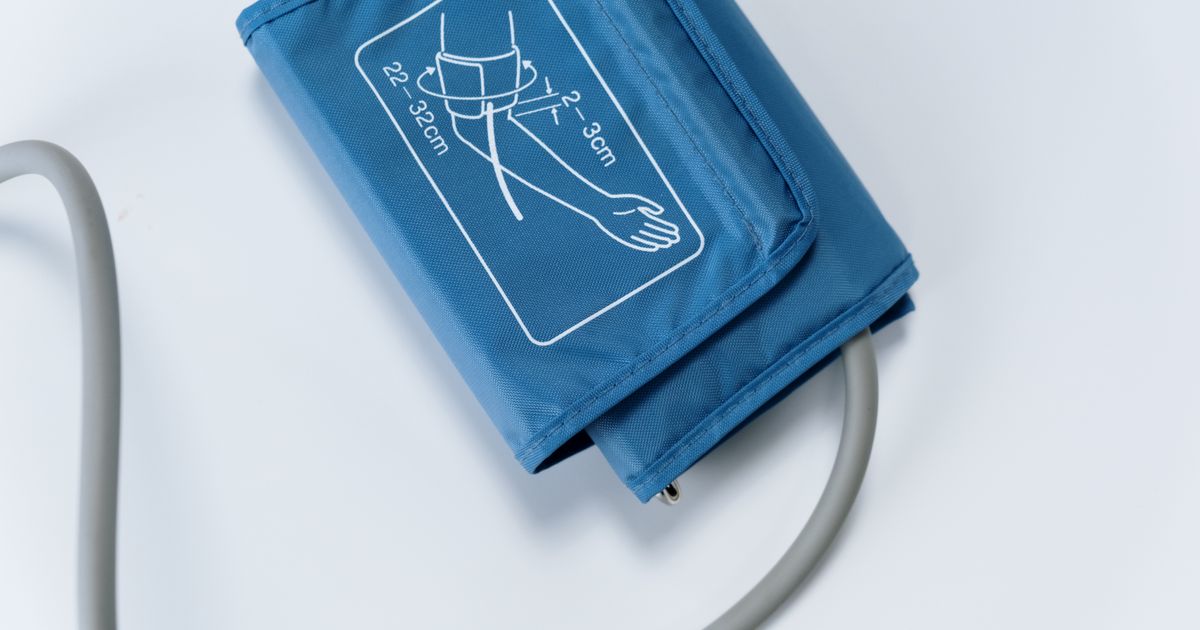
Wrap a measuring tape around the middle of your upper arm. Most standard cuffs fit 22-32 cm. Many Indian adults, especially those with obesity, need a large cuff (32-42 cm), which some brands sell separately. Very thin elderly arms may need a small cuff.
Smartwatches are not a substitute
Cuffless smartwatches and phone apps that claim to measure BP are not yet accurate enough for diagnosis or treatment decisions. Our wearable health trackers guide explains what these devices can and cannot do.
The Right Way to Measure Blood Pressure at Home
Technique matters more than the brand of the machine. Small mistakes, like talking, crossing your legs or measuring over a sleeve, can add 5-15 mmHg to a reading.
Before measuring
- Avoid tea, coffee, smoking and exercise for at least 30 minutes beforehand
- Empty your bladder, as a full bladder can raise BP
- Sit quietly for 5 minutes before the first reading
- Don't measure right after a heavy meal, a bath, or an argument
Position
- Sit on a chair with back support, not on a bed, sofa edge or floor
- Keep feet flat on the floor, legs uncrossed
- Rest your arm on a table so the cuff is at heart level
- Wrap the cuff on bare skin, about 2-3 cm above the elbow crease, snug enough to fit two fingers underneath. Don't roll a tight kurta or sweater sleeve up over it
- Don't talk or use your phone during the measurement
How many readings, and when
Hypertension experts, including the European Society of Hypertension, recommend a simple schedule often called 7-2-2:
| What | Recommendation |
|---|---|
| Number of days | 7 consecutive days (minimum 3) before a doctor's visit or after a medicine change |
| Morning | Within 1 hour of waking, after passing urine, before breakfast and before BP medicines |
| Evening | Before dinner or before bed, not right after eating |
| Readings per session | 2 readings, 1-2 minutes apart |
| Averaging | Discard Day 1 readings, average the rest |
For stable, well-controlled hypertension, many doctors suggest a week of readings every 1-3 months rather than daily checks. Measuring too often, many times a day, mostly feeds anxiety and adds little useful information.
Use the same arm
At your first doctor's visit, BP is often checked on both arms. If one arm consistently reads higher, use that arm at home. A large difference between arms (more than 10-15 mmHg) should be mentioned to your doctor.
What Your Home BP Readings Mean
Home readings are naturally a little lower than clinic readings, so the cut-off for high BP at home is lower than in the clinic.
| Home BP average (mmHg) | Interpretation |
|---|---|
| Below 120/80 | Optimal |
| 120-129 / below 80 | Normal |
| 130-134 / 80-84 | Borderline; review lifestyle and recheck |
| 135/85 or higher | Hypertension at home (equivalent to about 140/90 in clinic) |
| 160/100 or higher | High; consult your doctor soon |
| 180/110 or higher | Very high; recheck after 5 minutes of rest and seek medical advice |
If you are already on treatment, your doctor will usually aim for a home average below 135/85, and often lower, such as below 130/80, if you have diabetes, kidney disease, or a past heart attack or stroke. Your doctor will set your personal target.
When to seek urgent help
Call for emergency care (dial 108 or 112) if a very high reading comes with any of these:
- Chest pain or tightness
- Sudden weakness or numbness of the face, arm or leg, slurred speech, or drooping face (possible stroke)
- Severe headache with vomiting or blurred vision
- Breathlessness or confusion
A single high reading without symptoms is rarely an emergency. Rest for a few minutes, repeat the measurement, and contact your doctor if it stays high.
Very low readings
Readings below about 90/60 mmHg, especially with dizziness, fainting or falls, should also be reported. This is common in older adults on several BP medicines, during winter illnesses with poor food intake, or with dehydration from diarrhoea. Never stop or change BP medicines on your own. Speak to your doctor first.
Winter and Your Blood Pressure
Cold weather narrows blood vessels, increases the heart's workload and makes blood slightly more prone to clotting. This is why heart attacks and strokes peak in winter across much of North India. Practical steps for the cold months:
- Measure in a warm room. A reading taken in a cold room right after leaving a warm quilt can be higher than your usual.
- Stay warm in the early morning. Layer up before stepping out for a morning walk, or shift walks to later in the day when it is warmer.
- Watch the salt. Winter favourites like pickles, papad, namkeen, gajak, and pakoras with chai add a lot of hidden sodium.
- Keep up activity indoors when smog or cold makes outdoor walks difficult. Air pollution also raises BP and cardiac risk, as our air pollution guide explains.
- Don't skip tablets when travelling for weddings and festivals. Carry a week's extra supply.
- Ask your doctor if a dose adjustment is needed if your home average is consistently higher in winter than in summer.
Turning Readings Into Useful Information for Your Doctor
The most common problem with home monitoring in India is not the machine, it's the record. Readings get scribbled on calendar pages, lost in WhatsApp chats, or stay inside the machine's memory, where the doctor never sees them. When you arrive at the OPD and say "it was around 140 at home", your doctor has little to work with.
Keep a simple log
For each reading, note:
- Date and time
- Systolic / diastolic and pulse
- Arm used
- Whether it was before or after your BP medicine
- Anything unusual: poor sleep, a missed dose, a headache, a stressful day, a cold morning
Bring the 7-day average, not just the highest or lowest reading. Many doctors also find it helpful to see morning and evening averages separately.
Check your machine once a year
Take your BP monitor to your next clinic visit and compare its reading with the doctor's calibrated device on the same arm. If the difference is more than about 5-10 mmHg, ask whether the machine or the cuff should be replaced.
Keep BP alongside your lab results
Blood pressure is only one part of your heart and kidney health. Your doctor will also want to see your lipid profile, HbA1c, kidney function and urine microalbumin over time. When you upload your reports to MedicalVault, these lab results sit in one secure place, and MedicalVault's trend analysis shows how creatinine, cholesterol and sugar are moving alongside your BP treatment. If you monitor a parent's BP from another city, the family sharing feature lets you see their latest reports and spot worrying changes without waiting for the next phone call.
Key Takeaways
- Home blood pressure monitoring gives a truer picture than occasional clinic readings. Indian studies show around 1 in 5 people have masked or white coat hypertension that a single clinic reading can miss.
- Choose an automatic upper-arm BP machine that is independently validated, with a cuff that fits your arm. Wrist devices and smartwatches are not reliable enough for treatment decisions.
- Measure correctly: seated with back support, feet flat, arm at heart level, cuff on bare skin, after 5 minutes of rest and no tea, coffee or smoking for 30 minutes.
- Follow the 7-2-2 schedule: 7 days, 2 sessions a day (morning before medicines, evening before dinner), 2 readings each time, then average.
- A home average of 135/85 mmHg or higher suggests hypertension. Your doctor will set your personal target, often lower if you have diabetes or kidney disease.
- BP tends to rise in winter. Stay warm, cut hidden salt and discuss seasonal dose changes with your doctor instead of adjusting medicines yourself.
- Bring an organised log to your doctor, and keep related lab reports in MedicalVault so your full heart and kidney health picture is in one place.
To understand hypertension itself, its causes, medicines and complications, read our complete high blood pressure guide, or visit the FAQ page to learn more about organising your family's health records.