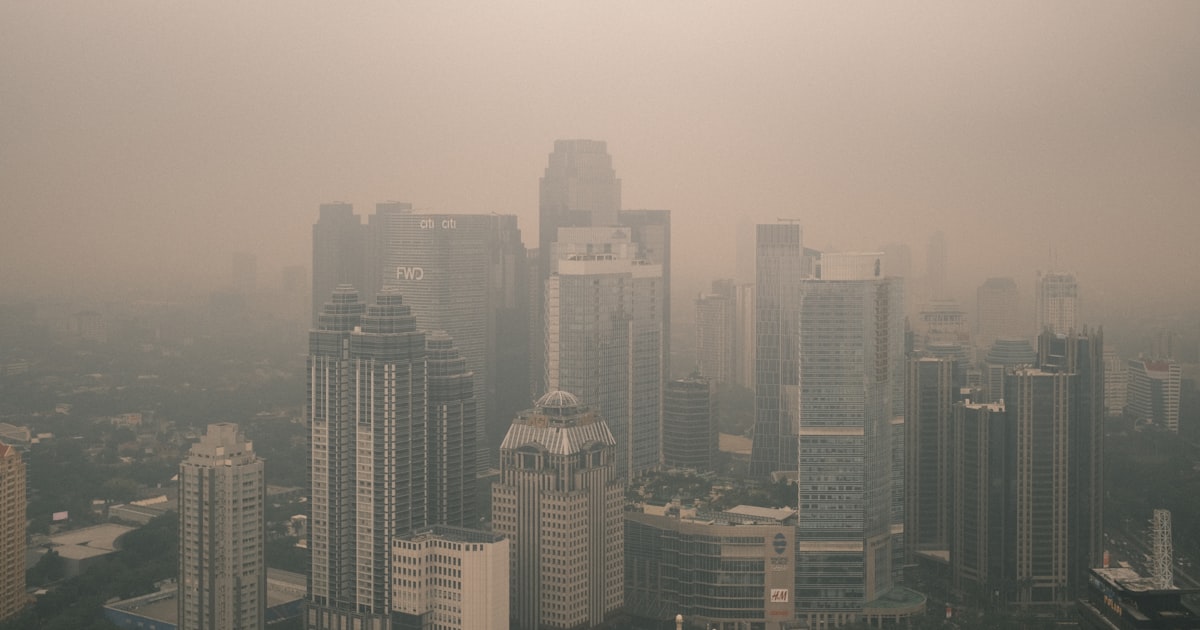
Every winter, a familiar haze settles over Delhi, Lucknow, Patna, and dozens of other Indian cities. Schools close. Hospitals fill. Parents keep children indoors. But air pollution is not a seasonal problem that goes away when the smog lifts — its damage accumulates silently in your lungs, heart, and blood vessels year after year, in every city and village in India, every single day.
Air pollution is now the second-largest risk factor for disease in India, responsible for over 20 lakh deaths annually, according to the State of Global Air 2024 report — making it 16 times more deadly than COVID-19 was at its peak. India's average PM2.5 concentration is nearly 11 times higher than the WHO's recommended guideline. In the winter of 2025–26, 204 out of 238 monitored Indian cities failed to meet even India's own (already less strict) national air quality standards. This is not a problem for someone else. If you breathe Indian air, this affects you.
Understanding What's in the Air: PM2.5, PM10, and AQI
Before understanding the health effects, it helps to understand what we are actually inhaling.
Particulate matter (PM) is a mixture of solid particles and liquid droplets suspended in the air — a cocktail of dust, smoke, soot, chemicals, heavy metals, and biological material. Particles are classified by size, measured in micrometres (µm):
- PM10 — particles up to 10 µm in diameter. These are visible as haze and can irritate the nose, throat, and upper airways, but are mostly filtered by the nose and upper respiratory tract.
- PM2.5 — particles up to 2.5 µm in diameter. These are invisible to the naked eye and the most dangerous. They penetrate deep into the alveoli (air sacs) of the lungs, enter the bloodstream, and can travel to the heart, brain, and other organs.
- PM1 — ultrafine particles under 1 µm, increasingly implicated in systemic vascular damage. Newer Indian research from the Frontiers in Sustainable Cities journal (2026) documents the deposition patterns of PM1 in Delhi's urban lungs.
The Air Quality Index (AQI) is India's composite measure of pollution, covering PM2.5, PM10, ozone (O₃), nitrogen dioxide (NO₂), sulphur dioxide (SO₂), and carbon monoxide (CO). Understanding where your city sits on the AQI scale gives you daily health context:
| AQI Range | Category | Health Implications |
|---|---|---|
| 0–50 | Good | Minimal impact |
| 51–100 | Satisfactory | Minor breathing discomfort for sensitive people |
| 101–200 | Moderate | Breathing discomfort for asthma and heart disease patients |
| 201–300 | Poor | Breathing discomfort for everyone on prolonged exposure |
| 301–400 | Very Poor | Respiratory illness on prolonged exposure; affects the healthy |
| 401–500 | Severe | Serious health impacts; affects healthy people, significant risk for sensitive groups |
Most major Indian cities routinely breach 300–400 during winter months. The CPCB (Central Pollution Control Board) AQI app and IQAir's real-time maps are the most reliable sources for your city's daily reading.
How Air Pollution Damages the Body
The health effects of air pollution in India go far beyond a winter cough.
Respiratory System
PM2.5 particles that reach the alveoli trigger an inflammatory cascade — the body's immune cells attack the particles, releasing cytokines that cause chronic inflammation and oxidative stress. Over years of exposure, this leads to:
- Chronic bronchitis and COPD: India has an estimated 5.5 crore COPD patients, many of whom live in cities or rural areas with high indoor pollution from biomass cooking fires. COPD is projected to be the third leading cause of death globally by 2030. Never-smoking young people in Delhi NCR have been shown to have significantly lower lung function (FVC and FEV1 on spirometry) than age-matched peers in low-pollution hill districts — a finding documented in studies comparing Delhi NCR with Pauri Garhwal.
- Asthma exacerbations: Even well-controlled asthma can become dangerously unpredictable during high-AQI days. Our asthma and COPD guide covers management in detail.
- Lung cancer: Long-term exposure to PM2.5 is classified as a Group 1 carcinogen by the IARC. Lung cancer among non-smokers in India — particularly women in rural areas exposed to biomass cooking smoke — is a real and rising phenomenon. See our lung cancer guide for more on symptoms and screening.
Cardiovascular System
PM2.5 does not stay in the lungs. Ultrafine particles enter the bloodstream and deposit in arterial walls, accelerating atherosclerosis (arterial plaque formation). The mechanism mirrors smoking: systemic inflammation, endothelial damage, and increased clotting tendency. Studies show that every 10 µg/m³ increase in PM2.5 raises cardiovascular mortality by approximately 3.6%.
The number of heart disease deaths attributable to ambient air pollution in India increased nearly five-fold between 1990 and 2019. For context, Delhi's winter PM2.5 routinely exceeds 200–300 µg/m³ — forty to sixty times the WHO guideline.
Short-term exposure effects include elevated blood pressure, increased heart rate variability, and — in those with underlying heart disease — a materially higher risk of heart attack and cardiac arrhythmia. Three to five consecutive high-AQI days can trigger myocardial infarction even in people without previously known coronary artery disease.
Brain and Nervous System
Air pollution crosses the blood-brain barrier, both directly (via the olfactory nerve) and via systemic inflammation. Research links long-term PM2.5 exposure to accelerated cognitive decline, higher rates of dementia, and worsening of anxiety and depression symptoms. Children exposed to high pollution show measurable reductions in IQ and cognitive development.
Kidneys
Emerging evidence links long-term particulate exposure to chronic kidney damage through systemic inflammatory pathways — relevant context for the millions of Indians already at risk due to diabetes and hypertension.
Children and Pregnancy
Children's developing lungs are especially vulnerable. A child in Delhi growing up in poor-air-quality conditions can reach adulthood with permanently reduced lung capacity. Maternal exposure to high PM2.5 during pregnancy is linked to preterm birth, low birth weight, and increased risk of developmental delay in the child.
Signs That Air Pollution May Be Affecting Your Health
Many Indians normalise symptoms that are actually warning signs of air pollution-related illness:
- Persistent cough lasting more than 8 weeks (classified medically as a chronic cough)
- Morning phlegm or mucus production
- Increasing breathlessness during exertion that was easy before
- Frequent "chest tightness" during smoggy days or on morning runs
- Recurring respiratory infections (more than 2–3 bouts of bronchitis per year)
- Worsening of asthma, heart disease, or diabetes control during winter months
- Chronic fatigue or headaches that improve when you travel to a less-polluted area
Tests to Ask Your Doctor About
If you live in a high-pollution city and have any of the symptoms above, or belong to a vulnerable group (children, elderly, pregnant, smoker, or have pre-existing heart/lung/kidney disease), these tests offer a baseline:
Spirometry (Pulmonary Function Test — PFT)
Spirometry is the cornerstone of respiratory health assessment. You breathe into a device that measures:
- FVC (Forced Vital Capacity): the total air you can breathe out forcefully after a maximal inhalation
- FEV1 (Forced Expiratory Volume in 1 second): how much air you exhale in the first second
- FEV1/FVC ratio: the key indicator of airflow obstruction (< 0.70 suggests COPD or obstruction)
Spirometry takes about 15 minutes and costs ₹500–1,200 at most diagnostic centres. It requires no fasting or special preparation. People in high-pollution occupations (traffic police, welders, construction workers, auto-rickshaw drivers) should get a baseline spirometry and repeat every 1–2 years. Doctors at AIIMS Delhi and pulmonology units at state government hospitals now routinely recommend spirometry for anyone in Delhi NCR with respiratory symptoms.
Chest X-Ray and High-Resolution CT (HRCT) of the Chest
A chest X-ray can detect signs of hyperinflation, infiltrates, or structural lung changes. For more detailed assessment, an HRCT chest provides a high-resolution cross-sectional image of the lung tissue and can detect early emphysematous changes, ground-glass opacities, or early interstitial lung disease before they become symptomatic.
Peak Flow Meter (Home Monitoring)
A peak flow meter is an inexpensive (₹400–800) handheld device that measures peak expiratory flow — how fast you can blow air out. People with asthma use them daily to detect early airway narrowing before it becomes symptomatic, and to correlate worsening with local AQI spikes.
Blood Tests
- CBC (Complete Blood Count): Chronic inflammation from pollution often causes a mild elevation in white blood cell count and, over years, can contribute to anaemia. Our CBC guide explains how to read your report.
- CRP (C-Reactive Protein): A high-sensitivity CRP measures systemic inflammation — a key mechanism by which PM2.5 damages blood vessels. It is particularly useful in assessing cardiovascular risk in high-pollution residents.
- Eosinophil count: An elevated eosinophil percentage in your CBC often signals allergic airway inflammation — relevant for those with pollution-exacerbated asthma.
- IgE levels: Total serum IgE reflects allergic sensitisation, which is worsened by high-pollution environments.
You can store all your spirometry reports, chest imaging, and blood test results in MedicalVault's secure report storage and use the trend analysis feature to see whether your lung function is declining over successive tests — critical information for anyone living in a high-AQI city.
Practical Protection: What Actually Works
The good news is that while you cannot single-handedly fix India's air, you can meaningfully reduce your personal exposure and mitigate the health impact.
N95 Masks — Not Surgical Masks
N95 respirators (including FFP2 equivalents) filter at least 95% of airborne particles, including PM2.5. Standard surgical masks and single-layer cloth masks provide minimal protection against PM2.5. When AQI exceeds 200, children, pregnant women, the elderly, and anyone with pre-existing heart or lung disease should wear a well-fitted N95 outdoors. Indian brands like Magnum, Niosh, and 3M are widely available for ₹40–150 per mask.
HEPA Air Purifiers Indoors
HEPA air purifiers can reduce indoor PM2.5 by 80–95% in a closed room. Given that Indians spend roughly 80% of their time indoors, improving indoor air quality is one of the highest-impact interventions available. Brands like Philips, Coway, Dyson, and Xiaomi offer models between ₹8,000–50,000 that cover a single room adequately. The filter must be changed as per the manufacturer's schedule (usually every 6–12 months) to remain effective.
Exercise Timing
If you exercise outdoors, avoid the early morning rush-hour peak (7–10 AM) and evening peak (6–9 PM) when vehicle emissions combine with lower atmospheric mixing. Midday, when pollutants disperse better, is generally safer on AQI-rated days. Check the CPCB AQI app before stepping out.
Nutrition for Pollution Defence
Certain nutrients genuinely help the body manage the oxidative stress caused by PM2.5:
- Vitamin C (amla, guava, citrus) and Vitamin E (nuts, sunflower seeds) are potent antioxidants
- Omega-3 fatty acids (flaxseed, walnuts, fish like mackerel and sardines) reduce systemic inflammation
- Turmeric (haldi) — curcumin has documented anti-inflammatory properties
- Jaggery (gud) — traditional wisdom and some research suggests it helps remove fine particles from the respiratory tract; it is not a substitute for avoiding exposure but may offer modest benefit
Indoor Cooking Pollution
Over 60 crore Indians still cook with biomass (wood, dung, agricultural waste). Indoor cooking smoke from a chulha can create PM2.5 levels far higher than even Delhi's worst outdoor air — 10 to 50 times the outdoor levels in a poorly ventilated kitchen. The National Clean Cooking Mission's Pradhan Mantri Ujjwala Yojana provides subsidised LPG cylinders — if you or a family member still uses a chulha, switching to LPG dramatically reduces chronic respiratory and cardiovascular risk.
Vulnerable Groups: Who Needs Extra Care
These groups face disproportionately higher harm from air pollution and should be extra vigilant:
- Children under 12 — developing lungs and faster breathing rates mean higher particle deposition
- Pregnant women — foetal exposure linked to preterm birth, low birth weight, developmental impact
- People over 60 — reduced respiratory reserve and often underlying heart/lung conditions
- People with asthma, COPD, or chronic heart disease
- Outdoor workers: traffic police, construction labourers, street vendors, auto-rickshaw drivers, delivery riders
- Residents of Delhi NCR, Patna, Kolkata, Lucknow, Agra, Muzaffarpur, Faridabad — consistently among the most polluted cities in the world
Key Takeaways
- India's average PM2.5 is nearly 11 times the WHO guideline; over 2 million Indians die annually from air pollution-related illness.
- PM2.5 is the most dangerous fraction — invisible particles that penetrate deep into the lungs, enter the bloodstream, and damage the heart, brain, and kidneys over time.
- Chronic cough, morning phlegm, increasing breathlessness, and worsening asthma during winter are warning signs that deserve medical evaluation, not normalisation.
- Spirometry (PFT) is the key test for assessing lung function damage from pollution — anyone with respiratory symptoms in a high-pollution city should have one.
- Blood tests including CBC, high-sensitivity CRP, and eosinophil count help assess the systemic inflammatory burden.
- N95 masks, HEPA air purifiers, and avoiding peak traffic hours are the most evidence-backed individual protection strategies.
- Switching from biomass cookstoves to LPG is the single most impactful intervention for rural household air quality.
- Track your spirometry results, CBC, and chest imaging over time using MedicalVault's trend analysis to detect gradual deterioration early — when it is still reversible.