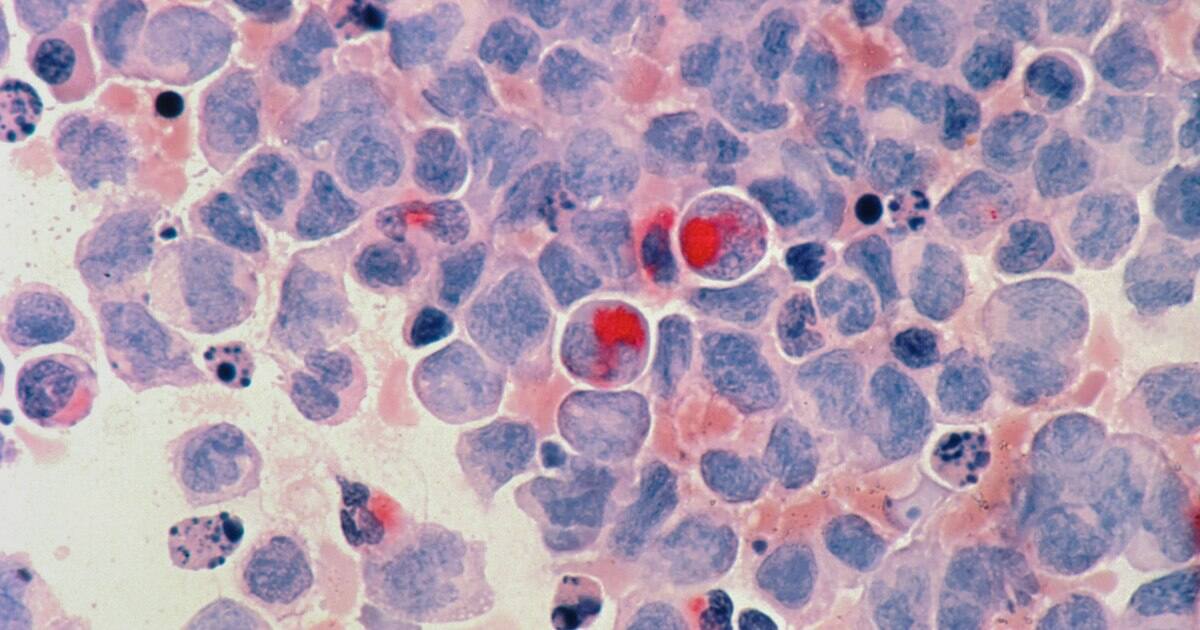
For eight months, a 58-year-old retired bank officer in Pune was treated for "back pain due to age". He tried painkillers, physiotherapy and an ayurvedic massage course. Then a routine blood test showed haemoglobin of 8.9 g/dL, an ESR of 110 mm/hr and a creatinine that had quietly doubled. A haematologist ordered two tests he had never heard of, serum protein electrophoresis (SPEP) and serum free light chains, and within a week the diagnosis was clear: multiple myeloma, a cancer of the bone marrow.
His story is common in India. Indian studies report that patients with multiple myeloma are typically diagnosed around 55-60 years of age, nearly a decade younger than in Western countries, and very often late, after months of being treated for back pain, "weakness", anaemia or kidney problems. The good news is that myeloma treatment has improved dramatically, and Indian generic versions of key drugs have made it far more affordable. This guide explains what multiple myeloma is, the warning signs, and, most importantly, how to understand the tests used to diagnose and monitor it: SPEP, immunofixation, free light chains, beta-2 microglobulin and bone marrow examination.
What Is Multiple Myeloma?
Multiple myeloma is a cancer of plasma cells, a type of white blood cell found in the bone marrow. Healthy plasma cells make antibodies (immunoglobulins) that fight infections. In myeloma, one abnormal plasma cell multiplies uncontrollably and produces huge amounts of a single, useless antibody called monoclonal protein, M-protein or paraprotein.
This causes problems in four main ways, remembered by doctors as CRAB:
| CRAB feature | What happens | What you may notice | Lab / scan clue |
|---|---|---|---|
| C - Calcium high | Bone breakdown releases calcium | Thirst, constipation, confusion, tiredness | Serum calcium above 11 mg/dL |
| R - Renal (kidney) damage | Light chains clog the kidney filters | Swelling, reduced urine, often no symptoms | Creatinine above 2 mg/dL |
| A - Anaemia | Myeloma cells crowd out normal marrow | Breathlessness, fatigue, pale skin | Haemoglobin below 10 g/dL |
| B - Bone lesions | Myeloma "punches holes" in bones | Persistent back or rib pain, fractures | Lytic lesions on CT, PET-CT or MRI |
Besides CRAB, myeloma also weakens immunity, so frequent infections (repeated pneumonia, urinary infections or shingles) are another clue.
Why it is missed in India
Myeloma is relatively uncommon (Indian estimates suggest roughly 1 case per 1,00,000 people a year, rising in cities), and its symptoms mimic everyday problems. Back pain is blamed on lumbar spondylosis (see our low back pain guide), anaemia on poor diet, and high creatinine on diabetes or blood pressure. Red flags that should prompt your doctor to think of myeloma include:
- Back or bone pain in someone over 45 that is persistent, worse at night, or not improving with treatment
- Unexplained anaemia that does not respond to iron
- Very high ESR (often above 100 mm/hr), as discussed in our ESR test guide
- High total protein with low or normal albumin on a liver function test, a "protein gap"
- Unexplained kidney dysfunction or high calcium (see our serum calcium guide)
- A fracture after a minor fall, or loss of height
- Rouleaux formation (red cells stacked like coins) reported on a peripheral blood smear
The Key Tests for Multiple Myeloma
No single test diagnoses myeloma. Doctors combine blood tests, urine tests, bone marrow examination and imaging.
1. Serum protein electrophoresis (SPEP)
SPEP separates the proteins in your blood using an electric current. Normal blood proteins form a characteristic pattern of bands: albumin, alpha-1, alpha-2, beta and gamma globulins. In myeloma, the excess monoclonal protein shows up as a tall, narrow spike, usually in the gamma region, called the M-spike or M-band.
| SPEP finding | What it may mean |
|---|---|
| No M-band, normal pattern | No monoclonal protein detected by SPEP |
| Small M-band (below 3 g/dL) | Could be MGUS, smouldering myeloma or early myeloma; needs further tests |
| M-band of 3 g/dL or more | Strongly suggests smouldering or active myeloma |
| Broad, diffuse rise in gamma globulins (polyclonal) | Usually infection, chronic liver disease or autoimmune disease, not myeloma |
The size of the M-spike is also used to monitor treatment: a falling M-protein means the treatment is working.
2. Immunofixation electrophoresis (IFE)
Immunofixation confirms that an M-band is truly monoclonal and identifies its type, for example IgG kappa, IgA lambda or light chain only. IgG myeloma is the most common type. IFE is more sensitive than SPEP and can detect small amounts of M-protein that SPEP misses. Reports simply say "monoclonal band detected: IgG kappa" or "no monoclonal band detected".
3. Serum free light chain (sFLC) assay
Antibodies are made of heavy chains and light chains. Light chains come in two types: kappa (κ) and lambda (λ). Normally, a small amount of free light chains circulates in a balanced ratio. In myeloma, the abnormal plasma cells often make too much of one type.
| Parameter | Typical reference range* |
|---|---|
| Free kappa | 3.3-19.4 mg/L |
| Free lambda | 5.7-26.3 mg/L |
| Kappa/lambda ratio | 0.26-1.65 |
*Ranges are for the commonly used assay; your lab's reference range may differ, and the ratio range is wider in people with kidney disease.
An abnormal kappa/lambda ratio suggests a monoclonal process. A ratio of 100 or more (with the involved chain at least 100 mg/L) counts as a myeloma-defining event even before CRAB features appear. The sFLC test is essential for light-chain myeloma, which can be missed entirely by SPEP, and for patients with kidney damage.
4. Urine tests: Bence Jones protein and UPEP
Free light chains spill into urine, where they are called Bence Jones protein. A 24-hour urine protein electrophoresis (UPEP) with immunofixation measures them. Routine urine dipsticks often do not detect light chains, so a normal urine routine test does not rule out myeloma.
5. Bone marrow aspiration and biopsy
A bone marrow examination, usually taken from the back of the hip bone under local anaesthesia, measures the percentage of clonal plasma cells. Ten per cent or more supports a diagnosis of myeloma; 60% or more is myeloma-defining on its own. The sample is also sent for cytogenetics or FISH, which looks for genetic changes such as del(17p), t(4;14) or t(14;16) that indicate higher-risk disease. Our biopsy and histopathology report guide explains how such reports are structured.
6. Staging and supporting blood tests
- Beta-2 microglobulin and serum albumin: used in the International Staging System (ISS)
- LDH: high levels suggest more aggressive disease
- CBC, creatinine, calcium and uric acid: baseline and monitoring
- Revised ISS (R-ISS) combines beta-2 microglobulin, albumin, LDH and high-risk genetics into Stage I, II or III
| ISS stage | Beta-2 microglobulin | Albumin |
|---|---|---|
| Stage I | Below 3.5 mg/L | 3.5 g/dL or more |
| Stage II | Neither stage I nor III | Neither stage I nor III |
| Stage III | 5.5 mg/L or more | Any |
7. Imaging
Old-style "skeletal survey" X-rays miss many lesions. Current practice prefers whole-body low-dose CT, PET-CT or whole-body MRI to detect bone lesions. Our X-ray, CT scan and MRI guide explains the differences.
Approximate test costs in India
| Test | Approximate cost* |
|---|---|
| Serum protein electrophoresis (SPEP) | ₹600-1,500 |
| Serum immunofixation (IFE) | ₹3,000-6,000 |
| Serum free light chains (kappa, lambda, ratio) | ₹2,500-5,000 |
| Beta-2 microglobulin | ₹1,000-2,000 |
| Bone marrow aspiration and biopsy | ₹3,000-10,000 (plus FISH, which costs more) |
| PET-CT | ₹15,000-25,000 |
*Prices vary by city, lab and hospital. Government medical colleges and AIIMS-type institutes charge much less.
MGUS, Smouldering and Active Myeloma: Know the Difference
Finding an M-protein does not automatically mean cancer. Doctors classify it into three stages:
| Condition | M-protein | Bone marrow plasma cells | CRAB or other myeloma-defining events | What happens |
|---|---|---|---|---|
| MGUS (monoclonal gammopathy of undetermined significance) | Below 3 g/dL | Below 10% | None | Monitoring only; risk of progression about 1% per year |
| Smouldering myeloma | 3 g/dL or more, or | 10-59% | None | Closer monitoring; some high-risk patients may be offered treatment in trials or by specialist decision |
| Active (symptomatic) myeloma | Usually present | 10% or more | Present (CRAB, or SLiM criteria) | Treatment needed |
SLiM criteria identify high-risk patients who need treatment even without symptoms: Sixty per cent or more plasma cells in the marrow, a Light chain ratio of 100 or more, or more than one focal lesion on MRI.
MGUS is far more common than myeloma, especially after 50, and many people with MGUS never develop cancer. But it needs regular follow-up, usually SPEP and free light chains at 6 months and then every 1-2 years if stable, as advised by your doctor. This is exactly where keeping records matters: your doctor compares your current M-protein value with every previous one. When you upload your reports to MedicalVault, MedicalVault's trend analysis shows how your M-protein, light chain ratio, haemoglobin and creatinine move over the years.
Treatment of Multiple Myeloma in India
Multiple myeloma is currently considered treatable but usually not curable. However, many patients now live for many years with good quality of life, often with several periods of remission. Treatment decisions are made by a haematologist or medical oncologist; the outline below is for understanding only.
Common treatment approaches
- Induction therapy: Combinations of drugs such as bortezomib (a proteasome inhibitor), lenalidomide or thalidomide (immunomodulatory drugs) and dexamethasone. A widely used combination is VRd (bortezomib, lenalidomide, dexamethasone). The monoclonal antibody daratumumab is increasingly added for eligible patients.
- Autologous stem cell transplant (ASCT): For fit patients, the patient's own stem cells are collected, high-dose chemotherapy is given, and the cells are returned. Indian centres report good results, and costs at public institutions such as AIIMS have been reported at under ₹3 lakh, though private hospitals cost considerably more.
- Maintenance therapy: Usually low-dose lenalidomide to keep the disease in remission.
- Supportive care: Bone-strengthening drugs (zoledronic acid or denosumab), kidney protection, infection prevention (vaccines, antivirals), pain control and treatment of anaemia.
- Newer therapies: For relapsed disease, options include pomalidomide, carfilzomib, and cellular therapies. India's own CAR-T therapy developments are covered in our CAR-T cell therapy guide.
Making treatment affordable
- Indian generics: Generic bortezomib and lenalidomide from Indian manufacturers (for example, Natco's Bortenat and Lenalid) cost a fraction of the original brands. Discuss generic options with your oncologist.
- Ayushman Bharat PM-JAY: Many cancer chemotherapy packages are covered at empanelled hospitals; ask the Ayushman Mitra desk. Our PM-JAY guide explains eligibility.
- Patient assistance programmes run by drug manufacturers, and state cancer schemes such as those in Tamil Nadu, Kerala and Maharashtra
- Government cancer centres, including Tata Memorial Centre and regional cancer centres, offer subsidised treatment
Living With Myeloma: Practical Tips for Patients and Families
- Keep every report in order: Myeloma is monitored for years. Each visit involves SPEP, free light chains, CBC, creatinine and calcium. A lost report means your doctor cannot compare responses accurately.
- Understand response terms: Your oncologist may talk about partial response, very good partial response (VGPR), complete response or MRD negativity (no detectable disease even on sensitive tests). These are based on changes in M-protein and light chains.
- Protect your kidneys: Drink adequate fluids unless told otherwise, and avoid painkillers like ibuprofen and diclofenac (common in Indian households) without your doctor's approval. Tell every doctor you have myeloma before any CT contrast scan.
- Prevent infections: Get vaccinated against influenza, pneumococcus and shingles as advised, and report fever promptly.
- Protect your bones: Avoid heavy lifting and sudden twisting; ask about safe exercise.
- Visit a dentist before starting bone-strengthening drugs, which carry a small risk of jaw bone problems.
- Share information with family caregivers: Treatment schedules, blood counts and medicines change often. MedicalVault's family sharing feature lets your spouse or children in another city see the latest reports before the next oncology visit.
Key Takeaways
- Multiple myeloma is a cancer of plasma cells that Indian patients typically develop around 55-60 years, often diagnosed late after being treated for back pain, anaemia or kidney problems.
- Watch for CRAB features: high calcium, kidney damage, anaemia and bone pain or fractures, plus very high ESR and frequent infections.
- SPEP detects the M-spike, immunofixation identifies its type, and the serum free light chain ratio catches light-chain myeloma that SPEP may miss.
- A bone marrow examination, beta-2 microglobulin, albumin, LDH and imaging (low-dose CT, PET-CT or MRI) confirm and stage the disease.
- MGUS is common and usually harmless, but needs regular SPEP and free light chain monitoring.
- Treatment with bortezomib, lenalidomide, dexamethasone and stem cell transplant can give years of good-quality life, and Indian generics and PM-JAY make it more affordable.
- Myeloma care depends on comparing results over time. MedicalVault keeps every SPEP, free light chain and blood report organised, trended and shareable with your care team and family.