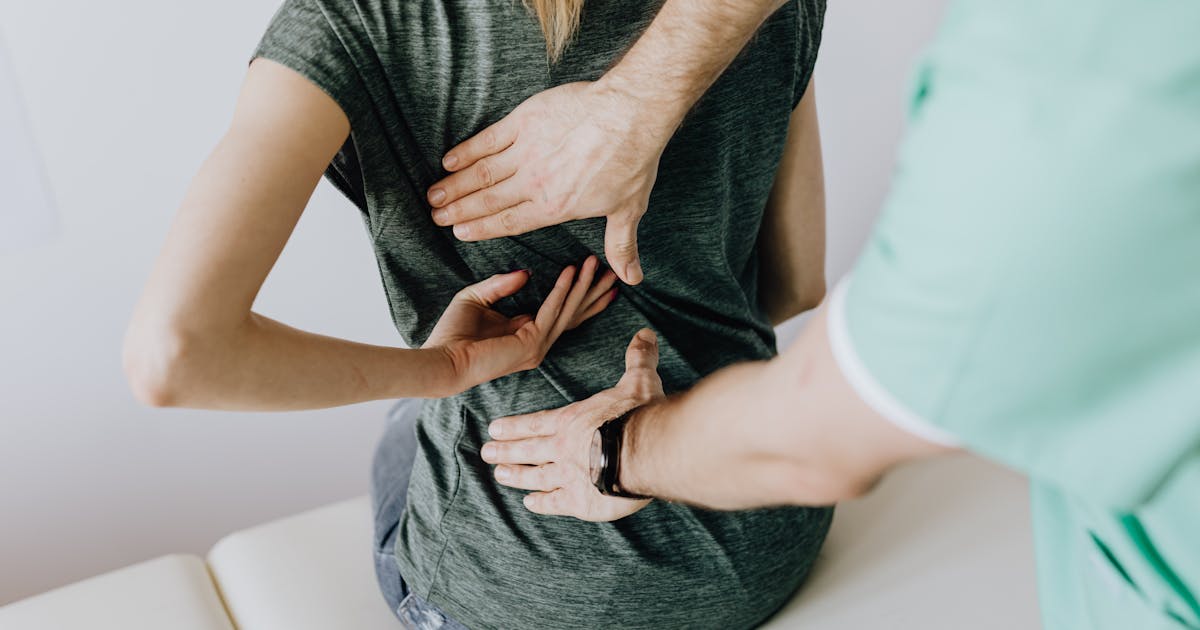
Ask any doctor at an urban Indian clinic about their most common complaint, and the answer is almost always the same: "kamar dard" — back pain. Whether it's a software engineer hunched over a laptop in Bengaluru, a homemaker in a small town lifting heavy vessels on the floor, or a farmer in rural Maharashtra bending over crops all day — low back pain cuts across every class, occupation, and age group in India.
India has one of the highest lifetime prevalence rates of low back pain (LBP) in the world, with some studies suggesting it affects nearly 60-70% of Indians at some point in their lives. Yet most people either ignore it ("it will pass"), self-medicate with painkillers, or rush to the wrong specialist. Understanding what is actually causing your back pain — and what to do about it — can mean the difference between weeks of unnecessary suffering and a faster, lasting recovery.
What Is Low Back Pain? Understanding the Anatomy
Your lower back (lumbar spine) is an engineering marvel: five vertebrae (L1-L5) stacked on top of each other, cushioned by intervertebral discs, connected by facet joints, and stabilised by layers of muscles and ligaments. The entire column protects the spinal cord and the nerve roots that branch out to your legs.
When any part of this system is stressed — a disc that bulges, a muscle that spasms, a facet joint that becomes arthritic, or a nerve root that gets compressed — you feel it as low back pain.
Acute vs. Chronic Back Pain
| Type | Duration | Common Cause | Recovery |
|---|---|---|---|
| Acute | Less than 6 weeks | Muscle strain, minor disc irritation | 80-90% recover within 4-6 weeks |
| Sub-acute | 6-12 weeks | Disc herniation, joint inflammation | May need physiotherapy |
| Chronic | More than 12 weeks | Spondylosis, disc disease, postural | Requires comprehensive management |
Common Causes of Low Back Pain in Indians
1. Muscle Strain and Ligament Sprain (Most Common)
The most frequent cause — often from lifting something heavy awkwardly (moving a gas cylinder, picking up a child), a sudden twisting motion, or prolonged poor posture. Pain is usually felt immediately, often with muscle spasm.
- In India: Especially common in construction workers, domestic workers, and people who sit on the floor for prayers, cooking, or work
- Recovery: Usually 2-4 weeks with rest, heat, and anti-inflammatory medication
- Red flag to watch: If pain doesn't improve in 2 weeks or is severe, get evaluated
2. Lumbar Spondylosis (Wear-and-Tear Arthritis)
Lumbar spondylosis refers to age-related degeneration of the vertebrae, discs, and facet joints of the lower spine. It is essentially osteoarthritis of the spine.
- Who it affects: Adults above 40, though X-rays show spondylotic changes in up to 90% of people above 60
- Symptoms: Dull aching pain, morning stiffness that improves with gentle movement, worsening after long periods of sitting or standing
- Important note: X-ray findings of spondylosis do NOT always cause symptoms — many people have severe X-ray changes with minimal pain, and vice versa
3. Lumbar Disc Herniation (Slipped Disc)
Each intervertebral disc has a tough outer ring (annulus fibrosus) and a soft gel-like centre (nucleus pulposus). When the outer ring cracks under pressure, the inner material can bulge or "herniate" outward, pressing on nearby nerve roots.
- Classic presentation: Sharp, shooting pain radiating from the lower back down one leg (sciatica) — pain goes down the buttock, back of the thigh, and into the foot. Numbness or tingling in the leg or foot may accompany it
- Most common level: L4-L5 or L5-S1 disc in Indians
- Aggravated by: Bending forward, sitting for long periods, coughing or sneezing
- 80-90% of disc herniations resolve within 6-12 weeks without surgery — important reassurance for patients who fear the worst
4. Lumbar Canal Stenosis
Age-related narrowing of the spinal canal compresses the nerves inside. Very common in Indians above 60.
- Characteristic symptom — neurogenic claudication: Pain, heaviness, or cramping in both legs on walking, relieved by bending forward or sitting. People often walk hunched or stop to lean on a wall to get relief
- Different from vascular claudication: In vascular claudication (blocked arteries), pain is also on walking but is NOT relieved by bending forward
- Diagnosis: MRI of the lumbar spine
5. Spondylolisthesis
One vertebra slips forward over the one below it. Common at L4-L5 or L5-S1. Can be caused by stress fractures (isthmic type, more common in young athletes and labourers) or by degenerative changes (degenerative type, more common above 50).
- Symptoms: Low back pain, sometimes leg pain and weakness
- Grade I-II can often be managed conservatively; Grade III-IV may need surgery
6. Sacroiliac (SI) Joint Dysfunction
The joint connecting the sacrum (base of spine) to the pelvis is often overlooked. Inflammation or dysfunction here causes pain in the lower back, buttocks, and sometimes the groin.
- Common after pregnancy in Indian women (hormonal changes loosen the joint ligaments)
- Also common in people who sit asymmetrically (crossed legs, wallet in back pocket) for long periods
Warning Signs: When Is Back Pain Serious?
Most low back pain is benign, but certain "red flag" symptoms demand urgent medical evaluation:
Seek care immediately if you have back pain with:
- Bladder or bowel problems — difficulty urinating, urinary retention, or incontinence (possible cauda equina syndrome — surgical emergency)
- Saddle area numbness — numbness in the inner thighs, buttocks, and genital area
- Significant leg weakness — foot drop, inability to stand on toes or heels
- Unexplained weight loss — possible tumour or infection
- Fever with back pain — possible spinal infection (discitis, spondylodiscitis)
- Night pain that wakes you — malignancy or infection must be ruled out
- Back pain after a significant fall or trauma — fracture must be excluded, especially in elderly Indians with osteoporosis
Diagnosing Low Back Pain: Which Tests Are Needed?
Here is a key insight most patients miss: most acute back pain does NOT need an MRI or X-ray immediately. Clinical examination is the gold standard for the first 4-6 weeks unless red flags are present.
When NO imaging is needed initially:
- Pain started after a clear physical trigger (lifting, twisting)
- No neurological symptoms (numbness, weakness, incontinence)
- Pain is improving, even slowly
- Under 50 years old with no red flags
X-Ray (Plain Radiograph)
Best for bony problems: spondylosis grading, spondylolisthesis (slippage), compression fractures in the elderly.
- Does not show disc herniations, nerve compression, or soft tissue pathology
- Cost in India: ₹200-500 (lumbar AP + lateral views)
MRI Lumbar Spine
The gold standard for soft tissue pathology — disc herniations, nerve compression, canal stenosis, infections, tumours.
- When to order: After 4-6 weeks if no improvement, or immediately if red flags are present
- Important: An MRI showing "disc bulge" or "spondylosis" does NOT mean surgery is needed — these findings are extremely common even in people without symptoms
- Cost in India: ₹3,000–₹8,000 (government hospitals: ₹500–₹2,000 or free under PM-JAY)
Nerve Conduction Study (NCS) / Electromyography (EMG)
Useful when there is doubt about whether neurological symptoms arise from the spine or from peripheral nerve disease (e.g., diabetic neuropathy causing leg symptoms vs. disc herniation).
- Cost in India: ₹1,500–₹3,500
Blood Tests
Not routinely needed for mechanical back pain, but ordered when infection, inflammatory arthritis (ankylosing spondylitis — common in young Indian men), or malignancy is suspected:
- ESR, CRP, CBC, HLA-B27 (for ankylosing spondylitis)
- PSA if prostate cancer is suspected in men
Treatment: The Evidence-Based Approach
The First 48-72 Hours: Acute Flare Management
What helps:
- Stay active — complete bed rest beyond 1-2 days actually worsens recovery. Light walking is better than lying down
- Heat application — a hot water bag on the lower back for 15-20 minutes, 2-3 times a day, relaxes muscle spasm effectively. Widely available in India and very effective
- NSAIDs: Diclofenac (Voveran), Ibuprofen (Brufen), Aceclofenac (Zerodol) — take with food to protect the stomach. Avoid if you have kidney disease, peptic ulcer, or are taking blood thinners
- Muscle relaxants: Cyclobenzaprine, Tizanidine (Tizanil), Methocarbamol — for acute muscle spasm, for short-term use only (3-5 days)
- Paracetamol: Safe as a mild analgesic, though evidence suggests NSAIDs are more effective for acute back pain
What doesn't help:
- Complete bed rest for more than 2 days
- Prolonged steroid injections without clear nerve compression
- Hard mattress — medium-firm mattresses actually score better in studies
Physiotherapy: The Cornerstone of Recovery
Physiotherapy is the single most evidence-based treatment for chronic and recurrent back pain. It is far more effective than medications alone for long-term outcomes.
A typical programme includes:
- Core strengthening — targeting the deep stabilising muscles (transverse abdominis, multifidus) that support the lumbar spine
- McKenzie exercises — especially effective for disc herniations; extension-based movements that centralise and reduce disc pain
- Hot/cold modalities, TENS, ultrasound — for pain relief in early phases
- Postural correction — critical for desk workers; teaches ergonomic sitting, standing, and lifting techniques
Cost in India: ₹300-800/session; many government hospitals offer physiotherapy at low or no cost
Yoga and Exercise
Indian yoga has robust evidence for low back pain:
- Setu Bandhasana (Bridge Pose) — strengthens lower back and glutes
- Bhujangasana (Cobra Pose) — extension exercise, beneficial for disc herniation
- Balasana (Child's Pose) — gentle stretch for lumbar muscles
- Cat-Cow stretches (Marjaryasana-Bitilasana) — improves spinal mobility
- Walking — 30 minutes of brisk walking daily is one of the best treatments for chronic back pain
Caution: Avoid Chakrasana (full wheel) or Paschimottanasana (seated forward bend) during acute episodes of disc herniation — forward flexion aggravates disc symptoms.
Epidural Steroid Injections
When nerve root pain (sciatica) is severe and not responding to 4-6 weeks of conservative treatment, a fluoroscopy-guided epidural steroid injection can provide significant temporary relief, allowing the patient to participate in physiotherapy.
- Duration of benefit: Weeks to months (not permanent)
- Cost in India: ₹5,000–₹15,000 per injection at private centres; available at government medical colleges
- Should always be combined with a physiotherapy programme for best results
Surgery: When Is It Needed?
The vast majority of back pain — even disc herniations with sciatica — does NOT need surgery. Surgery is considered in:
- Cauda equina syndrome — immediate emergency surgery
- Progressive neurological deficit — foot drop worsening, leg weakness progressing
- Failure of 6-12 weeks of conservative treatment for disc herniation with severe sciatica
- Severe canal stenosis limiting walking to less than 100 metres despite full conservative treatment
Surgical options in India:
- Microdiscectomy — removal of the herniated disc fragment; minimally invasive; ₹1.5–₹3 lakh at private hospitals; available free under PM-JAY
- Laminectomy/Decompression — for canal stenosis
- Spinal fusion — for Grade III-IV spondylolisthesis or instability; ₹3–₹7 lakh
- Endoscopic spine surgery — newer, less invasive; available at major spine centres in metro cities
Prevention: An Indian Lifestyle Guide to a Healthy Back
For desk workers (the fastest-growing risk group in urban India):
- Adjust your chair so feet are flat on the floor and knees are at 90°
- Position your screen at eye level — looking down at a laptop screen all day strains the neck and upper back, transmitting to the lower back
- Use lumbar support or a rolled towel behind the lower back
- Stand up and walk for 5 minutes every 45-60 minutes — set a phone reminder if needed
- Avoid sitting with a wallet in your back pocket — it tilts the pelvis asymmetrically
For homemakers:
- Avoid cooking at floor level for long periods — a raised platform or table significantly reduces lumbar strain
- When lifting heavy vessels, bend at the knees (not the waist), keep the object close to your body
- Use a long-handled broom and mop instead of bent-over cleaning
For all:
- Maintain a healthy weight — every extra kilogram increases lumbar loading disproportionately
- Strengthen your core with 10 minutes of daily exercises — this is more protective than any back belt or brace
- Back belts/braces are for short-term use during heavy work only — wearing them all day weakens core muscles over time
- Manage stress — psychological stress is a strongly proven risk factor for chronic back pain progression
If you want to track the progression of your pain episodes, physiotherapy reports, or MRI findings over time, uploading your reports to MedicalVault's centralised storage ensures your spine specialist always has your complete history at the next consultation.
Key Takeaways
- Low back pain affects the majority of Indians at some point in life — it is the leading cause of disability among working-age adults
- Most acute back pain (muscle strain, minor disc irritation) resolves within 4-6 weeks with active management and does NOT need an MRI or surgery
- Red flags — bladder/bowel problems, leg weakness, fever with pain, or night pain — demand urgent evaluation
- Physiotherapy and regular exercise are the most evidence-based long-term treatments — more effective than painkillers or injections alone
- Common causes include lumbar spondylosis, disc herniation (slipped disc), canal stenosis, and SI joint dysfunction — each with its own management approach
- Surgery is needed for fewer than 5-10% of back pain cases; most disc herniations heal with time and physiotherapy
- Indian lifestyle adjustments — ergonomic work setup, yoga, daily walking, and weight management — are the most sustainable long-term solutions
- Use MedicalVault's family sharing feature to keep your specialist updated with your complete medical history, test reports, and imaging across years of care