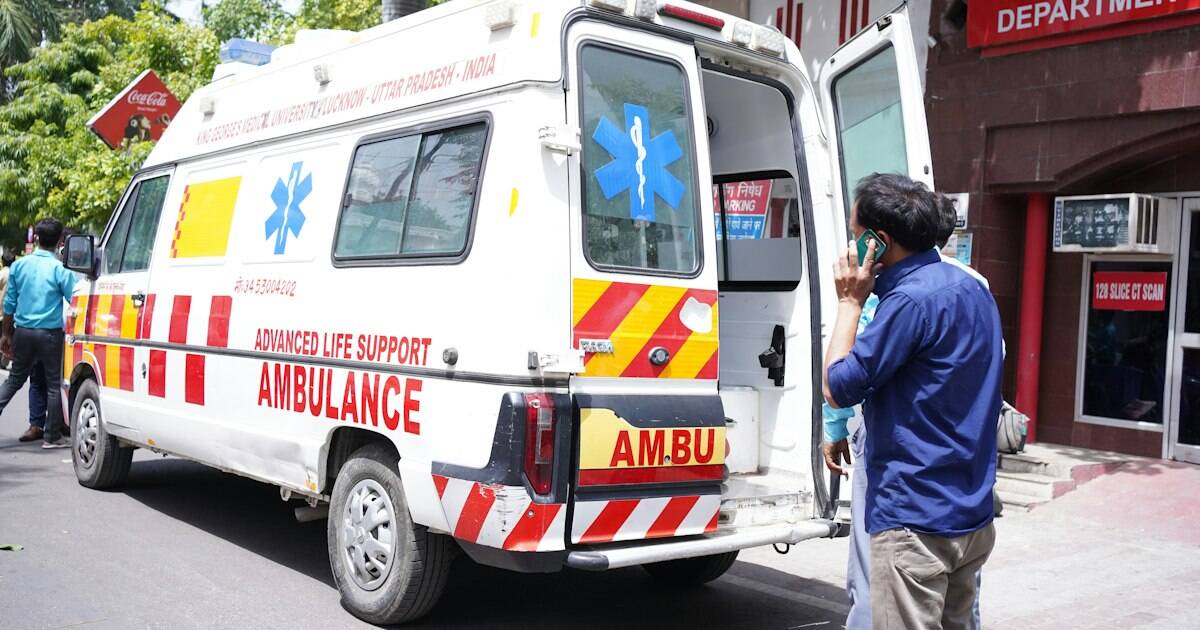
It is 11 p.m. when your father collapses in the bathroom. In the panic that follows, someone calls an ambulance, someone else searches for his medicines, and at the hospital the emergency doctor asks the questions nobody can answer quickly: "Is he diabetic? Is he on blood thinners? Any allergies? Has he had heart problems before? Where are his old reports?" Precious minutes are lost while the family digs through plastic folders and WhatsApp chats.
Emergencies are never convenient, but being unprepared makes them far more dangerous. India recorded more than 1.77 lakh road accident deaths in 2024 (Ministry of Road Transport and Highways), and the Law Commission of India has noted that proper treatment within the "golden hour" after a serious injury could prevent up to half of such deaths. The same principle applies to heart attacks, strokes, severe low blood sugar and allergic reactions: fast action and accurate health information save lives. This guide explains the emergency numbers every Indian should know, how to set up emergency medical information on your phone, what to keep in a family emergency health file, and your legal rights as a bystander and a patient.
Emergency Numbers Every Indian Family Should Know
India has been moving towards a single emergency number, 112, under the Emergency Response Support System (ERSS). In May 2026, the Supreme Court directed states to integrate helplines such as police (100), fire (101) and ambulance (108 and 102) into 112, though implementation still varies by state. Until integration is complete everywhere, it is wise to know both.
| Number | Service | When to use |
|---|---|---|
| 112 | National emergency number (police, fire, ambulance) | Any emergency, from any mobile or landline |
| 108 | Emergency ambulance (in most states) | Medical emergencies, accidents, pregnancy complications |
| 102 | Patient transport ambulance (in many states) | Pregnant women and sick infants, non-emergency transport |
| 1033 | National Highways helpline | Accidents and emergencies on national highways |
| 14567 | Elderline (national helpline for senior citizens) | Support, guidance and assistance for elderly people |
| 1098 | Childline | Children in distress or danger |
| 14416 | Tele-MANAS (mental health helpline) | Mental health crises and emotional support |
Tips:
- Save these numbers in every family member's phone, including elderly parents and domestic help
- Teach children to dial 112 and to state their address clearly
- When calling, stay calm and give: exact location with a landmark, what happened, number of people affected, and whether the person is conscious and breathing
- Smartphones sold in India have an emergency SOS shortcut, usually pressing the power button several times quickly or holding the side and volume buttons, which can call emergency services and alert your emergency contacts. Test how it works on your phone (without completing the call)
Set Up Emergency Medical Information on Your Phone
Most smartphones let you display medical details and emergency contacts on the lock screen, so a first responder or doctor can see them without unlocking your phone. Few Indians use this feature, yet it takes only five minutes.
On an iPhone: Medical ID
- Open the Health app and tap your profile picture at the top right
- Tap Medical ID, then Edit (or Get Started)
- Add your date of birth, medical conditions, allergies, medications, blood type, weight and emergency contacts
- Turn on Show When Locked, which is essential, or responders will not be able to see it
- To view it from a locked phone: swipe up or press the Home button, tap Emergency, then Medical ID
On Android phones
The menu varies by manufacturer:
- Samsung Galaxy: Settings → Safety and emergency → Medical info and Emergency contacts; turn on display on the lock screen
- Google Pixel: Open the Personal Safety app → Your info → Medical information and Emergency contacts
- Other brands: Search "emergency information" or "medical info" in Settings
- To view from a locked phone: swipe up, tap Emergency, then Emergency information
What to include (and what to avoid)
| Include | Avoid |
|---|---|
| Blood group (see our blood group test guide) | Full address |
| Major conditions: diabetes, heart disease, epilepsy, asthma, kidney disease | Bank details, Aadhaar or PAN numbers |
| Severe allergies (for example, penicillin, sulpha drugs, peanuts) | Passwords or PINs |
| Critical medicines: insulin, blood thinners, steroids, anti-epileptics | Detailed sensitive history you would not want strangers to read |
| Implants: pacemaker, stents, valve replacement | |
| Organ donor status | |
| Two or three emergency contacts |
Keep the lock-screen information short and critical. Detailed records belong in a secure medical records app or file, as described below.
For elderly parents and those with basic phones: Keep a laminated emergency card in their wallet and a copy on the fridge with the same information.
Build a Family Emergency Health File
When you reach the hospital, the emergency team needs more than a blood group. A well-organised emergency health file helps doctors make faster, safer decisions.
What to keep in your emergency health file
- Personal details: Full name, age, blood group, height and weight, and ABHA number (see our ABHA card guide)
- Current medicine list: Generic names, doses and timings. Our polypharmacy guide shows how to prepare a master medicine list.
- Allergies and past drug reactions
- Chronic conditions and the treating doctors, with phone numbers
- Baseline ECG: An old ECG helps doctors spot new changes during chest pain. Our ECG and echo guide explains why.
- Recent lab reports: HbA1c, kidney function, blood counts, INR (if on warfarin)
- Previous hospital discharge summaries (see our discharge summary guide)
- Surgery and implant details: Stent cards, pacemaker cards, joint replacement details
- Health insurance details: Policy number, TPA card and helpline (our insurance claims guide explains cashless approvals)
- Advance directive (living will), if you have made one, and organ donation pledge details (see our organ donation guide)
Paper vs digital: why you need both
A paper folder can be grabbed in a hurry, but it gets lost, outdated, or is not available when the emergency happens away from home. A digital copy can be accessed from anywhere, by any family member. When you upload your family's reports to MedicalVault, every report, prescription and discharge summary is organised and searchable on your phone. MedicalVault's family sharing feature means a sibling in another city can share the right report with the emergency doctor even if you are travelling. The MedicalVault mobile app also lets you share specific reports securely with a QR code.
Update regularly
Review the file and phone information every six months, after any hospital admission, and whenever medicines change.
Know the Warning Signs and First Steps
Being prepared also means recognising emergencies early. Call 112 or 108 immediately for:
| Emergency | Warning signs | First steps while waiting |
|---|---|---|
| Heart attack | Chest pain or pressure, pain spreading to arm, jaw or back, sweating, breathlessness | Keep the person seated and calm; follow ambulance staff instructions; see our heart attack guide |
| Stroke | BE-FAST: Balance loss, Eye/vision problems, Face drooping, Arm weakness, Speech difficulty, Time to call | Note the time symptoms started; do not give food or water; see our stroke guide |
| Cardiac arrest | Sudden collapse, no response, not breathing normally | Start hands-only CPR: push hard and fast in the centre of the chest (100-120 per minute); use an AED if available |
| Severe low blood sugar | Sweating, confusion, unusual behaviour in a diabetic | If awake and able to swallow, give sugar or glucose; see our hypoglycaemia guide |
| Severe allergic reaction | Swelling of lips or throat, difficulty breathing, rash after food, sting or medicine | Use an adrenaline auto-injector if prescribed; seek help immediately |
| Snakebite | Bite marks, pain, swelling, drowsiness or bleeding | Keep the person still and calm, immobilise the limb, rush to hospital; see our snakebite guide |
| Burns | Skin damage from fire, hot liquids or chemicals | Cool with running tap water for 20 minutes; see our burns first aid guide |
Learning basic life support (BLS) and CPR through a short course offered by hospitals, the Indian Red Cross Society or certified trainers is one of the best investments a family can make. Sudden cardiac arrest can strike even young adults, as explained in our sudden cardiac arrest guide.
Your Rights in a Medical Emergency
Protection for Good Samaritans
Many Indians hesitate to help accident victims for fear of police questioning or legal trouble. The Good Samaritan guidelines endorsed by the Supreme Court in 2016, and later given legal backing through Section 134A of the Motor Vehicles Act (added in 2019), protect people who help:
- A bystander who helps an injured person cannot be held liable for civil or criminal action
- Hospitals cannot detain a Good Samaritan or demand payment from them
- Revealing personal details to police or hospital is voluntary
- If a Good Samaritan chooses to be a witness, the questioning should be done in a single session at a convenient time and place
Emergency treatment and cashless care
- Hospitals, both government and private, are expected to provide immediate emergency care to accident victims, and the Supreme Court has repeatedly held that emergency treatment cannot be refused or delayed for legal formalities.
- The central government's cashless treatment scheme for road accident victims provides treatment at designated hospitals up to ₹1.5 lakh per victim for up to seven days after the accident. Check current details with the hospital or the 112 helpline.
- Ayushman Bharat PM-JAY beneficiaries can access cashless treatment for covered emergencies at empanelled hospitals (see our PM-JAY guide).
Your right to your medical records
After an emergency admission, you are entitled to copies of your medical records and discharge summary. Our guide on your right to medical records in India explains how to request them. Add them to your emergency file and MedicalVault as soon as you get them.
Key Takeaways
- Save 112 (national emergency), 108 (ambulance), 102, 1033, 14567 and 14416 in every family member's phone.
- Set up Medical ID (iPhone) or Emergency information (Android) on your phone with blood group, conditions, allergies, critical medicines and emergency contacts, and make sure it shows on the lock screen.
- Keep a family emergency health file with medicine lists, baseline ECG, recent reports, discharge summaries, implant cards and insurance details, in both paper and digital form.
- Learn to recognise heart attack, stroke (BE-FAST), cardiac arrest, low sugar and severe allergy, and consider a CPR course.
- India's Good Samaritan law protects people who help accident victims; emergency care cannot be refused for formalities.
- Update emergency information every six months and after every hospital visit.
- MedicalVault keeps your family's complete medical history organised, searchable and shareable, so the right information reaches the right doctor when every minute counts.