It was a Sunday evening in Bengaluru when a 32-year-old software engineer collapsed on the badminton court mid-rally. His teammates froze. He had no history of heart disease, no warning signs, no previous complaints — and yet his heart had simply stopped. He survived only because a colleague had done a CPR certification course two years earlier. Across India, this scene is playing out with disturbing frequency: healthy-looking young people dropping dead from sudden cardiac arrest with no prior diagnosis.
Sudden cardiac arrest (SCA) is not the same as a heart attack. It is not a disease of old age. And it is no longer rare among Indians under 40. The Indian Council of Medical Research (ICMR) reports that sudden cardiac deaths among those under 40 have risen sharply over the past decade, driven by a combination of genetic predisposition, rising lifestyle stress, and largely undiagnosed heart conditions. Understanding this crisis — and what you can do about it — may be the most important health conversation you have this year.
Sudden Cardiac Arrest vs Heart Attack: A Crucial Distinction
Most Indians use "heart attack" and "cardiac arrest" interchangeably. They are very different events.
A heart attack (myocardial infarction) is a circulation problem: a blocked artery cuts off blood supply to the heart muscle, which begins to die. The person is typically conscious, in pain, and has several minutes to hours to reach a hospital. Learn more about the warning signs in our heart attack guide.
A sudden cardiac arrest is an electrical problem: the heart's electrical system malfunctions, causing the heart to quiver uselessly (a condition called ventricular fibrillation) rather than pump. Blood stops circulating to the brain within seconds. The person loses consciousness and collapses, often without any warning. Without intervention, death occurs within 4–6 minutes.
The two can be connected — a heart attack can sometimes trigger a cardiac arrest — but SCA frequently occurs in people with no known coronary artery disease, particularly the young.
Why Young Indians Are at Risk
The assumption that cardiac arrest only strikes people in their 50s and 60s is dangerously outdated. A 2025 study published in the Journal of Natural Remedies documented a surge in SCA among Indian youth, and cardiologists across major cities now report seeing patients in their 20s and 30s in cardiac ICUs with alarming regularity.
Hypertrophic Cardiomyopathy (HCM)
Hypertrophic cardiomyopathy is the leading structural cause of SCA in young people worldwide, and India is no exception. In HCM, the heart muscle thickens abnormally — most often in the wall between the two lower chambers — making it harder for the heart to pump efficiently. The condition is genetic (autosomal dominant), meaning one parent carrying the gene gives a 50% chance of passing it to each child. Many people with HCM live normal lives, but the thickened muscle can disrupt the heart's electrical pathways and trigger fatal arrhythmias during intense physical exertion. HCM can be completely silent until that first and final event.
Electrical Rhythm Disorders: Long QT and Brugada Syndrome
Long QT syndrome is an inherited or acquired condition in which the heart takes abnormally long to recharge between beats. This electrical delay creates a vulnerable window during which a dangerous arrhythmia — torsades de pointes — can develop, which can degenerate into ventricular fibrillation. Certain medications (including common antibiotics like azithromycin and antihistamines like cetirizine in combination with other drugs) can prolong the QT interval even in people without an inherited predisposition.
Brugada syndrome is another genetic electrical disorder, characterised by a distinctive pattern on an ECG and a high risk of ventricular fibrillation, especially during fever or sleep. It is more common in Southeast and South Asian populations than in Europeans.
Myocarditis
Myocarditis — inflammation of the heart muscle, usually caused by a viral infection — is a growing but under-recognised cause of SCA in young Indians. A seemingly routine viral illness (including post-COVID-19 cases) can cause inflammatory damage that disrupts the heart's electrical conduction. The inflammation often resolves on its own, but if a person resumes intense exercise during or shortly after a viral illness before the inflammation clears, the risk of arrhythmia spikes dramatically.
Commotio Cordis
In young athletes playing cricket, kabaddi, football, or hockey, a sharp blow to the chest — from a ball, elbow, or fall — can trigger ventricular fibrillation through a phenomenon called commotio cordis. The chest wall does not need to be broken; the impact need only strike at a precisely vulnerable point in the heart's electrical cycle.
Lifestyle Accelerants
Beyond inherited conditions, several modern lifestyle factors are dramatically increasing risk among Indian youth:
- Energy drinks: High doses of caffeine and taurine can destabilise the heart's rhythm, particularly in those with underlying (unknown) electrical disorders. The market for energy drinks in India has grown exponentially, and consumption among students and young professionals is rampant.
- Unregulated protein supplements and anabolic steroids: Widely available in gyms with no medical oversight, anabolic steroids cause ventricular hypertrophy (thickening of the heart wall) and can directly increase arrhythmia risk.
- Extreme unaccustomed exercise: The gym boom in India has also brought a surge in people jumping from near-zero fitness to intense HIIT or heavy weight training without cardiac screening. Sudden extreme exertion on a structurally abnormal heart is a recognised SCA trigger.
- Sleep deprivation and chronic stress: IT professionals, startup founders, and medical students working 14–16-hour days exist in a state of chronic sympathetic nervous system overdrive. This raises resting heart rate, blood pressure, and the frequency of ectopic beats — all of which increase arrhythmia risk.
- Uncontrolled hypertension: With over 22 crore Indians having high blood pressure — and more than half unaware of it — hypertension-driven left ventricular hypertrophy is silently increasing the structural substrate for arrhythmias. Our hypertension guide covers how to detect and manage this risk.
Warning Signs You Must Never Ignore
SCA is called "sudden" for a reason — in many cases there are no prior warnings. However, cardiac disorders that predispose to SCA do often produce symptoms that go unrecognised or dismissed. These include:
- Unexplained fainting (syncope) — especially during or after exercise. Many young Indians attribute these episodes to "dehydration" or "low BP." A syncopal episode during exertion is a red-flag emergency and must be evaluated with an ECG and echocardiogram before resuming any physical activity.
- Palpitations — particularly rapid, irregular, or sustained heartbeats that cause dizziness or lightheadedness.
- Chest pain or pressure during exercise — not the muscle soreness of exertion but a central, heavy sensation.
- Unexplained breathlessness during moderate activity in a young person who was previously fit.
- Family history: If a first-degree relative (parent or sibling) died suddenly before the age of 50, or has been diagnosed with HCM, long QT, or Brugada syndrome, you carry a materially higher risk. This is not something to ignore.
Who Should Get Screened — and What Tests Matter
Cardiologists recommend pre-participation cardiac screening for all athletes and, increasingly, for any young Indian with risk factors. Here is what evaluation typically involves:
12-Lead ECG
A resting electrocardiogram (ECG) is the most cost-effective first-line screening tool. A 12-lead ECG can detect long QT syndrome, Brugada pattern, Wolff-Parkinson-White (WPW) syndrome, signs of HCM, and left ventricular hypertrophy. It takes five minutes and costs ₹200–500 at any diagnostic lab (SRL Diagnostics, Thyrocare, Dr. Lal PathLabs). No fasting is required.
Echocardiogram (Echo)
A 2D echocardiogram uses ultrasound to image the heart's structure and function. It is the gold-standard test for diagnosing HCM, measuring wall thickness, and assessing the ejection fraction (how efficiently the heart pumps). An echo at a private hospital in India typically costs ₹1,500–3,500 and requires no preparation.
Holter Monitor (24- or 48-Hour ECG)
If you experience palpitations or syncope, a Holter monitor — a wearable device that records your heart rhythm continuously for 24–48 hours — can capture arrhythmias that a resting ECG might miss. It is particularly useful if symptoms are intermittent.
Treadmill Stress Test (TMT)
A treadmill test (TMT) evaluates your heart's electrical activity and blood pressure response during graded exercise. It can unmask arrhythmias and ischaemia that only appear under physical stress. People with exertion-related symptoms should always have a TMT before resuming training.
Genetic Testing
For those with a family history of sudden cardiac death or an established diagnosis of HCM, long QT, or Brugada syndrome, genetic panel testing is increasingly available in India through labs like Medgenome and Neuberg Diagnostics, typically costing ₹8,000–25,000. A positive genetic result can guide screening of other family members before they experience a cardiac event.
Tracking your ECG results, echo reports, and Holter findings in a single place helps you and your cardiologist spot trends over time. MedicalVault's report upload feature allows you to store all your cardiac investigation results securely and share them with any specialist instantly.
CPR: The 4-Minute Window That Saves Lives
When SCA strikes, the only thing that stands between life and death is bystander CPR (cardiopulmonary resuscitation). The heart is in ventricular fibrillation — it is quivering, not pumping. CPR manually circulates blood to the brain until a defibrillator can restore a normal rhythm.
The survival rate from out-of-hospital SCA drops by approximately 10% for every minute that CPR is delayed. Brain death begins at around 4–6 minutes. Yet a 2024 survey by the Indian Resuscitation Council found that bystander CPR is initiated in fewer than 5% of witnessed cardiac arrests in India — a fraction of the 40–60% seen in countries like Denmark and the United States.
Hands-only CPR (no mouth-to-mouth) is effective and recommended for untrained bystanders:
- Call 112 immediately.
- Push hard and fast in the centre of the chest — aim for 100–120 compressions per minute (roughly the beat of the song Stayin' Alive).
- Do not stop until emergency services arrive or an AED is available.
Automated External Defibrillators (AEDs)
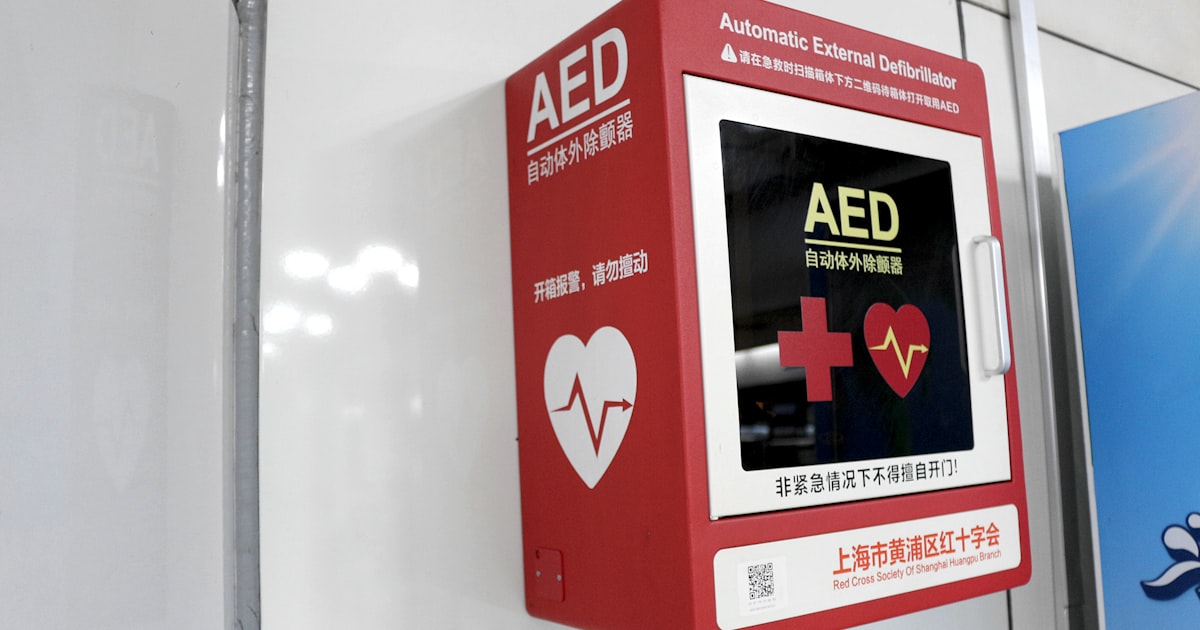
AEDs are portable devices that deliver a shock to the heart to restore normal rhythm. They are designed for use by untrained bystanders — they analyse the rhythm themselves and only deliver a shock if one is needed. AEDs are increasingly being installed in airports, metro stations, malls, gyms, and large offices in Indian cities. If you see one — learn where it is. The life you save will most likely be someone you know.
Prevention Strategies for Young Indians
SCA is not inevitable. For most people, it can be prevented with the right information:
- Get a baseline cardiac check-up before age 30 if you plan to take up competitive sport, intense gym training, or if you have a family history of heart disease or sudden death.
- Never resume exercise immediately after a viral fever or illness — wait at least 7–10 days after full recovery and get medical clearance if the illness was severe.
- Avoid energy drinks — especially before or during exercise.
- Do not use unsupervised supplements or anabolic steroids purchased from gyms without medical oversight.
- Control known risk factors: hypertension, diabetes, and dyslipidaemia all damage the heart's electrical environment over time. Use MedicalVault's trend tracking to monitor your blood pressure, blood sugar, and cholesterol readings over months and years.
- Carry your family history: If any first-degree relative had SCA or unexplained sudden death under 50, inform every doctor you visit. This history should be part of your permanent health record.
- Learn CPR — the Indian Resuscitation Council and the National Heart Institute offer one-day certification courses. Encourage your workplace and housing society to do the same.
Key Takeaways
- Sudden cardiac arrest (SCA) is an electrical emergency, not the same as a heart attack; it kills within minutes without intervention.
- Young Indians are increasingly affected due to genetic conditions (HCM, long QT, Brugada), myocarditis, energy drink and supplement misuse, and chronic stress.
- Unexplained fainting during exercise, palpitations, or a family history of sudden death before age 50 are red-flag symptoms requiring urgent cardiac evaluation.
- A 12-lead ECG, echocardiogram, and Holter monitor form the core of a pre-participation or symptomatic cardiac screening workup.
- Survival from out-of-hospital SCA depends almost entirely on bystander CPR within the first 4–6 minutes — learn CPR today.
- AEDs are designed for bystander use — know where they are in your workplace, gym, and housing complex.
- Store your ECG reports, echo results, and stress test findings on MedicalVault so your cardiologist always has your full cardiac history at hand, wherever you are.