It is October, someone in the family has had fever for three days, and the CBC report comes back with one line in bold: platelet count 68,000. By evening the WhatsApp group is full of advice about papaya leaf juice, kiwi fruit and goat's milk, and a relative is already calling blood banks for a donor. Every post-monsoon season, millions of Indian families go through this exact panic. A low platelet count can be serious, but most of the time it is a temporary effect of a viral fever that recovers on its own, and in some cases the number on the report is not even real.
This guide explains what platelets do, the normal platelet count in India, the most common causes of a low count, when a low number is actually dangerous, and what you should (and should not) do while waiting for it to recover.
What Are Platelets and What Is a Normal Platelet Count?
Platelets (thrombocytes) are tiny cell fragments made in the bone marrow. When a blood vessel is injured, platelets rush to the spot, stick together and form a plug, then help build a stable clot. Each platelet lives for only about 7 to 10 days, so the marrow is constantly producing new ones.
A low platelet count is called thrombocytopenia. A high count is called thrombocytosis.
Platelet count normal range
Most Indian labs report a normal range of roughly 1.5 to 4.5 lakh per microlitre (150,000 to 450,000/µL). Some use 1.5 to 4.1 lakh. Always read your result against the range printed on your own report.
Labs write the same number in different ways, which confuses many people:
| How the Report Shows It | What It Means |
|---|---|
| 1.5 lakh/cumm | 150,000 per microlitre |
| 150 × 10³/µL | 150,000 per microlitre |
| 150 × 10⁹/L | 150,000 per microlitre |
| 0.68 lakh/cumm | 68,000 per microlitre |
So "150" on one lab's report and "1.5" on another's are the same result. Check the unit before comparing two reports.
How low is "low"?
| Platelet Count (per µL) | Category | What It Usually Means |
|---|---|---|
| 1.5 – 4.5 lakh | Normal | No concern |
| 1 – 1.5 lakh | Mild thrombocytopenia | Common during viral fevers; usually no bleeding risk |
| 50,000 – 1 lakh | Moderate | Needs monitoring and a look for the cause; bleeding is uncommon |
| 20,000 – 50,000 | Severe | Higher risk with injury or surgery; close medical follow-up |
| Under 20,000 | Very severe | Risk of spontaneous bleeding rises; often needs hospital care |
| Under 10,000 | Critical | Doctors may consider platelet transfusion even without bleeding |
These bands are a general guide. How you feel, whether you are bleeding, and the underlying cause matter more than a single number.
Common Causes of Low Platelet Count in India
Infections: the biggest cause after the monsoon
- Dengue is the most talked-about cause. Platelets typically fall between days 3 and 7 of fever (the "critical phase") and start recovering on their own within a few days. Read our dengue test guide for NS1, IgM and IgG testing.
- Malaria, both falciparum and vivax, frequently lowers platelets. See our malaria guide.
- Scrub typhus, leptospirosis and typhoid are common post-monsoon causes that are sometimes missed when everyone assumes it is dengue.
- Other viral fevers, including chikungunya, influenza and hepatitis viruses, can cause a mild dip.
- Sepsis (severe bacterial infection) can cause a sharp fall and needs urgent hospital care.
Pseudothrombocytopenia: when the count is not real
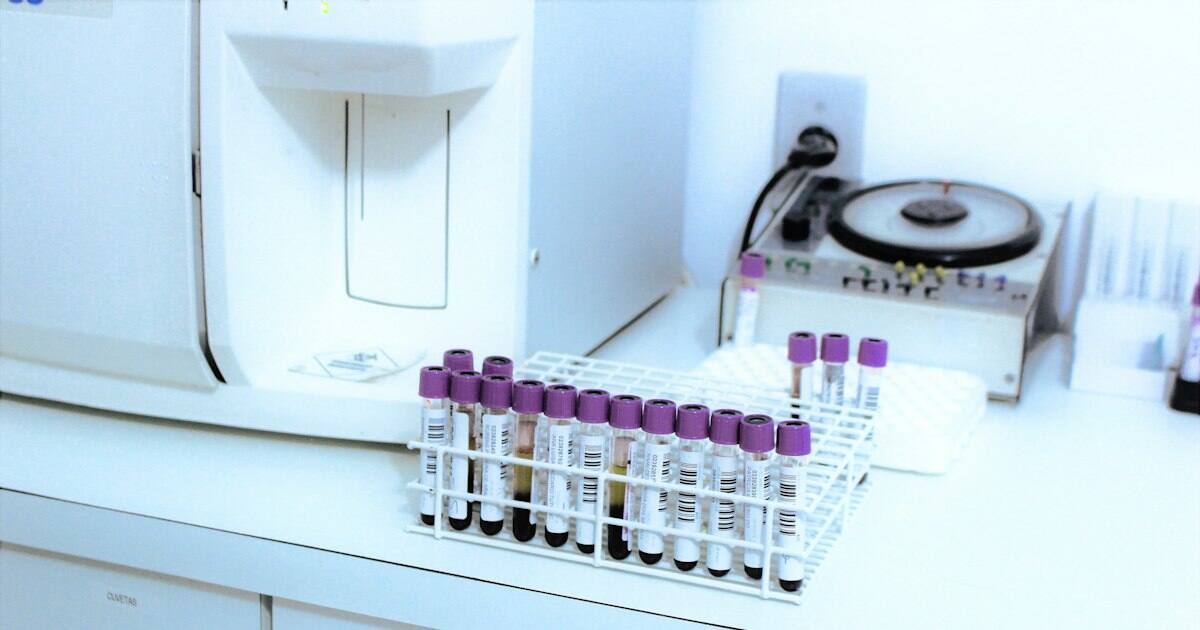
Most labs collect blood for a CBC in a purple-top tube containing an anticoagulant called EDTA. In about 1 in 1,000 people, EDTA makes platelets clump together in the tube. The analyser counts each clump as one large cell, or misses it entirely, so the report shows a falsely low count, sometimes below 50,000, in a person who is perfectly healthy.
Clues to pseudothrombocytopenia:
- No bruising or bleeding despite a "very low" count
- The person feels completely well
- The lab comments "platelet clumps seen" on the report
The fix is simple: the doctor asks for a peripheral smear and a repeat count in a citrate (blue-top) tube. This can save weeks of unnecessary worry and investigations.
Giant platelets in eastern and north-eastern India
A harmless inherited condition called asymptomatic constitutional macrothrombocytopenia (sometimes called Harris platelet syndrome) is surprisingly common among healthy people from West Bengal, Odisha, Bihar, Assam and neighbouring regions. These individuals have fewer but much larger platelets. Automated machines often undercount them, so reports show 70,000 to 1.2 lakh, while the total platelet mass and clotting ability are normal. A smear showing giant platelets and a normal bleeding history usually settles the matter. If you come from these regions and have always had a "low" count, mention it to your doctor.
Nutritional deficiency
Vitamin B12 and folate deficiency are widespread in India, especially among vegetarians, and can lower platelets along with haemoglobin and white cells. See our vitamin B12 deficiency guide.
Immune thrombocytopenia (ITP)
In ITP, the immune system destroys the body's own platelets. In children it often follows a viral infection and usually resolves within weeks to months. In adults it is more often long-lasting. Treatment, when needed, may include steroids, immunoglobulin or medicines that stimulate platelet production, all under a haematologist's care.
Other causes
- Liver disease and alcohol: Cirrhosis enlarges the spleen, which traps platelets. See our liver cirrhosis guide.
- Medicines: Heparin, some antibiotics (such as linezolid), anti-epileptics (such as valproate), quinine and certain chemotherapy drugs.
- Pregnancy: A mild fall (gestational thrombocytopenia) is common and harmless, but a sharp drop with high blood pressure can signal HELLP syndrome, which needs urgent care.
- Bone marrow conditions: Aplastic anaemia, leukaemia and other blood cancers, usually with abnormalities in other blood counts too. Our blood cancer guide explains warning signs.
When Is a Low Platelet Count Dangerous?
The single most important point: in dengue, the platelet count alone is not the best measure of danger. Plasma leakage, shown by a rising haematocrit (PCV), falling blood pressure and dehydration, is what makes dengue life-threatening. Many patients with 30,000 platelets do well, while some with 80,000 deteriorate because of fluid leakage.
Bleeding warning signs
See a doctor promptly if you notice:
- Pinpoint red or purple spots on the skin (petechiae), especially on the legs
- Unexplained bruises
- Bleeding gums or nosebleeds that do not stop
- Unusually heavy menstrual bleeding
Go to the emergency immediately if there is:
- Vomiting blood or material that looks like coffee grounds
- Black, tarry stools or blood in urine
- Severe headache, confusion or drowsiness
- Severe abdominal pain, persistent vomiting, or cold, clammy hands and feet
- Fainting or difficulty breathing
What the other CBC numbers tell your doctor
Your CBC report includes platelet indices alongside the count:
| Parameter | Typical Range | What It Suggests |
|---|---|---|
| MPV (Mean Platelet Volume) | 7.5 – 11.5 fL | High MPV with low count suggests the marrow is actively producing young platelets (as in ITP or recovery from dengue) |
| PDW (Platelet Distribution Width) | 9 – 17 fL | Variation in platelet size |
| P-LCR (Platelet Large Cell Ratio) | 13 – 43% | Proportion of large platelets; high in giant platelet disorders |
| PCT (Plateletcrit) | 0.17 – 0.35% | Total platelet mass; may be normal in giant platelet conditions despite a "low" count |
Our CBC report guide explains the rest of the report.
Platelet Transfusion: When It Is Really Needed
During every dengue season, Indian blood banks face a rush for platelets, often for patients who do not need them. The Government of India's National Center for Vector Borne Diseases Control (NCVBDC) guidance on dengue is clear:
- Prophylactic platelet transfusion is not recommended when the count is above 10,000/µL in a patient who is not bleeding.
- Transfusion is considered when the count falls below 10,000 or when there is significant active bleeding.
- Most dengue patients recover their platelet count without any transfusion.
Unnecessary transfusions carry real risks, including reactions, infection and fluid overload, and they divert a scarce resource from patients who truly need it.
RDP vs SDP
| Type | What It Is | Typical Effect |
|---|---|---|
| RDP (Random Donor Platelets) | Separated from a single whole blood donation; several units are often pooled | Each unit raises the count modestly |
| SDP (Single Donor Platelets / apheresis) | Collected from one donor using a machine | One unit equals roughly 4 to 6 RDP units; costs more |
If your doctor recommends a transfusion, ask which type and how many units are needed. SDP processing charges at private blood banks commonly run into five figures, so it is worth understanding the plan. Our blood donation guide explains how families can help by donating.
What to Do (and Avoid) While Platelets Recover
Do
- Get the cause diagnosed. A low count is a finding, not a diagnosis. Fever plus low platelets needs dengue, malaria and sometimes scrub typhus testing.
- Repeat the CBC as advised, often daily during the critical phase of dengue. Try to use the same lab so results are comparable.
- Drink adequate fluids (ORS, coconut water, soups, buttermilk, nimbu paani) unless your doctor has restricted fluids.
- Use paracetamol for fever, within the dose your doctor recommends.
- Rest and avoid contact sports, heavy lifting and activities with a risk of falls.
- Use a soft toothbrush and an electric razor rather than a blade.
Avoid
- Aspirin, ibuprofen, diclofenac, aceclofenac and nimesulide for fever or body ache. These painkillers affect platelet function and increase bleeding risk, and are best avoided in suspected dengue.
- Intramuscular injections when the count is very low.
- Demanding platelet transfusion simply because the number is low.
- Self-medicating with steroids or unverified "platelet boosters".
What about papaya leaf extract?
Papaya leaf juice and extract tablets are widely used in India. A few small Indian studies have reported a slightly faster rise in platelet count, but the evidence is limited and has not shown a clear reduction in serious complications or hospital stays. Papaya leaf is not a substitute for medical monitoring. If you want to try it, discuss it with your doctor, especially if you are pregnant, take other medicines, or have liver or kidney disease. Kiwi fruit, pomegranate and goat's milk are healthy foods, but there is no good evidence that they raise platelets faster.
Cost of testing
A CBC with platelet count usually costs ₹200 to ₹500 at Indian lab chains such as Dr. Lal PathLabs, Thyrocare, Metropolis, SRL (Agilus) and Redcliffe, and much less at government hospitals. A standalone platelet count is cheaper, and a peripheral smear examination adds a modest charge. Home sample collection is widely available; see our home sample collection guide.
Tracking Platelet Counts: Why the Trend Matters
In dengue and other fevers, doctors make decisions based on the direction of the platelet count and haematocrit over several days, not on one reading. A count of 40,000 that was 25,000 yesterday is good news; a count of 90,000 that was 1.6 lakh yesterday needs closer watching.
During a dengue illness you may end up with five or six CBC reports in a week, from different labs, some as paper printouts and some as WhatsApp PDFs. When you upload your reports to MedicalVault, the platelet count, haematocrit and white cell count are extracted automatically, and MedicalVault's trend analysis plots them day by day so the doctor sees the full picture in seconds. If a parent is unwell in another city, the family sharing feature lets you follow each new result as soon as it is uploaded.
Key Takeaways
- A normal platelet count is about 1.5 to 4.5 lakh/µL; check units, because "150" and "1.5 lakh" mean the same thing.
- In India, dengue, malaria, scrub typhus and other post-monsoon fevers are the most common causes of a low platelet count, and most recover without transfusion.
- A surprisingly low count in a well person may be pseudothrombocytopenia (EDTA clumping) or inherited giant platelets, common in eastern India; a smear and citrate tube repeat can clarify.
- Bleeding signs, severe abdominal pain, persistent vomiting and drowsiness matter more than the number alone; seek urgent care if they appear.
- Government dengue guidance does not support prophylactic platelet transfusion above 10,000/µL without bleeding.
- Use paracetamol for fever and avoid aspirin, ibuprofen and diclofenac; discuss papaya leaf extract with your doctor before using it.
- Keep every CBC in one place and watch the trend; MedicalVault makes daily platelet tracking during an illness simple for the whole family.