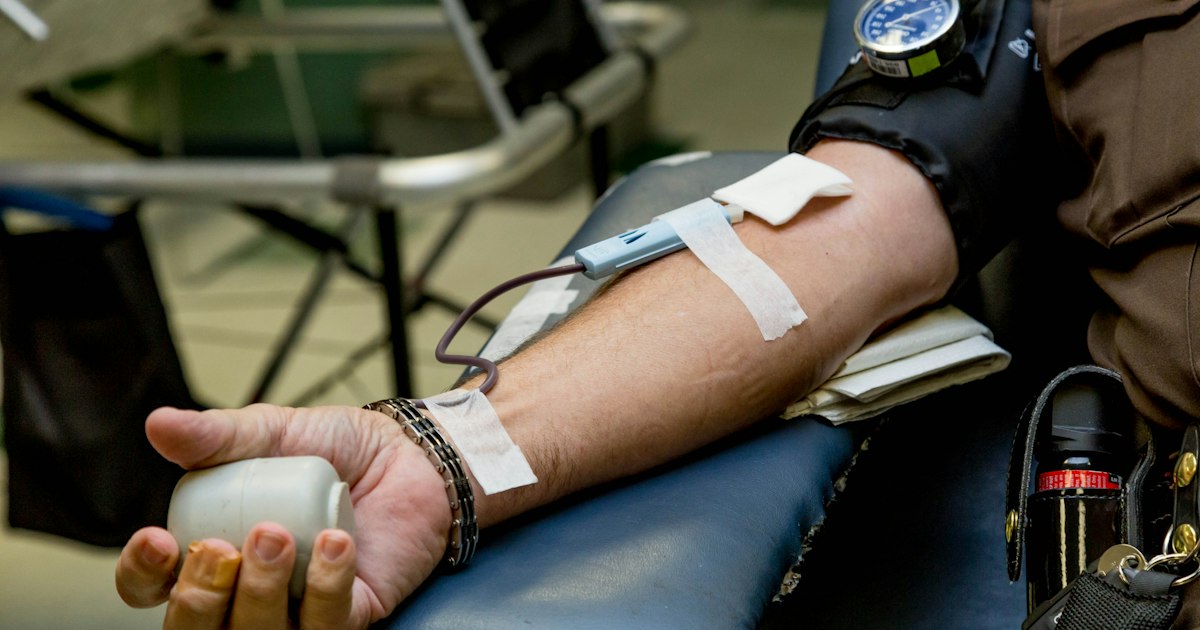
Every two seconds, someone in India needs blood — after a road accident, during childbirth, in a cancer ward, or in the middle of a routine surgery that goes slightly wrong. Yet most of us only think about blood donation when a WhatsApp forward asks for a rare group at 2 a.m., or when a relative is stuck in a hospital corridor waiting for a replacement unit. The truth is more reassuring than that panic suggests: India now collects more blood than ever before, but the system still runs on the goodwill of ordinary, healthy adults showing up on an ordinary Tuesday.
This guide explains exactly who can donate blood in India, what actually happens during and after donation, why voluntary donors matter so much, and how to make it a habit rather than a one-time favour to a friend.
Why Blood Donation Matters in India
India collected roughly 1.46 crore (14.6 million) units of blood in 2024–25, a jump of about 15% over the previous year, according to data tracked through the government's eRaktKosh network. That sounds like a lot until you remember the scale of the country: multiple units are needed for every major surgery, every road traffic accident, every delivery with complications, and every round of chemotherapy for a blood cancer patient. Thalassemia patients alone may need a transfusion every 2-4 weeks for life — a reality covered in our thalassemia guide.
The encouraging part of the story is the shift towards voluntary, unpaid donation. Around 74-75% of all blood collected in India now comes from voluntary donors rather than family replacement donors or paid donors, a category the World Health Organization considers the safest source of blood because voluntary donors have no financial incentive to hide risk factors. This is a huge improvement from earlier decades, but it also means the system depends entirely on healthy people choosing to donate — there is no factory that manufactures blood.
Blood cannot be manufactured, has a limited shelf life (whole blood lasts about 35-42 days refrigerated, platelets only about 5 days), and every unit donated today may already be needed by tomorrow evening. That is why blood banks run camps continuously rather than stockpiling once a year.
Who Can Donate Blood in India: Eligibility Criteria
The National Blood Transfusion Council (NBTC), under India's Ministry of Health and Family Welfare, sets the eligibility rules that every blood bank in the country follows.
| Criterion | Requirement |
|---|---|
| Age | 18 to 65 years (some centres accept experienced repeat donors up to 70) |
| Weight | Minimum 45 kg (some modern collection units require 50 kg for a full 450 ml unit) |
| Haemoglobin | At least 12.5 g/dL |
| Pulse | 50-100 beats per minute, regular rhythm |
| Blood pressure | Systolic 100-180 mmHg, diastolic 60-100 mmHg |
| Body temperature | Normal (no fever on the day) |
| Interval between donations | Minimum 3 months (90 days) for whole blood |
Who Should NOT Donate (Temporarily or Permanently)
Doctors at the blood bank screen every donor before collection. You may be temporarily deferred if you:
- Have had a fever, cold, or infection in the last 2 weeks
- Have taken antibiotics in the last 2 weeks
- Are pregnant, or have delivered/breastfed within the last 12 months
- Have had a tattoo, piercing, or dental extraction in the last 6-12 months
- Have travelled recently to a malaria-endemic area (deferral period varies)
- Have had a recent vaccination (deferral period depends on the vaccine type)
- Have low haemoglobin — a common reason for deferral among Indian women, given the country's high burden of iron deficiency anaemia
- Are menstruating and feeling unwell (many centres allow donation during periods if haemoglobin and general health are fine — this is a personal comfort decision, not a blanket rule)
You may be permanently ineligible if you have a history of Hepatitis B or C, HIV, or certain chronic conditions such as uncontrolled heart disease or cancer. Having well-controlled hypertension or diabetes does not automatically disqualify you — many donors with controlled blood pressure or blood sugar on medication are still eligible, so it is worth asking the medical officer at the camp rather than assuming you cannot donate.
What Happens When You Donate Blood
Many first-time donors avoid donating simply because the process feels unfamiliar. Here is what actually happens, start to finish:
1. Registration and Screening (10-15 minutes)
You fill a form with basic health history, then a doctor checks your haemoglobin (a quick finger-prick test), blood pressure, pulse, weight, and temperature.
2. The Donation Itself (8-10 minutes)
A sterile, single-use needle is used — there is zero risk of contracting an infection from donating blood, since every needle and collection bag is used once and discarded. You will typically give 350 ml or 450 ml, which is less than 10% of your total blood volume. Most people feel nothing more than a brief pinch.
3. Rest and Refreshment (10-15 minutes)
After donation, you rest for a few minutes and are given juice, biscuits, or a light snack to help your body stabilise. Mild light-headedness is normal and passes quickly with rest and fluids.
4. Recovery
Your body replaces the plasma volume within 24-48 hours and the red blood cells within about 4-6 weeks. Most donors resume normal activity the same day, though doctors advise avoiding heavy lifting or strenuous exercise for the rest of that day.
Types of Blood Donation
Not all donations are the same "whole blood" draw most people picture:
- Whole blood donation: The standard donation — 350-450 ml collected in about 10 minutes, usable for multiple patients after separation into components.
- Platelet (SDP/apheresis) donation: A machine separates platelets and returns the rest of your blood to you. Takes 60-90 minutes but can be done more frequently (every 2 weeks, up to 24 times a year) and is critical for cancer and dengue patients — relevant if you have read our dengue guide, since platelet transfusions are sometimes needed in severe dengue.
- Plasma donation: Similarly collected via apheresis, used for burns, clotting disorders, and critical care patients.
Component Separation: Why One Donation Helps Up to 3 Patients
A single unit of whole blood is rarely transfused as-is. Most blood banks in India separate each donation into red blood cells, plasma, and platelets, meaning one donation can potentially help up to three different patients — a trauma patient needing red cells, a burns patient needing plasma, and a dengue or leukaemia patient needing platelets. As of recent government data, 72% of blood centres in India now have component separation units, up sharply from a decade ago, which has meaningfully stretched the impact of every single donation.
Common Myths About Blood Donation
| Myth | Reality |
|---|---|
| Donating blood makes you weak | A healthy adult's body replaces the donated volume within days; there is no lasting weakness |
| You can get an infection from donating | Impossible — needles and bags are sterile, single-use, and discarded after one donation |
| Diabetics and people on BP medication cannot donate | Many with well-controlled diabetes or hypertension are eligible — ask the screening doctor |
| Vegetarians cannot donate | Diet has no bearing on eligibility as long as haemoglobin and other parameters are normal |
| You can donate as often as you like | Whole blood donation is capped at once every 3 months to protect donor health |
| Blood donation camps are unsafe | Camps run by NBTC-accredited blood banks follow the same sterile protocols as hospitals |
How and Where to Donate Blood in India
You can donate at:
- Government and private hospital blood banks
- Voluntary blood donation camps organised by NGOs, Rotary/Lions clubs, colleges, corporates, and religious institutions, especially around World Blood Donor Day (14 June) and festivals
- Standalone blood banks run by organisations like the Indian Red Cross Society
The eRaktKosh portal (e-raktkosh.mohfw.gov.in), run by the Ministry of Health and Family Welfare, lets you locate the nearest blood bank, check real-time blood group availability, and find upcoming donation camps in your city — genuinely useful if a family member needs a specific blood group urgently.
Cost
Donating blood costs you nothing. If you ever need a transfusion later, having a personal record of your blood group, past donations, and any transfusion reactions can speed up hospital paperwork considerably — something you can track alongside your blood group and Rh factor test results once uploaded to MedicalVault.
Why Keeping Your Blood Donation and Group Records Matters
Most Indians do not know their exact blood group and Rh factor until an emergency forces the question. Once you know yours — through a donation camp, a routine test, or a dedicated blood group test — it is worth keeping that report somewhere reliable rather than trusting memory. Uploading your reports to MedicalVault keeps your blood group, past donation dates, and any deferral notes in one place, so you or a family member is never scrambling to find this information during an emergency. MedicalVault's family sharing feature also means an adult child living in another city can instantly check a parent's blood group before an urgent hospital admission, without a frantic phone call first.
When You Should NOT Donate Right Now
Always postpone donation, and consult your doctor first, if you:
- Currently have a fever, cold, cough, or any active infection
- Are on antibiotics or certain other medications
- Have donated whole blood in the last 3 months
- Feel unusually fatigued, dizzy, or unwell on the day
- Have a haemoglobin level below 12.5 g/dL (get it checked; a related concern may be vitamin B12 or iron deficiency)
The screening doctor at every camp is trained to make this call — never feel pressured to donate if you are not feeling well, and never hide relevant health information to "help" someone faster. Safe blood for the recipient always comes first.
Key Takeaways
- India collected about 14.6 million units of blood in 2024-25, with roughly 74-75% coming from voluntary, unpaid donors — the safest source recognised by the WHO.
- You can donate if you are 18-65 years old, weigh at least 45 kg, have haemoglobin above 12.5 g/dL, and are generally healthy, with a minimum 3-month gap between whole blood donations.
- The process is quick (donation itself takes about 10 minutes), uses sterile single-use equipment, and carries zero infection risk to the donor.
- Common conditions like well-controlled diabetes or hypertension do not automatically disqualify you — always ask the screening doctor rather than assuming.
- One donation, after component separation, can help up to three different patients through separated red cells, plasma, and platelets.
- Use the eRaktKosh portal to find blood banks, camps, and real-time availability in your city during emergencies.
- Keeping a record of your blood group and donation history on MedicalVault means your family always has this information on hand when it matters most.
Always consult a qualified doctor or the medical officer at your nearest blood bank if you are unsure about your personal eligibility to donate.