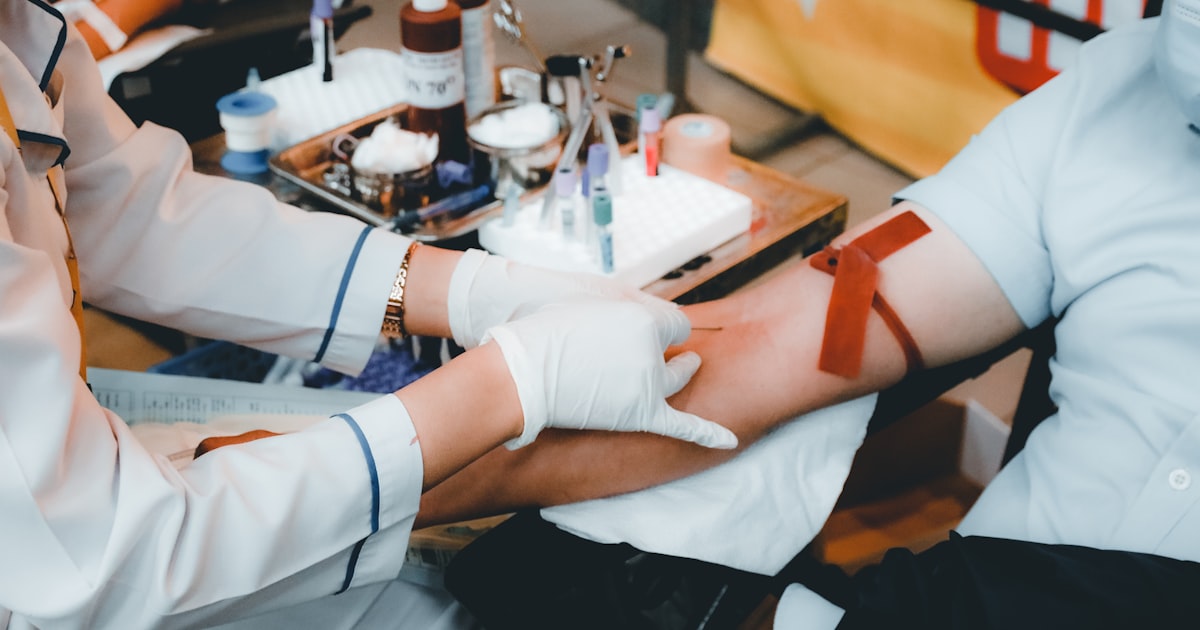
A decade ago, getting a blood test meant taking half a morning off work, standing in a queue at a diagnostic centre, and coming back a few days later to collect a printed report. Today, in most Indian cities, you can book a full body checkup on an app before bed and have a phlebotomist ringing your doorbell by 7 a.m. the next morning. Home sample collection has quietly become one of the biggest shifts in how urban India accesses routine healthcare — but with that convenience comes a new set of questions: Is a report from a home-collected sample as reliable as one from a lab? How do you tell a trustworthy provider from a fly-by-night one? And what do you do with the digital report once it lands in your inbox?
This guide walks through how home sample collection and lab-test apps actually work in India, what to check before you book one, and how to make sure the results are usable long after the app notification disappears.
How Home Sample Collection Actually Works
The model is straightforward on the surface: you select tests on an app or website, choose a time slot, and a phlebotomist visits your home to draw blood or collect other samples (urine, stool, swabs). The sample is then transported in a temperature-controlled kit to a central or regional laboratory for processing, and results are delivered digitally, typically within 24–48 hours.
Several large players now operate this model at national scale, including Thyrocare, Healthians, Redcliffe Labs, and platforms like PharmEasy and 1mg that aggregate testing from partner labs. Traditional diagnostic chains such as Dr. Lal PathLabs, Metropolis Healthcare, and Apollo Diagnostics have also added home collection alongside their walk-in centres. Some providers advertise collection within 60–90 minutes of booking in metro areas, and same-day report delivery for routine panels.
Why It Has Grown So Fast
A few India-specific factors explain the rapid adoption:
- Time poverty in metros: With long commutes and demanding work schedules, avoiding a trip to a diagnostic centre — and the accompanying wait — is a meaningful convenience, not a luxury.
- Elderly and homebound patients: For ageing parents or anyone with mobility issues, especially in joint families where adult children coordinate care remotely, home collection removes a genuine barrier to getting regular tests done.
- Preventive health check culture: The rise of annual "full body checkup" packages, often bundled at aggressive prices, has normalised routine testing even for people with no symptoms.
- Post-pandemic comfort with remote services: The same shift that normalised teleconsultations made home collection for diagnostics feel unremarkable rather than unusual.
Is a Home-Collected Sample as Accurate as a Lab Visit?
This is the most common concern, and the honest answer is: it depends far more on the laboratory processing the sample than on where the needle went in.
Once blood is drawn, its accuracy depends on correct collection technique, proper storage and transport temperature, and — most importantly — the quality standards of the laboratory that actually runs the test. A sample collected at home by a trained phlebotomist and analysed in a properly accredited lab is generally considered comparable in accuracy to a sample collected at the lab itself, provided cold-chain transport protocols are followed correctly.
Where accuracy genuinely suffers is with finger-prick capillary tests rather than proper venous blood draws. Finger-prick samples, often used in small point-of-care devices for glucose or cholesterol screening, are more prone to contamination and dilution errors than a venous draw and are best treated as a quick indicator rather than a diagnostic-grade result. If a provider offers a full lab panel (like a lipid profile or HbA1c) via finger-prick rather than venous draw, treat the result with more caution and consider confirming with a standard blood draw.
The One Certification That Actually Matters: NABL
The single most important thing to check before booking any diagnostic service in India — home collection or otherwise — is whether the processing laboratory is NABL accredited (National Accreditation Board for Testing and Calibration Laboratories). NABL accreditation is not mandatory for diagnostic labs in India, which has created a real quality gap in the market: some smaller or newer players cut corners on equipment calibration, quality control, and technician training.
Most apps display their lab's NABL and/or ISO certification on the booking page or the final report itself — if you cannot find this information, treat it as a red flag rather than an oversight.
What to Check Before Booking
| Factor | Why It Matters | What to Look For |
|---|---|---|
| Lab accreditation | Determines reliability of results | NABL and/or CAP accreditation clearly stated |
| Sample type | Venous draws are more reliable than finger-prick for lab panels | Confirm venous blood draw for anything beyond basic glucose screening |
| Cold chain | Improper storage/transport can degrade samples | Provider should mention temperature-controlled transport |
| Phlebotomist training | Reduces risk of poor technique, bruising, contamination | Check reviews specifically mentioning collection experience |
| Turnaround time | Affects how quickly you or your doctor can act | 24–48 hours is typical for routine panels; verify before urgent tests |
| Report format | Determines whether you can actually use the data later | PDF with clear reference ranges; avoid image-only reports where possible |
| Fasting instructions | Many panels (lipid, glucose) require 8–12 hour fasting | App should clearly specify fasting requirements before the visit |
Common Mistakes People Make When Booking
A few avoidable errors show up repeatedly with first-time users of home collection services:
- Not fasting correctly. Lipid profiles and fasting glucose tests require 8–12 hours without food (water is fine). Booking an early morning slot without fasting overnight, or eating breakfast before the phlebotomist arrives because the visit was delayed, quietly invalidates the results.
- Booking based on price alone. The cheapest "mega health checkup" package is not always the best value if it excludes clinically relevant tests your doctor has actually asked for, or bundles in tests you do not need.
- Ignoring medication timing. Certain tests (thyroid panels, some hormone tests) can be affected by when you take your regular medication. Ask the app's support chat or your doctor if any medicines should be paused or timed around the test.
- Forgetting to check the report before archiving it. Skim the reference ranges before filing the report away — a value marked outside normal range deserves a follow-up conversation with your doctor, not just a saved PDF.
Costs and What's Typically Included
Pricing varies significantly by city and package, but home collection is often priced comparably to, or only slightly higher than, walk-in lab visits, since providers absorb the collection cost as part of customer acquisition. Basic packages (CBC, blood sugar, lipid profile) commonly range from roughly ₹300–₹800, while comprehensive "full body checkup" packages covering 60–100+ parameters — including thyroid, liver, kidney, vitamin D, and B12 panels — often run between ₹1,000 and ₹3,000, frequently with free home collection included. Always compare what is actually included in a "full body" package rather than choosing based on the headline price alone; some packages pad the parameter count with tests of limited clinical value while omitting more clinically important ones like HbA1c or a proper thyroid panel.
When Home Collection Is (and Isn't) the Right Choice
Home collection works well for routine, non-urgent testing: annual checkups, monitoring a known chronic condition like diabetes or thyroid disease, or tests your doctor has asked you to repeat periodically. It is particularly valuable for elderly parents managing multiple chronic conditions, where a lab visit is a genuine physical burden, and for busy professionals who would otherwise delay or skip preventive testing altogether.
It is less suitable for situations requiring immediate clinical judgement — for instance, tests ordered during an acute illness where a doctor needs same-day results to guide urgent treatment, or specialised tests (like certain hormone panels requiring precise timing) that may need to be done at a hospital-affiliated lab. When in doubt, ask your treating doctor whether a particular test is appropriate for home collection or needs to be done at a clinical facility.
After the Report Arrives: Don't Let It Get Lost in the App
This is where a genuine gap tends to open up. Each diagnostic app stores your reports within its own ecosystem — useful while you are an active customer of that particular provider, but fragmented the moment you switch providers for a better price on your next checkup, which many price-conscious Indian consumers do regularly. A year from now, your CBC from Healthians, your thyroid panel from Thyrocare, and your lipid profile from a hospital lab visit may be sitting in three different apps, none of which talk to each other or to your doctor's records.
This fragmentation defeats one of the biggest benefits of regular testing: the ability to see trends over time. A single HbA1c reading tells you where you stand today; three years of HbA1c readings, tracked consistently regardless of which lab ran the test, tell you whether your diabetes management is actually working.
The practical fix is to treat every diagnostic app as a temporary mailbox, not a permanent archive. As soon as a report is ready, download it and upload it to MedicalVault, where OCR automatically extracts the test names, values, and reference ranges regardless of which lab generated the report. This gives you a single, provider-agnostic timeline of your health data, and lets you use MedicalVault's trend analysis to track any parameter — cholesterol, HbA1c, thyroid hormones, vitamin D — across every test you have ever taken, no matter which app or lab originally produced it. If you are coordinating testing for elderly parents who use home collection services themselves, family sharing means their reports land directly in your view too, without you needing login access to every diagnostic app they use.
For related reading on making sense of what these panels actually show, see our guides on understanding your CBC report and the complete guide to lipid profile and cholesterol testing, two of the most commonly ordered tests in any home collection package.
Key Takeaways
- Home sample collection has grown rapidly across Indian cities through players like Thyrocare, Healthians, Redcliffe Labs, and aggregators like PharmEasy and 1mg.
- Accuracy depends primarily on the processing laboratory's quality standards, not on where the sample was physically collected — provided proper venous draw and cold-chain transport are used.
- Always check for NABL accreditation before booking; it is not mandatory in India, so the responsibility falls on the consumer to verify it.
- Prefer venous blood draws over finger-prick sampling for any panel beyond basic glucose screening.
- Compare "full body checkup" packages on clinical relevance of included tests, not just headline pricing.
- Home collection is best suited for routine and preventive testing, not for acute, urgent, or highly time-sensitive clinical situations.
- Treat every diagnostic app as temporary storage — upload reports to a dedicated platform like MedicalVault so your health history stays continuous and searchable, regardless of how often you switch providers.
The convenience of a phlebotomist at your doorstep is real, and it has made routine testing more accessible to millions of Indians who would otherwise put it off. The part that still requires a little discipline from you is making sure the results outlive the app that delivered them.