A cough that won't go away after three weeks. A low-grade fever every evening. Weight dropping without trying. In most countries these symptoms would lead to a long list of possible causes. In India, any good doctor will ask one question first: could this be tuberculosis? India carries about a quarter of the world's TB burden, and a fast, accurate TB test is the most important step between those first symptoms and a cure.
The trouble is that "TB test" can mean many different things. Your doctor might order a Mantoux skin test, a QuantiFERON blood test, a sputum smear, a CBNAAT or TrueNat, or a chest X-ray. Some of these detect active disease, some only show past exposure, and at least one blood test that some clinics still offer has been banned in India since 2012. This guide explains each TB test, what the results mean, what they cost, and how to get tested free under India's national TB programme.
Why TB Testing Matters So Much in India
According to the WHO Global TB Report 2025, India's TB incidence fell by 21%, from 237 per lakh population in 2015 to 187 per lakh in 2024. That is almost double the global rate of decline. Even so, India still accounts for roughly 25% of the world's TB cases, and more than 25 lakh cases are notified every year under the National TB Elimination Programme (NTEP).
A large share of patients first see a private doctor. The India TB Report 2024 found that nearly a third of notified cases came from the private sector. That is why it matters for every Indian family to know which tests are reliable and which are not.
TB is also no longer just a disease of the lungs or of poverty. It can affect lymph nodes, the spine, the abdomen, the brain and the kidneys. People with diabetes, HIV, kidney disease, malnutrition, those on steroids or biologic medicines, and smokers all have a higher risk.
Symptoms that should prompt a TB test
- Cough for 2 weeks or more, with or without sputum
- Coughing up blood
- Evening fever and night sweats
- Unexplained weight loss and loss of appetite
- Persistent tiredness
- Painless swelling in the neck (lymph nodes)
- Chest pain or breathlessness
NTEP also encourages testing for close contacts of a person with TB, even if they have no symptoms.
Active TB vs Latent TB: Two Different Questions
Before choosing a test, it helps to understand the two states of TB infection:
| Active TB disease | Latent TB infection (LTBI) | |
|---|---|---|
| What is happening | TB bacteria are multiplying and causing disease | Bacteria are dormant, held in check by the immune system |
| Symptoms | Usually present | None |
| Infectious to others | Yes (if in lungs or throat) | No |
| Main tests | Sputum CBNAAT/TrueNat, smear, culture, chest X-ray | Mantoux (TST) or IGRA |
| Treatment | Full TB treatment (usually 6 months or more) | Short preventive therapy for selected people |
A large share of Indian adults are estimated to carry latent TB, and most of them will never fall ill. This is why a positive Mantoux or IGRA alone does not mean you have TB disease. It only means you have been infected at some point.
Tests That Diagnose Active TB
CBNAAT (GeneXpert) and TrueNat: the rapid molecular tests
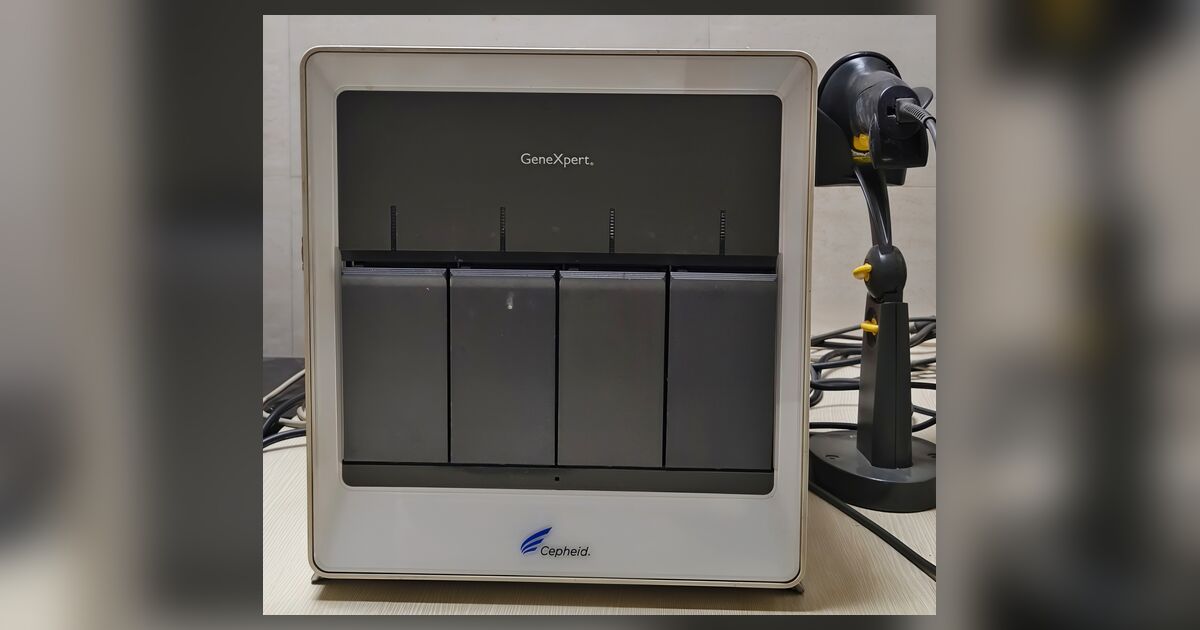
CBNAAT (Cartridge-Based Nucleic Acid Amplification Test, also known by the brand GeneXpert) and TrueNat (a chip-based test developed in India) detect the DNA of Mycobacterium tuberculosis directly in a sample. They are now the preferred first test for TB in India.
- Sample: usually sputum. Lymph node aspirates, pleural fluid, CSF, urine and tissue samples can also be tested for TB outside the lungs.
- Time: results in about 2 hours, often available the same or next day.
- Bonus information: both tests also check for rifampicin resistance, the key marker of drug-resistant TB (MDR-TB).
- Accuracy: much more sensitive than a sputum smear, especially in people with HIV and children.
How to read a CBNAAT/TrueNat report:
| Result | Meaning |
|---|---|
| MTB not detected | No TB DNA found in this sample. Doesn't fully rule out TB if symptoms persist |
| MTB detected, rifampicin resistance not detected | TB confirmed; first-line drugs are likely to work |
| MTB detected, rifampicin resistance detected | Possible drug-resistant TB; further tests (line probe assay, culture) needed |
| MTB detected, rifampicin resistance indeterminate | TB confirmed; resistance test needs repeating |
The report may also grade the amount of bacteria as "very low", "low", "medium" or "high".
Sputum smear microscopy (AFB stain)
The oldest TB test looks for acid-fast bacilli (AFB) under a microscope. It is cheap and widely available at government Designated Microscopy Centres. Its main limitation is that it misses many cases, because a large number of bacteria must be present for them to be seen. It also cannot tell drug-sensitive from drug-resistant TB. Smear is still used across India, but where available, NTEP now prefers molecular tests upfront.
TB culture and drug-sensitivity testing
Culture (liquid MGIT or solid LJ medium) grows the bacteria in the lab. It is the most sensitive test and allows full drug-sensitivity testing, but results take 2-8 weeks. Doctors use it mainly for suspected drug-resistant TB, treatment failure, or when other tests are negative but suspicion remains high. Our culture and sensitivity test guide explains how these reports work in general.
Chest X-ray and other imaging
A chest X-ray is a quick screening tool. Patchy shadows in the upper lungs, cavities, or fluid around the lung can suggest TB, but an X-ray cannot confirm it. Other infections and conditions can look similar. NTEP now uses chest X-rays widely to screen people without symptoms, followed by a molecular test if the X-ray is abnormal. CT scans, ultrasounds and MRIs help find TB outside the lungs. For more on imaging, see our guide to X-ray, CT scan and MRI.
Other supporting tests
- CBC and ESR: often show mild anaemia and a raised ESR, but these are non-specific (see our ESR test guide)
- Biopsy / FNAC: for lymph nodes or tissue, often combined with CBNAAT on the sample
- Pleural or ascitic fluid ADA: a raised adenosine deaminase supports TB in fluid around the lungs or in the abdomen
Tests for Latent TB: Mantoux and IGRA
Mantoux test (Tuberculin Skin Test, TST)
A small amount of tuberculin (PPD) is injected just under the skin of the forearm. A health worker measures the hardened swelling (induration), not the redness, after 48-72 hours.
| Induration | Usually considered positive in |
|---|---|
| 5 mm or more | People with HIV, close contacts of a TB patient, people on immunosuppressive drugs |
| 10 mm or more | Most other people in high-burden settings like India, including children under 5 and people with diabetes or kidney disease |
Limitations: needs two visits, the reading depends on the person measuring it, and prior BCG vaccination, which almost all Indians receive at birth, can cause a false positive. Malnutrition, HIV and severe illness can cause false negatives. Mantoux is inexpensive, usually ₹150-₹400 in private labs.
IGRA (QuantiFERON-TB Gold Plus, T-SPOT.TB)
Interferon-gamma release assays are blood tests that measure how your immune cells react to TB-specific proteins.
- One visit, a simple blood draw
- Not affected by BCG vaccination, which makes it more specific in India
- Results in 1-3 days
- Cost: roughly ₹2,500-₹4,000 at private labs
Important: like Mantoux, IGRA cannot tell latent from active TB. A positive IGRA in someone with a cough still needs sputum CBNAAT and a chest X-ray. A negative IGRA also doesn't rule out active TB. Research from India has raised concern that IGRA is often misused as a test for active TB, which it was never designed to be.
Who actually needs a latent TB test?
Testing for latent TB is useful when the result will lead to preventive treatment, such as:
- Household contacts of a person with lung TB
- People living with HIV
- Before starting biologic medicines (anti-TNF drugs) for rheumatoid arthritis, psoriasis or IBD
- Before organ transplant or dialysis, and before long-term steroids or chemotherapy
- Healthcare workers and some visa or employment medicals
India's NTEP now offers TB preventive treatment (TPT) to eligible contacts and high-risk groups. Our rheumatoid arthritis guide and psoriasis guide mention why TB screening comes before biologic therapy.
The TB Blood Test You Should Avoid
Some clinics still advertise "TB IgG/IgM antibody" or "TB rapid card" blood tests. These serological TB tests were banned in India in June 2012 (Gazette notifications G.S.R. 432(E) and 433(E)). The government found they gave inconsistent and inaccurate results, leading to wrong diagnoses and unnecessary treatment, and WHO has issued a strong recommendation against them.
If a lab offers you an antibody test for TB, decline it and ask your doctor for a CBNAAT or TrueNat instead.
Getting a TB Test: Cost, Free Options and Practical Tips
Free testing under NTEP
At government health facilities, all TB tests and treatment are free. That includes sputum smear, CBNAAT/TrueNat, chest X-ray, drug-resistance testing and medicines. Many private doctors can also send samples to NTEP-linked labs for free testing.
Once diagnosed, every patient is notified on the Ni-kshay portal and becomes eligible for Ni-kshay Poshan Yojana nutrition support of ₹1,000 per month for the entire treatment period, paid directly to the bank account. The amount was doubled from ₹500 in November 2024.
Approximate private sector costs
| Test | Typical private cost (INR) |
|---|---|
| Sputum AFB smear | ₹150-₹400 |
| CBNAAT / GeneXpert | ₹1,500-₹3,000 (subsidised rates at many labs) |
| TrueNat | ₹1,500-₹2,500 |
| Mantoux test | ₹150-₹400 |
| IGRA (QuantiFERON) | ₹2,500-₹4,000 |
| TB culture with drug sensitivity | ₹2,000-₹5,000 |
| Chest X-ray | ₹300-₹800 |
Prices vary by city and lab.
How to give a good sputum sample
A poor sample is one of the most common reasons TB is missed.
- Collect an early-morning sample, before eating or brushing your teeth (rinse your mouth with plain water)
- Take a deep breath, hold it, and cough deeply from the chest. Saliva from the mouth is not enough
- Collect about a teaspoon (3-5 ml) of thick sputum in the sterile container
- Close the lid tightly and deliver it to the lab within a few hours
- Do this in an open area or away from others, to protect family members
Keep every report together
TB treatment lasts at least six months, with sputum tests at diagnosis, during treatment and at the end, along with monthly LFTs if you are on certain drugs. Patients often move between a private doctor, a government DOTS centre and a district hospital. Reports get scattered, and if TB comes back years later, doctors need the original CBNAAT result and drug-resistance pattern. When you upload your reports to MedicalVault, every sputum result, chest X-ray report and LFT is stored in one timeline. MedicalVault's trend analysis also helps you follow liver function during treatment. If a parent or spouse is the patient, the family sharing feature lets the person managing their care see every report in one place.
For more on treatment itself, including drug regimens, side effects and DOTS, read our detailed tuberculosis treatment guide.
Key Takeaways
- India carries about a quarter of the world's TB cases. Anyone with a cough lasting two weeks or more, evening fever, night sweats or weight loss should get a TB test.
- CBNAAT (GeneXpert) and TrueNat are now the preferred first tests for active TB in India. They give results in about 2 hours and also detect rifampicin resistance.
- Sputum smear is cheap but misses many cases. Culture is the most sensitive test but takes weeks. A chest X-ray can suggest TB but can't confirm it.
- Mantoux and IGRA (QuantiFERON) detect TB infection, not active disease. They are most useful for close contacts and before biologic or immunosuppressive treatment.
- TB antibody (serology) blood tests are banned in India because they are unreliable. Ask for a molecular test instead.
- All TB tests and treatment are free under NTEP, and notified patients receive ₹1,000 a month in nutrition support through Ni-kshay Poshan Yojana.
- TB care spans months and often several facilities. Keeping every result in MedicalVault makes it easier for your doctor to track progress and spot a relapse early.
Have questions about storing and sharing your family's reports? Visit our FAQ page to learn more.