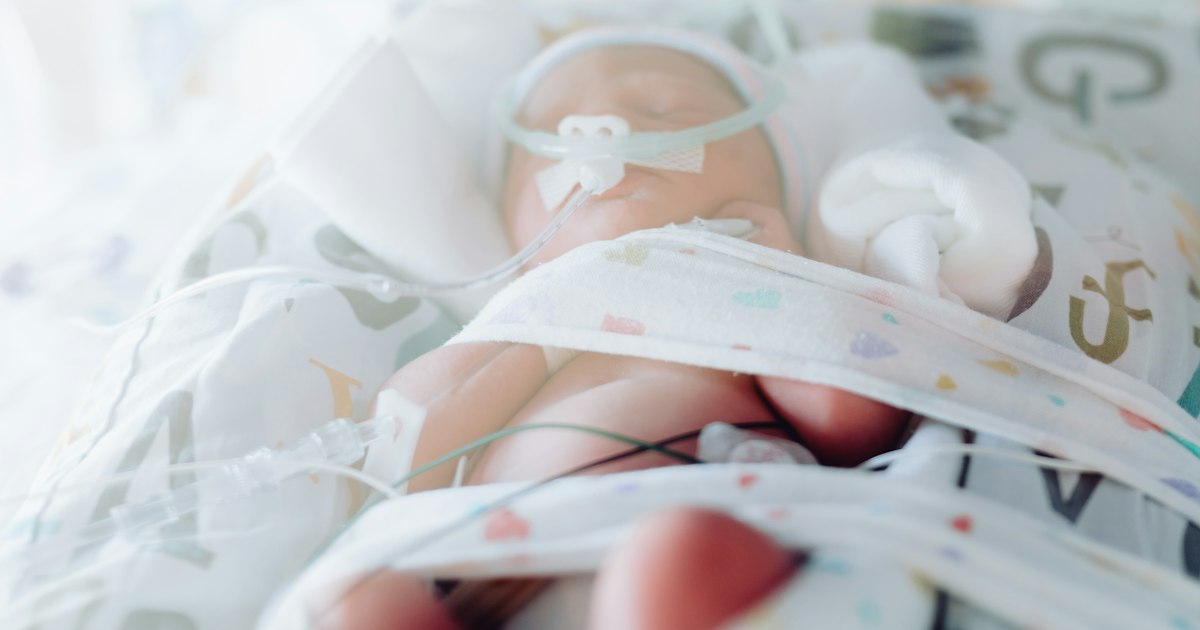
The baby was not supposed to arrive until after Diwali. Instead, at 32 weeks, you are standing outside a NICU in your hospital gown, peering through glass at a tiny body under a warmer, wires taped to a chest the size of your palm. The doctors use words like "CPAP", "surfactant" and "corrected age", and relatives on the phone keep asking when you can bring the baby home.
If this is your family, you are far from alone. India had about 30 lakh preterm births in 2020, the highest number of any country and more than one in five of all preterm births worldwide, according to a 2023 study published in The Lancet. Roughly 13 in every 100 Indian babies are born too early. Premature birth is also one of the leading causes of newborn deaths in India. Yet with good care in the hospital and at home, most premature babies grow into healthy children. This guide explains what prematurity means, what happens in the NICU, how to care for a premature baby at home, and which follow-up tests protect your child's eyes, ears and development.
What Counts as a Premature Baby?
A baby born before 37 completed weeks of pregnancy is called preterm or premature. Doctors group preterm babies by how early they arrive, because the risks differ a lot:
| Category | Gestational age at birth | What to expect (general) |
|---|---|---|
| Late preterm | 34 to under 37 weeks | Often needs only a short stay; may have feeding difficulty, jaundice and low sugar |
| Moderately preterm | 32 to under 34 weeks | Usually needs SNCU/NICU care for warmth, feeding and sometimes breathing support |
| Very preterm | 28 to under 32 weeks | Needs NICU care; higher risk of breathing problems, infections and eye problems |
| Extremely preterm | Under 28 weeks | Needs intensive care, often for weeks or months; highest risk of complications |
Prematurity is different from low birth weight (LBW), which means a birth weight under 2.5 kg. Many Indian babies are both preterm and LBW, but a full-term baby can also be small if growth was restricted in the womb.
Why are so many Indian babies born early?
Common contributors include:
- Maternal anaemia and poor nutrition before and during pregnancy (see our iron deficiency anaemia guide)
- High blood pressure in pregnancy and preeclampsia (see our preeclampsia guide)
- Infections, including urinary tract infections and genital infections
- Twins or triplets, more common with IVF
- Teenage pregnancy, and pregnancies spaced too closely together
- Diabetes, thyroid disease and other chronic conditions in the mother
- Tobacco use (including smokeless tobacco), heavy physical work and air pollution
- Problems with the cervix, uterus or placenta
Regular antenatal check-ups, treating anaemia and high BP early, and planning gaps between pregnancies all lower the risk.
What doctors do when early birth is expected
If preterm labour starts between about 24 and 34 weeks, doctors often give the mother antenatal corticosteroid injections (usually dexamethasone in India) to help the baby's lungs mature, and sometimes magnesium sulphate to protect the baby's brain. Where possible, women at risk are shifted to a hospital with a Special Newborn Care Unit (SNCU) or NICU before delivery, since transporting a tiny baby after birth is riskier.
Common Health Problems in Premature Babies
Premature babies are not just small; many of their organs are not yet ready for life outside the womb.
In the first days and weeks
- Breathing problems (respiratory distress syndrome): The lungs lack surfactant, a substance that keeps air sacs open. Treatment includes CPAP (bubble CPAP is widely used in Indian SNCUs), surfactant medicine, or a ventilator.
- Keeping warm: Preterm babies lose heat fast. Hypothermia is dangerous and is a big reason Indian hospitals emphasise warmers and skin-to-skin care.
- Feeding difficulties: Babies born before about 34 weeks often cannot suck and swallow in a coordinated way. They may first need tube feeds or paladai (small spouted cup) feeds of expressed breast milk.
- Jaundice: More common and more prolonged in preterm babies. Read our newborn jaundice guide.
- Low blood sugar and infections (sepsis): Preterm babies have weaker immunity and small energy reserves.
- Apnoea: Pauses in breathing, which usually improve as the baby matures. Caffeine citrate is often used.
Problems that can show up later
- Retinopathy of prematurity (ROP): Abnormal growth of blood vessels in the retina, which can cause blindness if missed. India has a large burden of ROP, partly because more premature babies now survive.
- Hearing loss
- Anaemia and bone weakness (metabolic bone disease) from low iron, calcium and vitamin stores
- Delays in movement, speech or learning, and in a small proportion, cerebral palsy
- Poor weight gain in the first year
The earlier the birth and the lower the weight, the higher these risks, which is why follow-up is so important.
Inside the NICU: What Parents Can Do
Kangaroo Mother Care (KMC)
Kangaroo Mother Care means holding your baby, wearing only a nappy and cap, skin-to-skin against your bare chest, for long periods every day. It was first developed for low-resource settings and is now strongly recommended by the WHO and India's health ministry for preterm and LBW babies.
KMC helps:
- Keep the baby warm and stable
- Improve breastfeeding and weight gain
- Reduce infections and the risk of death in small babies
- Calm both baby and parent
Fathers, grandmothers and other close family members can also give KMC, which helps when the mother needs rest. Aim for as many hours as possible, ideally 8 hours or more per day, in sessions of at least an hour.
Breast milk is medicine
For preterm babies, mother's milk protects against serious gut infections (necrotising enterocolitis) and sepsis, and supports brain development. If your baby cannot breastfeed yet:
- Start expressing milk within the first hour or two after birth if you can, and every 2 to 3 hours after that, including at night
- Store it as the NICU staff advise
- Ask whether the hospital has a human milk bank if your supply is low; many government and private hospitals in Indian cities now have one
Your doctor may add a human milk fortifier to boost protein and minerals for very small babies.
Ask questions and keep records
NICU stays generate a large pile of documents: daily weights, blood tests, X-rays, cranial ultrasounds, medication charts and the final discharge summary. Ask for copies, and keep them together. Our discharge summary guide explains what a complete summary should contain.
Caring for a Premature Baby at Home
Discharge is usually planned when your baby is breathing comfortably without support, maintaining body temperature, feeding well by breast, paladai or bottle, and gaining weight steadily, often around 1.6 to 1.8 kg or more, though this varies by hospital and baby.
Feeding
- Feed every 2 to 3 hours, including at night, unless your doctor advises otherwise.
- Continue exclusive breast milk; do not give water, honey, ghutti, gripe water or animal milk.
- Weigh the baby as advised. Preterm babies are often expected to gain around 15 to 20 g per kg per day in the early weeks.
- Most preterm babies need iron, vitamin D and sometimes calcium/phosphorus supplements. Give them exactly as prescribed.
Warmth and hygiene
- Continue KMC at home for several hours a day until the baby is around 2.5 kg or no longer tolerates it.
- Dress the baby in one more layer than adults, with a cap and socks, especially during the north Indian winter.
- Wash hands before touching the baby, and limit visitors, particularly anyone with a cough or cold. This is hard in large Indian families, but it matters.
- Avoid traditional practices that can cause harm: putting oil in the nose or ears, applying kajal or surma to the eyes, and early full baths for very small babies. Discuss oil massage with your paediatrician before starting.
Danger signs: go to hospital immediately
- Not feeding well, or too sleepy to feed
- Fast breathing, chest drawing in, grunting, or blue lips
- Feeling cold to touch, or fever
- Pauses in breathing, or turning pale or limp
- Convulsions or abnormal movements
- Yellow palms and soles, or jaundice that is spreading
- Vomiting everything, a swollen belly, or blood in stools
Under the Home Based Newborn Care (HBNC) programme, ASHA workers visit newborns at home several times in the first six weeks, and premature or LBW babies may receive extra visits. Free treatment for sick newborns in public hospitals is available under Janani Shishu Suraksha Karyakram (JSSK).
Follow-Up Tests and Corrected Age
Corrected age
When tracking milestones in the first two years, doctors use corrected age: your baby's age from birth minus the number of weeks they were born early. A baby born 8 weeks early is not "late" for sitting at 7 months; at a corrected age of 5 months, they are right on time. Growth is plotted on special preterm growth charts until term, then on standard charts using corrected age.
Vaccines are an exception. Premature babies should get their vaccines on schedule according to their actual age from birth, not corrected age. Follow the Indian vaccination schedule and ask your paediatrician about any adjustments for very small babies.
Essential follow-up checks
| Check | Who needs it | When |
|---|---|---|
| ROP eye screening | Babies born before 34 weeks or under 2,000 g, and older or bigger babies with risk factors | First exam by about 20 to 30 days of life, then repeated until the retina is mature |
| Hearing screening (OAE / BERA) | All newborns, especially those who were in the NICU | Before discharge or within the first month; repeat if not passed |
| Growth monitoring | All preterm babies | Weekly or fortnightly at first, then monthly |
| Neurodevelopmental assessment | Especially very preterm and very small babies | Regular visits through the first 1 to 2 years and beyond |
| Blood tests (haemoglobin, calcium, phosphorus, alkaline phosphatase, vitamin D) | Most preterm babies | As advised by your paediatrician |
| Newborn metabolic screening | All newborns | In the first days of life; see our newborn screening guide |
Never skip the ROP screening. ROP has no visible signs in the early stages, and treatment works only within a narrow time window. If your hospital does not have an eye specialist trained in ROP, ask where your baby can be screened. Under the Rashtriya Bal Swasthya Karyakram (RBSK), babies with problems found during follow-up can be referred to District Early Intervention Centres (DEICs) for therapy and support.
Looking after yourself
A NICU stay is exhausting and frightening. Mothers of preterm babies have a higher risk of anxiety and postpartum depression. Sleep when you can, accept practical help, and talk to your doctor if you feel persistently low. Our postpartum depression guide has more support.
Keeping Your Premature Baby's Records Together
From the first NICU day, a preterm baby collects more medical paperwork in a few weeks than most children do in years: discharge summaries, weight charts, blood reports, ROP and hearing results, ultrasound reports and vaccination records. These matter for years, because doctors will ask about your baby's gestational age, birth weight and NICU course at every developmental check.
When you upload your reports to MedicalVault, each report, from haemoglobin and bilirubin to calcium and vitamin D, is organised in one place with values extracted automatically. MedicalVault's trend analysis lets you and your paediatrician follow your baby's blood counts and other results over time, and the family sharing feature means both parents, and grandparents helping with care, can see the latest reports before every appointment.
Key Takeaways
- A premature baby is born before 37 weeks. India has the world's largest number of preterm births, about 13 in every 100 babies.
- Maternal anaemia, high BP, infections, multiple pregnancies and closely spaced pregnancies are common contributors; good antenatal care lowers the risk.
- Kangaroo Mother Care and breast milk are among the most powerful, low-cost treatments for preterm babies, both in the NICU and at home.
- Learn the danger signs (poor feeding, fast breathing, cold body, fever, pauses in breathing) and seek care immediately.
- Track milestones by corrected age for the first two years, but give vaccines by actual age.
- ROP eye screening for babies under 34 weeks or 2 kg is essential and must not be missed, along with hearing tests and developmental follow-up.
- Keep every NICU, follow-up and vaccination record together in MedicalVault so your baby's full history is always at hand.