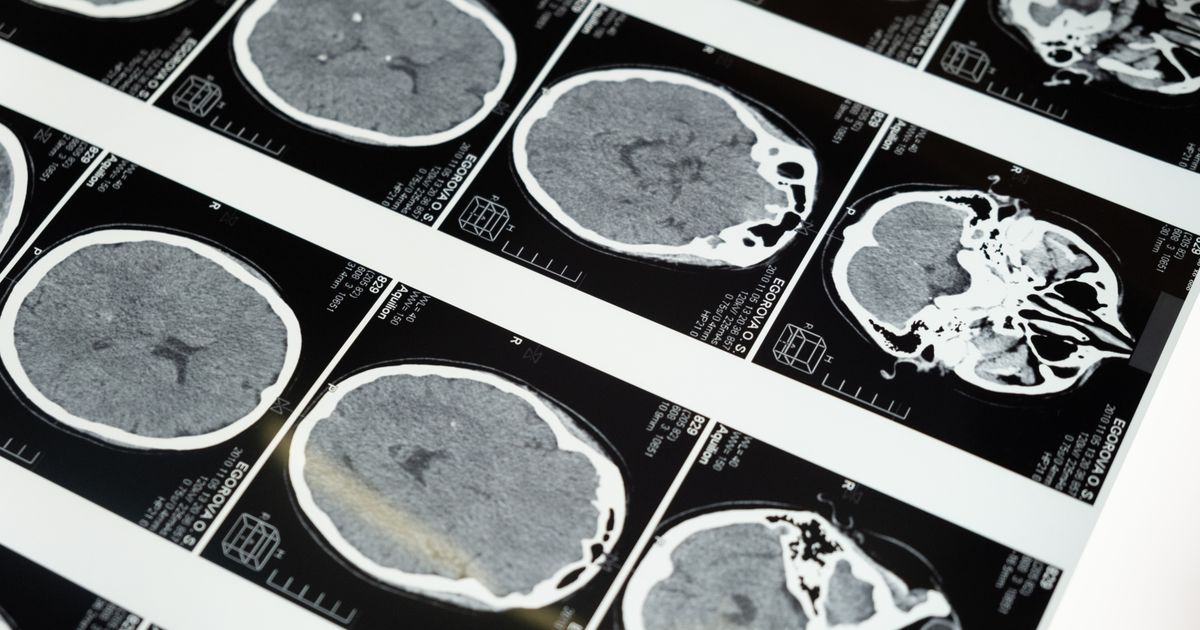
Somewhere in most Indian homes there is a drawer or a cupboard shelf with large plastic X-ray films, a few CDs in paper sleeves from a scan centre, and a pile of radiology reports. When a new doctor asks, "Do you have your old MRI?", the family hunts for the right CD, only to find that the laptop has no disc drive, the disc won't open, or the old films have faded. More often than not, the scan simply gets repeated.
That repeat costs money, often ₹3,000-₹15,000 for a CT or MRI, plus time. For CT scans and X-rays it also means more radiation. Most of this is avoidable. This guide explains what you actually receive after an MRI, CT scan or X-ray in India, the difference between the report and the DICOM images, and a simple system to store your scan images digitally so they're ready whenever a doctor needs them.
What You Get After an MRI, CT Scan or X-ray
After most scans in India, you receive some combination of the following:
| Item | What it is | Who needs it |
|---|---|---|
| Radiology report | A written interpretation by the radiologist (printed and/or PDF) | Every doctor, insurers, employers |
| Films | Printed images on large plastic sheets, still common for X-rays and some CT/MRI | Doctors who want a quick look |
| DICOM CD/DVD | The complete set of original digital images, often hundreds of slices | Specialists, surgeons, second opinions |
| Online link / PACS portal | A web or app link from the hospital or scan centre to view and download images | Convenient sharing; may expire |
| Key images | A few selected images printed on paper or included in the PDF report | Quick reference |
Many patients assume the report is enough. For routine follow-ups, it often is. But when a neurologist, orthopaedic surgeon, oncologist or cardiologist needs to compare today's scan with last year's, or plan surgery, they want the actual images, ideally in DICOM format.
What Is DICOM and Why Does It Matter?
DICOM (Digital Imaging and Communications in Medicine) is the universal format for medical images. Every CT scanner, MRI machine, digital X-ray, mammogram and many ultrasound machines around the world save images in DICOM.
DICOM files are not ordinary photographs. Each one contains:
- The full-resolution image, which can be adjusted for brightness and contrast to see bone, soft tissue, or lungs
- Hundreds of slices for a CT or MRI, which a viewer can scroll through or rebuild in 3D
- Patient details, scan date, machine settings and measurements
This is why a specialist will often say, "Don't just send me photos, bring the CD." A phone photo of a film or screen loses most of that detail. A DICOM file opened in proper software shows exactly what the radiologist saw.
Why the CD is becoming a problem
- Most new laptops and many desktops have no CD/DVD drive.
- Discs scratch, crack and degrade, especially in India's heat and humidity.
- Some discs include a built-in viewer that only works on older versions of Windows.
- CDs get lost when families move house or reports are split between siblings.
The Real Cost of Lost Scans: Money and Radiation
When old images can't be found, doctors often have no choice but to order a fresh scan for comparison. This has two costs.
Financial cost
| Scan | Approximate private cost in India |
|---|---|
| X-ray (single view) | ₹300-₹800 |
| CT scan (one region, plain) | ₹2,500-₹6,000 |
| CT with contrast | ₹4,000-₹10,000 |
| MRI (one region) | ₹4,000-₹12,000 |
| PET-CT | ₹15,000-₹30,000 |
Costs vary widely by city and centre. Government hospitals and schemes such as Ayushman Bharat PM-JAY and CGHS reduce the cost, but often mean long waiting times.
Radiation cost
MRI and ultrasound use no ionising radiation. CT scans and X-rays do:
| Imaging test | Typical effective dose | Roughly equivalent to |
|---|---|---|
| Chest X-ray | about 0.1 mSv | a few days of natural background radiation |
| CT chest | about 7 mSv | around 70 chest X-rays |
| CT abdomen | about 8 mSv | around 80 chest X-rays |
| CT abdomen and pelvis, with and without contrast | about 15 mSv | around 150 chest X-rays |
The US FDA estimates that a CT scan with a 10 mSv dose may add roughly 1 in 2,000 to a person's lifetime chance of fatal cancer. The risk from one scan is small, and when a CT is medically needed its benefits almost always outweigh the risk. But the doses add up over a lifetime, and children are more sensitive to radiation. Avoiding a repeat scan just because the old images are missing is one of the easiest ways to keep that total down. Our guide on X-ray, CT scan and MRI explains these tests in more detail.
How to Store Your Scan Images Digitally: A Step-by-Step System
You don't need to be technical to build a reliable scan archive. Here is a simple system any Indian family can follow.
Step 1: Ask for digital copies at the time of the scan
Before or right after your scan, ask the radiology desk:
- "Can I get the DICOM images on a CD, DVD or USB pen drive?" Many centres in India will copy to a pen drive if you bring one.
- "Is there an online link or app where I can download the images? How long will it stay active?"
- "Can I get the report as a PDF on email or WhatsApp?"
You have a right to copies of your medical records, including imaging. Our guide on the right to your medical records explains what hospitals must provide.
Step 2: Copy the CD to your computer the same day
Don't wait until the next doctor's visit, when you might find the disc unreadable.
- Insert the CD into a computer with a drive, or use an inexpensive external USB DVD drive (about ₹1,000-₹2,000).
- Copy the entire contents of the disc into a folder. Don't copy individual images. Keep the full folder structure, including the "DICOMDIR" file if present.
- Name the folder clearly, for example:
2026-11-MRI-LumbarSpine-Father-CityScanCentre - If you received a download link, download the full DICOM study (often offered as a ZIP file) before the link expires.
Step 3: Keep at least two copies
- One copy on a cloud drive you already use (Google Drive, OneDrive or iCloud), in a dedicated "Medical Scans" folder
- One copy on an external hard disk or pen drive kept safely at home
- Keep the original CD too. It costs nothing to store
Medical images are sensitive personal data. Use strong passwords and two-factor authentication on cloud accounts, and avoid sharing full DICOM folders in large WhatsApp groups. Our guide to the DPDP Act and medical records privacy explains your data rights.
Step 4: Store the report and key images where you'll actually find them
The DICOM folder is for specialists. Most of the time, what you and your doctors need quickly is the written report and the radiologist's impression, alongside your blood tests and prescriptions.
Upload the radiology report PDF to MedicalVault, or a clear photo of the report and any key images. That keeps your MRI, CT and X-ray findings in the same organised timeline as your lab reports. MedicalVault accepts PDFs and photos (JPG/PNG) rather than raw DICOM files, so the report and key images live there, and the full DICOM study stays in your cloud folder.
Step 5: Learn how to open DICOM files
If a doctor asks you to show images on a laptop or you want to check what's on a disc:
- Many CDs include a built-in viewer. Look for a file like
viewer.exeorStart.exe - Free DICOM viewers are available for Windows, Mac and even phones and tablets
- Many hospitals in India can import a patient's CD or pen drive directly into their own PACS system for the specialist to review
Sharing Scans for Second Opinions, Surgery and Travel
Second opinions
When seeking an online second medical opinion, most specialists want:
- The radiology report (PDF)
- The full DICOM study, usually through a cloud link or a DICOM-sharing platform the hospital recommends
- Previous scans of the same body part, for comparison
Sending a well-organised folder rather than random phone photos gets you a faster, more accurate opinion.
Before surgery or travel for treatment
Patients travelling from smaller towns to metros such as Delhi, Mumbai, Chennai, Vellore or Bengaluru for surgery or cancer treatment should carry:
- All DICOM studies on a pen drive and in the cloud
- Printed copies of every radiology report, in date order
- The discharge summaries from previous admissions
This often saves days of repeat investigations on arrival.
Insurance claims
Insurers usually require the radiology report rather than images, but some ask for films or CDs for high-value claims. Keeping both makes claim documentation simpler. See our guide on health insurance claims.
ABHA and digital health records
Under the Ayushman Bharat Digital Mission, hospitals and imaging centres registered on ABDM can link diagnostic reports, including imaging reports, to your ABHA address. In practice, most Indian scan centres today still hand over CDs and printed reports, so your own organised archive remains essential. Our ABHA card guide explains how linking works.
Special Situations: Children, Cancer and Chronic Conditions
Some patients benefit most from careful scan records:
- Children: more sensitive to radiation, so avoiding repeat CTs matters even more. Keep every scan from childhood conditions like seizures, kidney problems or fractures.
- Cancer patients: oncologists compare scans every few months to judge whether treatment is working. A missing baseline PET-CT or CT can make that comparison much harder.
- Spine and joint problems: an MRI from five years ago helps a surgeon see whether a disc problem is getting worse.
- Kidney stones, gallstones and thyroid nodules: ultrasound and CT reports tracked over time show whether a stone or nodule is growing. See our ultrasound abdomen report guide.
- Elderly parents: repeated X-rays and CTs after falls, strokes or heart problems quickly pile up. The family sharing feature lets siblings in different cities see each report as soon as it's uploaded.
Key Takeaways
- After an MRI, CT scan or X-ray in India, you usually get a written report, films and a DICOM CD or download link. The report alone is often not enough for specialists.
- DICOM is the universal medical image format, holding full-resolution images and hundreds of slices that phone photos of films cannot replace.
- Lost scans lead to repeat imaging, costing thousands of rupees and, for CT and X-ray, extra radiation. A chest CT gives roughly 70 times the dose of a chest X-ray.
- Ask for images on a pen drive or download link at the time of the scan, copy CDs to your computer the same day, and keep at least two copies (cloud plus an external drive).
- Name scan folders by date, type, body part and family member so anyone can find them quickly.
- Protect scan images like any sensitive data, and share full studies only with doctors and trusted family members.
- Keep radiology reports alongside your lab tests in MedicalVault, so your complete health history, from blood tests to MRI findings, is organised in one place and easy to share.
Want to learn more about organising your family's medical records? Explore our features page or visit the FAQ page.