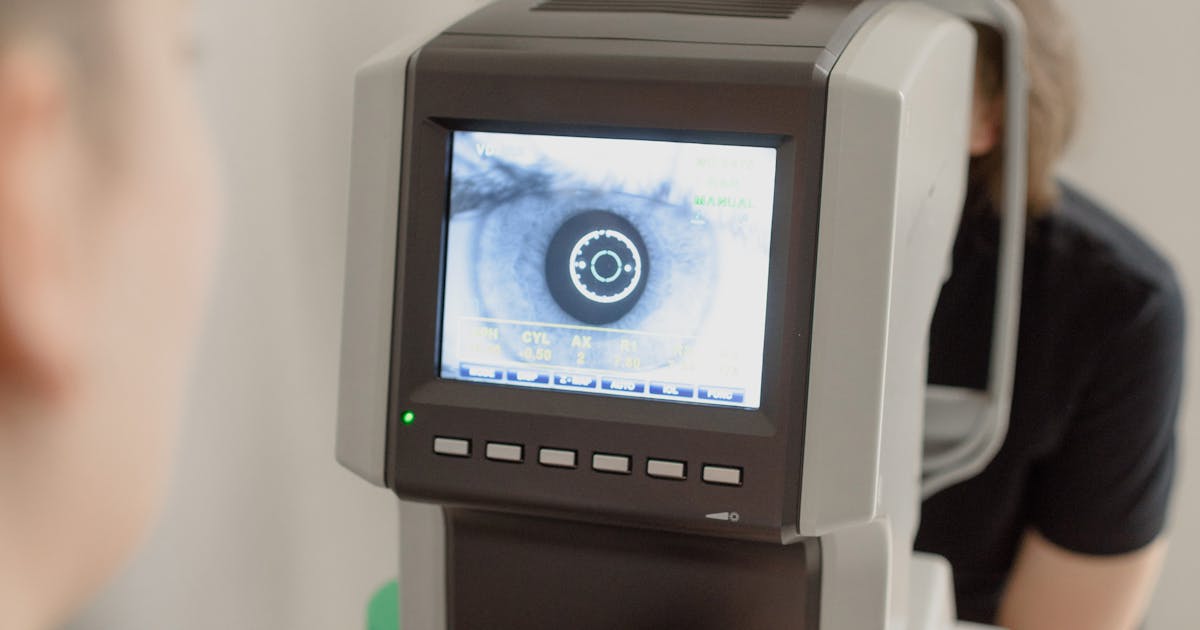
If you wear glasses or contact lenses, you have probably had this thought at least once: what if I could just see clearly without them? In India, that thought crosses the minds of hundreds of millions of people — our country has one of the highest rates of uncorrected refractive error in the world, with an estimated 550 million Indians needing some form of vision correction. For a long time, spectacles were the only practical answer. But over the past two decades, laser eye surgery has quietly become affordable, safe, and widely available across Indian cities — and millions of Indians have already made the switch from specs to no specs permanently.
This guide explains every major laser eye surgery option available in India in 2026, who is eligible, what it costs (by city), what to expect during and after surgery, and what questions to ask before you sign up.
Why Laser Eye Surgery Has Become So Popular in India
Myopia (short-sightedness) rates in India are rising rapidly. A meta-analysis of four decades of Indian data found that myopia prevalence among school-age children is expected to rise to nearly 48% by 2050 in urban areas — driven by increased screen time, reduced outdoor activity, and changing lifestyles. This means the number of Indians looking at laser eye surgery will only grow.
The demand for specs removal surgery (as it is commonly called in India) surged in the post-COVID years: long hours on screens worsened many prescriptions, and the discomfort of wearing glasses with masks pushed many people to finally consider surgery. According to industry estimates, the Indian laser eye surgery market was valued at USD 64 million in 2023 and is growing at over 8% annually.
Beyond vanity, there are practical reasons too — athletes, defence service aspirants, professionals who cannot wear glasses on the job, and people who find contact lenses uncomfortable all have compelling reasons to consider surgery.
Types of Laser Eye Surgery Available in India
The terminology around laser eye surgery can be confusing. Here is a clear breakdown of every major procedure you will encounter:
LASIK (Laser-Assisted In Situ Keratomileusis)
The most widely performed laser eye surgery worldwide. A thin flap is cut in the cornea using either a metal blade (conventional LASIK) or a femtosecond laser (Femto LASIK or bladeless LASIK). The flap is lifted, an excimer laser reshapes the corneal tissue underneath to correct your prescription, and the flap is laid back. Recovery is fast — most patients achieve good vision within 24 hours.
Conventional LASIK uses a microkeratome blade to create the flap and is the most affordable option. Femto LASIK (also called bladeless LASIK) uses a laser instead of a blade for greater precision. Both are effective; Femto LASIK has a slightly lower flap complication rate.
Contoura Vision LASIK
A topography-guided variant of Femto LASIK that maps the unique surface contours of your cornea (over 22,000 points) to customise the laser treatment beyond just correcting your spectacle power. Studies suggest it delivers sharper contrast vision and fewer halos/glare than standard LASIK, particularly important for night driving.
SMILE (Small Incision Lenticule Extraction)
SMILE is fundamentally different from LASIK. Instead of cutting a flap, the femtosecond laser creates a small lens-shaped piece of tissue (a lenticule) inside the cornea, which is then removed through a 2–4 mm arc incision. No corneal flap is created, which means:
- Less risk of dry eye post-surgery (more corneal nerves are preserved)
- No flap complications (displacement, dislodgement)
- Greater corneal biomechanical stability — an advantage for people with active lifestyles or contact sports
SMILE is currently approved for myopia and myopic astigmatism only (not hyperopia). Recovery is slightly slower than LASIK for the first week, but long-term outcomes are equivalent.
SMILE Pro
The latest evolution of SMILE, SMILE Pro uses the VISUMAX 800 laser platform (Carl Zeiss Meditec) with AI-guided tracking and executes the procedure in approximately 10 seconds per eye — significantly faster than conventional SMILE. The faster laser reduces energy exposure and patient discomfort. Most premium eye centres in India's metros have now upgraded to SMILE Pro.
SILK (Smooth Incision Lenticule Keratomileusis)
SILK (using Johnson & Johnson's ELITA platform) is a newer flapless procedure similar to SMILE but with a different laser platform. Results are comparable; it is now available at select centres in India as an alternative to SMILE Pro.
PRK / LASEK / Trans-PRK
Older surface ablation techniques where the corneal surface epithelium is removed and the laser treats the exposed tissue directly — no flap, no incision. Recovery is slower (3–5 days of discomfort and blurry vision), but PRK remains the preferred choice for people with thin corneas who are not eligible for LASIK or SMILE. Trans-PRK (also called SCHWIND AMARIS no-touch) is a newer touchless variant with faster healing.
ICL (Implantable Collamer Lens)
Not a laser procedure — ICL is a soft, foldable lens implanted inside the eye (between the iris and natural lens) without removing any corneal tissue. It is the preferred option for:
- Very high prescriptions (beyond what laser can treat — typically above –8 to –10 dioptres)
- Thin corneas ineligible for LASIK/SMILE
- Patients with dry eyes
ICL is reversible (the lens can be removed) and preserves all corneal tissue. Cost is higher — typically ₹1,20,000–1,80,000 per eye.
Am I a Candidate? Eligibility Criteria
Not everyone qualifies for laser eye surgery. Here are the standard eligibility criteria at most reputable Indian centres:
| Criteria | Requirement |
|---|---|
| Age | Minimum 18 years (most surgeons prefer 21+) |
| Prescription stability | Same power for at least 12 months (no significant change) |
| Corneal thickness | Sufficient thickness to safely perform the procedure (evaluated by topography) |
| Prescription range | LASIK/SMILE: typically –1 to –9 dioptres myopia; up to +4 dioptres hyperopia; up to 5 dioptres astigmatism |
| Pupil size | Normal; very large pupils may increase night-vision side effects |
| Corneal shape | No keratoconus (progressive corneal thinning), no irregular astigmatism |
| General health | No uncontrolled diabetes, no autoimmune conditions affecting healing, no active eye infections |
| Pregnancy/breastfeeding | Not recommended during pregnancy or breastfeeding — hormonal changes affect the cornea |
Before surgery, you will undergo a comprehensive pre-operative evaluation that includes corneal topography, pachymetry (corneal thickness measurement), pupil dilation examination, and refraction under cycloplegia (dilating eye drops). This evaluation typically costs ₹500–2,000 and takes 2–3 hours. Do not wear soft contact lenses for at least 3 days before this evaluation (hard lenses: 2 weeks) — they temporarily alter corneal shape.
Cost of Laser Eye Surgery in India (2026)
Costs vary significantly by procedure type, technology, and city. Here is a realistic guide:
| Procedure | Per Eye Cost | Both Eyes (Approx.) |
|---|---|---|
| Conventional LASIK | ₹20,000–35,000 | ₹40,000–70,000 |
| Femto LASIK | ₹35,000–55,000 | ₹70,000–1,10,000 |
| Contoura Vision LASIK | ₹45,000–65,000 | ₹90,000–1,30,000 |
| SMILE | ₹55,000–80,000 | ₹1,10,000–1,60,000 |
| SMILE Pro | ₹65,000–90,000 | ₹1,30,000–1,80,000 |
| PRK / Trans-PRK | ₹20,000–45,000 | ₹40,000–90,000 |
| ICL | ₹1,20,000–1,80,000 | ₹2,40,000–3,60,000 |
City-wise variation: Metro cities (Delhi, Mumbai, Bengaluru, Hyderabad, Chennai) are at the higher end of these ranges. Tier-2 cities (Pune, Ahmedabad, Jaipur, Coimbatore) are 20–30% cheaper for equivalent technology.
Is laser eye surgery covered by health insurance in India? Generally, no. Most health insurance plans classify laser eye surgery as an elective cosmetic procedure and exclude it. The exception: if your prescription is ≥7.5 dioptres, some insurers consider it medically necessary. Check your policy's terms carefully. A few employers' group health plans cover it — worth verifying with your HR team.
No government scheme (PMJAY/Ayushman Bharat) covers laser refractive surgery for healthy eyes with normal-range prescriptions.
What Happens on the Day of Surgery
A typical laser eye surgery (LASIK or SMILE) procedure takes 10–15 minutes per eye:
- Preparation: Anaesthetic eye drops are instilled. The eye is cleaned and a lid speculum (small instrument) keeps it open. You will feel pressure but no pain.
- Flap creation (LASIK) / Lenticule creation (SMILE): The femtosecond laser works for 20–30 seconds. You may notice a dimming of vision and slight pressure.
- Excimer laser reshaping (LASIK) / Lenticule removal (SMILE): The excimer laser fires for a few seconds; you will see a blinking light and may notice a faint smell (normal — it is the laser energy). SMILE: the surgeon makes a small incision and removes the lenticule through it.
- Completion: The flap is repositioned (LASIK) or the incision is complete (SMILE). The speculum is removed.
After surgery: Your vision will immediately be hazy. A family member should accompany you for transport home. Rest with eyes closed for 4–6 hours. Wear the protective shields provided, especially while sleeping, for the first week.
Recovery and What to Expect
| Timeline | What to Expect |
|---|---|
| Day 1 | Blurry, hazy vision; tearing; sensitivity to light. This is normal. |
| Day 2–3 | Vision improves significantly; most people can work on a computer |
| Week 1 | Mild dryness, occasional fluctuations in vision; avoid swimming and dusty environments |
| 1 month | Vision is largely stable; night driving generally fine |
| 3–6 months | Final stable vision achieved; any residual halos/glare usually resolve |
Dry eye is the most common side effect — up to 40% of LASIK patients report it in the first 3 months. Lubricating eye drops (like Refresh Tears, I-Drop, or Systane Ultra available at any Indian pharmacy) manage this effectively. SMILE has a significantly lower dry eye incidence than LASIK due to its flapless design.
Halos and glare around lights at night are normal in the first 1–3 months and improve as the cornea heals. In rare cases (2–3%), they persist longer.
How to Read Your Pre-Surgery Eye Report
If you have had a corneal topography done before surgery, upload your eye reports to MedicalVault and track all your eye-related records in one place. Before you head to any surgery consultation, make sure you have:
- Latest spectacle prescription (within the past 6 months)
- Previous prescriptions to demonstrate stability
- Corneal topography report (if already done)
- Any ocular history — previous eye infections, injuries, or treatments
Keeping these documents organised in a digital health records app means you can share them quickly at any consultation — important when getting a second opinion across different hospitals.
Choosing the Right Hospital and Surgeon
India has excellent laser eye surgery centres. Look for these indicators of quality:
- Certified laser platforms — VISUMAX, MEL 90, AMARIS, or ELITA for SMILE/SMILE Pro; ALLEGRETTO WAVE or WAVELIGHT EX500 for LASIK
- Surgeon experience — Ask how many procedures your surgeon has performed personally (look for >500 SMILE or >1,000 LASIK cases)
- Transparent pricing — The quote should include pre-op evaluation, surgery, 3–6 month follow-up visits, and eye drops
- No-pressure consultation — A good surgeon will tell you if you are NOT a candidate
Well-regarded chains and centres include Sankara Nethralaya (Chennai, Kolkata), LV Prasad Eye Institute (Hyderabad, Bhubaneswar), Aravind Eye Hospital (Madurai, Chennai, Coimbatore, Tirupati), Dr. Shroff's Charity Eye Hospital (Delhi), Centre for Sight (pan-India), Eye-Q (pan-India), and NetraDhama (Bengaluru).
Risks and Limitations: A Balanced View
Laser eye surgery has an overall 96–98% success rate in India, comparable to global standards. However, it is important to understand what success means: most patients achieve 6/6 (20/20) vision or better, but a small percentage may need glasses for specific tasks (night driving, fine print). Risks include:
- Under- or over-correction: May require glasses for some tasks or a touch-up procedure (1–5% of cases)
- Regression: Vision may gradually return towards the original prescription, typically in high myopes, over years
- Corneal ectasia (very rare, ~0.04%): Progressive thinning — most preventable by proper screening for keratoconus before surgery
- Flap complications (LASIK only): Dislodgement from trauma, wrinkles — eliminated with SMILE
- Night vision issues: Persistent halos/glare (rare with modern ablation profiles)
- Infection: Very rare with proper post-operative eye drops
This is why the pre-operative screening is non-negotiable. Never accept surgery at a centre that skips or rushes through the evaluation, or offers extremely low-ball pricing without proper workup.
Key Takeaways
- LASIK and SMILE Pro are the two most popular specs-removal procedures in India in 2026, with success rates of 96–98%
- SMILE Pro (flapless) has lower dry eye risk and suits active lifestyles; Femto LASIK/Contoura is slightly more affordable with excellent outcomes
- Costs range from ₹40,000 for basic LASIK to ₹1,80,000+ for SMILE Pro for both eyes; health insurance generally does not cover refractive surgery
- You must be 18+ with a stable prescription and pass a thorough corneal screening — not everyone qualifies
- Dry eye is the most common short-term side effect; it is manageable and usually resolves within 3 months
- Before any consultation, organise all your eye prescriptions and test reports — MedicalVault helps you store and share these digitally
- Always get a pre-operative evaluation at 2–3 centres before choosing a surgeon; outcomes depend significantly on proper patient selection
- Read our cataract surgery guide and glaucoma guide to understand other common eye conditions affecting Indians