Your eight-year-old's spectacle power jumped from -0.75 to -2.50 in 18 months. Your teenager rubs her eyes after every two hours of phone scrolling. You yourself wake up with gritty, burning eyes after a day of back-to-back video calls. None of this is in your imagination. India is in the middle of a quiet, fast-moving epidemic of digital eye strain and childhood myopia, and ophthalmologists across Delhi, Mumbai, Bengaluru, Chennai, and Hyderabad say the curve has accelerated sharply since the pandemic.
A 2026 review estimates that by 2050 nearly half of all urban Indian children will be myopic, up from roughly 8.5% prevalence in cities a decade ago. At the same time, 50–60% of digital device users in India report at least one symptom of digital eye strain — dryness, burning, blurred vision, headache, or neck pain. This guide explains what is happening, why it matters, how to test for it, and what really works to slow it down.
What Are Digital Eye Strain and Myopia?
Digital Eye Strain (Computer Vision Syndrome)
Digital Eye Strain (DES) — also called Computer Vision Syndrome (CVS) — is the cluster of eye and vision symptoms caused by prolonged screen use. The mechanism involves three things happening at once:
- Reduced blinking: Normal blink rate is 15–20 times per minute. When you stare at a phone or monitor, the rate drops to 5–7 per minute. Less blinking means a thinner tear film, dry surface, and gritty eyes.
- Sustained accommodation: The ciliary muscle that focuses the lens contracts to keep near objects sharp. Hours of this without relief leaves the focusing system in spasm.
- Convergence stress: Both eyes must turn slightly inward to keep a single image on the phone — this convergence load adds to fatigue.
Myopia (Short-Sightedness)
Myopia, or near-sightedness, occurs when the eyeball grows too long from front to back, so distant images focus in front of the retina instead of on it. Childhood-onset (school-age) myopia is the most concerning kind in India, because it tends to progress rapidly during growth spurts and stabilises only in the late teens. High myopia (above −6.00 D) substantially increases the lifetime risk of retinal detachment, myopic maculopathy, cataract, and glaucoma.
Why Indian Children Are Going Short-Sighted Faster
Less Outdoor Time
The single most consistent finding in global myopia research is that time spent outdoors protects against myopia onset. Bright outdoor light triggers dopamine release in the retina, which slows axial elongation of the eye. Studies suggest at least two hours of daylight per day offers meaningful protection. Most urban Indian children today get far less — school hours indoors, tuition classes, online coaching, and afternoon screen time leave little room for outdoor play.
Near-Work Overload
Indian school culture is heavily near-work intensive: textbooks, notebooks, board exam preparation, JEE/NEET coaching, and now hours of online classes. A Delhi-based study found that more than five hours a day of near-work strongly correlates with myopia progression in children.
Smartphones at Too Close a Range
Children hold phones at around 20–25 cm — much closer than the recommended 35–40 cm for reading. The closer the screen, the greater the accommodative and convergence demand, and the stronger the stimulus for the eyeball to elongate.
Post-Pandemic Acceleration
Indian and global cohort studies after COVID-19 lockdowns documented a sharper-than-usual jump in spectacle power among 6–12-year-olds. Online schooling, restricted outdoor time, and screen-based recreation combined to push myopia rates upward — and they have not fully reverted.
Genetics
Two myopic parents triple a child's risk. South Asian children appear to develop myopia at younger ages than many other populations, partly genetic and partly environmental.
Symptoms Parents Should Not Ignore
Watch for these signs in children:
- Sitting unusually close to the TV or holding the phone right up to the face
- Squinting to read distant signs, school blackboard, or cricket scoreboards
- Complaining of headaches, especially after homework or school
- Eye rubbing, blinking excessively, or red eyes
- Falling marks in subjects that need clear distance vision (copying from the board)
- Tilting the head sideways while reading
- Increase in spectacle power of more than 0.50 D every six months — this is fast progression and merits a paediatric ophthalmology review
In adults, digital eye strain commonly shows as:
- Burning, gritty, or dry eyes after work hours
- Blurred vision that clears after rest
- Frontal or temporal headaches
- Neck and upper-back stiffness from poor screen ergonomics
- Difficulty refocusing between near and far
Eye Tests and Examinations in India
Annual Comprehensive Eye Exam
The Indian Paediatric Ophthalmology and Strabismus Society recommends a first eye exam by age three, another before starting school, and annual examinations thereafter. Adults using screens more than four hours daily should have an eye exam every one to two years.
A complete examination typically includes:
| Test | What It Checks |
|---|---|
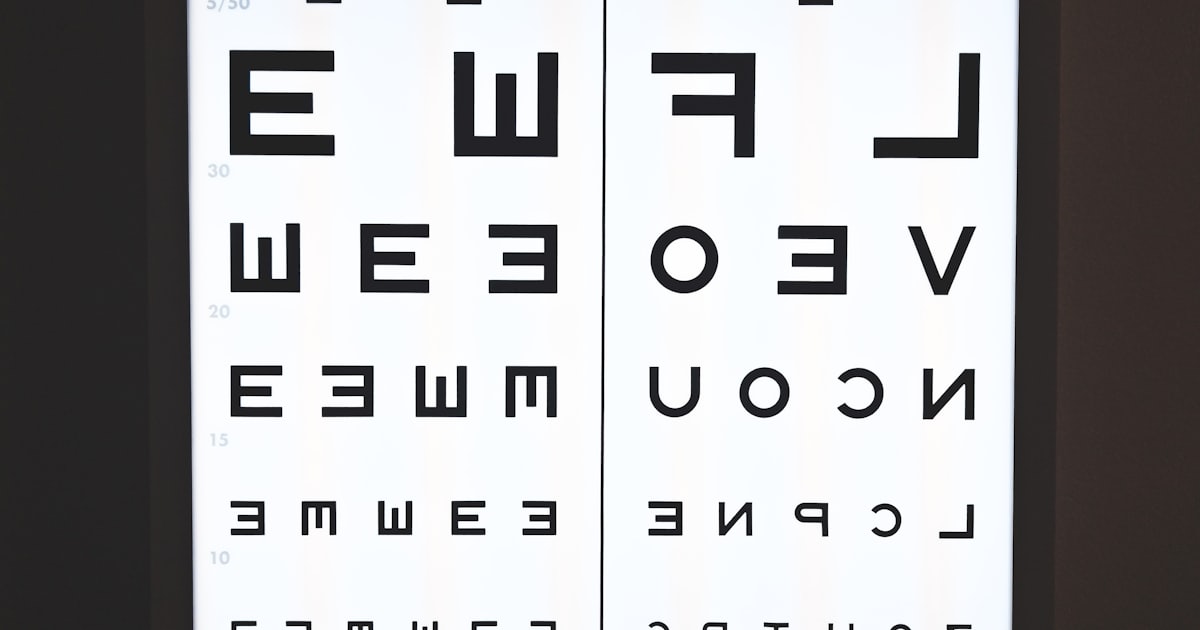
| Visual acuity (Snellen / LogMAR chart) | Distance and near sharpness |
| Auto-refractometer reading | Objective refractive error |
| Cycloplegic refraction (in children) | True spectacle power without focusing spasm |
| Slit-lamp examination | Front-of-eye health, tear film, cornea |
| Fundoscopy / retinal exam | Back of the eye, retinal health |
| Axial length measurement (IOL Master) | Eye length — the most sensitive marker of myopia progression |
| Schirmer's test | Tear production for dry-eye diagnosis |
| Tear break-up time (TBUT) | Tear film stability |
Cost in India
- Government hospitals (AIIMS, regional medical colleges): ₹50–₹300 for a full exam
- Private chains (Dr. Agarwal's, ASG, Centre for Sight, Sankara Nethralaya, LV Prasad): ₹500–₹1,500 for a basic exam
- Axial length scan (IOL Master/Lenstar): ₹500–₹1,500 — vital if your child has progressing myopia
- Specialist myopia clinic consultation: ₹1,000–₹3,000
Tracking changes over time is critical. When you upload your family's eye reports to MedicalVault, each visit's spectacle power, axial length, and tear-film results are stored together. The trend analysis feature shows whether a child's myopia is stable, slowly progressing, or accelerating — a single number means little, but a line over five visits tells the whole story.
What Actually Works to Slow Myopia Progression
Indian paediatric ophthalmologists now offer a layered toolkit of evidence-based interventions, beyond just stronger spectacles.
Low-Dose Atropine Eye Drops (0.01–0.05%)
Landmark trials (ATOM, LAMP) show that low-dose atropine drops at bedtime reduce myopia progression by 30–70%. The 0.05% concentration appears most effective, with manageable side effects (slight glare, mild near-blur). In India, compounded atropine 0.01% and 0.05% drops are available through select paediatric ophthalmology centres at ₹600–₹1,800 per month. They must be prescribed and monitored by an eye specialist.
Orthokeratology (Ortho-K) Lenses
Ortho-K are special rigid contact lenses worn overnight that gently reshape the cornea. The child wakes up able to see clearly all day without glasses, and axial elongation slows by 30–60%. Available in major Indian cities through certified contact-lens specialists; expect a startup cost of ₹40,000–₹80,000 and lens replacement every 12–18 months.
Myopia-Control Spectacle Lenses
Specialised lens designs — DIMS (Defocus Incorporated Multiple Segments), HALT, and peripheral-defocus lenses such as MiYOSMART (Hoya), Stellest (Essilor), and MyoCare (Zeiss) — slow myopia progression by around 50%. Available across India at ₹15,000–₹35,000 per pair. They look like ordinary glasses to the child's classmates.
Soft Multifocal Contact Lenses
Daily disposable soft multifocal lenses (e.g., MiSight) are FDA-approved for myopia control and now available in select Indian metros. Useful for older children who prefer not to wear spectacles.
Outdoor Time — The Free Prescription
At least 90–120 minutes of outdoor light per day is the single cheapest and most effective intervention for myopia prevention. Schools that built daylight breaks into the timetable have seen lower myopia incidence. Parents can build this in by walking children to the park before homework, scheduling cricket or badminton sessions, or simply reading on the balcony.
Managing Digital Eye Strain in Adults and Children
You cannot eliminate screens from modern Indian life, but you can substantially reduce the damage.
The 20-20-20 Rule
Every 20 minutes, look at something 20 feet (6 metres) away for at least 20 seconds. This relaxes the focusing muscle and breaks the convergence load. Set a quiet timer on your phone or use a free Pomodoro app. Surveys show only about one-third of Indians practise this rule even occasionally — it is the most under-used eye-care habit.
Workstation Ergonomics
- Monitor top edge at or slightly below eye level
- Screen 50–70 cm from the eyes
- Slight downward gaze (reduces ocular surface exposure)
- Adequate ambient room lighting; avoid working in the dark
- Anti-glare matte screens or a quality anti-reflective coating on spectacle lenses
Blink Consciously and Use Lubricants
Train yourself to blink completely. Preservative-free artificial tears — brands like Refresh Tears, Systane Ultra, Tear Drop, and Lubrex available across Indian pharmacies — can be used four to six times a day for symptomatic dry eye. If symptoms persist beyond two weeks, see an ophthalmologist; chronic dry eye may need treatment beyond drops.
Blue Light: Calibrate the Hype
The evidence for blue-light filter spectacles preventing retinal damage is weak. They may help some adults with sleep disturbance after late-night screen use, because blue light suppresses melatonin. The practical benefit is best obtained by using "night-shift" or "dark mode" settings on phones and laptops after 9 pm rather than buying expensive lenses.
Screen Time Boundaries for Children
- Under 2 years: No screen time other than video calls with family
- 2–5 years: Maximum 1 hour of high-quality content, with a parent
- 6–12 years: Recreational screens kept below 2 hours daily
- 13–18 years: Encourage device-free meals, no phones in bedrooms, and a hard cut-off 60 minutes before sleep
These are guidelines from paediatric and ophthalmology bodies including AAP and IPOS. Real-world enforcement is hard, but the closer you get to these numbers, the better.
When to See an Eye Specialist Urgently
Schedule an immediate review if any of the following occur:
- Sudden drop in vision in one or both eyes
- New floaters, flashes of light, or a curtain across the field of view (possible retinal detachment, more common with high myopia)
- Persistent severe headache with vision changes
- Eye pain with redness
- A child who consistently fails to read the school board, frequently rubs eyes, or has a fast jump in spectacle power
- Persistent dry-eye symptoms despite four weeks of self-care
Your eye specialist may add tests such as fundus photography, optical coherence tomography (OCT), or pachymetry. These tests, especially the OCT, are also useful for monitoring glaucoma and diabetic retinopathy — eye conditions Indian adults should screen for regularly.
Key Takeaways
- India is in the middle of a childhood myopia epidemic, with up to half of urban children projected to be short-sighted by 2050 — and digital eye strain affects 1 in 2 adult screen users.
- Less outdoor time, intense near-work, smartphones held very close, and post-pandemic online schooling have combined to push myopia onset earlier and progression faster.
- Watch for squinting, head tilting, sitting close to the TV, eye rubbing, headaches, and falling marks — these are signs your child needs an eye exam, not a scolding.
- Evidence-based myopia control — low-dose atropine 0.05%, ortho-K, MiYOSMART/Stellest/MyoCare lenses, and 2 hours daily outdoors — can cut progression by 30–70%. Discuss the right combination with a paediatric ophthalmologist.
- For adults, the 20-20-20 rule, good workstation ergonomics, preservative-free lubricant drops, and disciplined screen breaks address most digital eye strain symptoms without exotic gadgets.
- Annual eye exams from age three are the gold standard. Track power changes and axial length over time — a single number is meaningless without a trend.
- Keep your family's eye reports together in MedicalVault's family health vault so you can spot acceleration early and act before high myopia sets in.
Always consult a paediatric ophthalmologist before starting atropine drops, ortho-K, or specialty myopia-control lenses for your child. Treatment decisions should be personalised to the child's age, progression rate, and lifestyle.