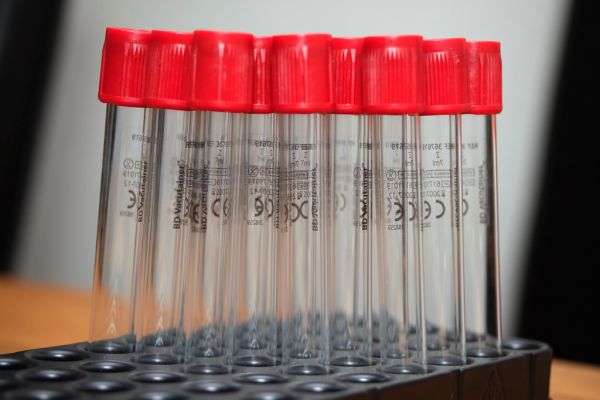
Your father had a heart valve replacement last year, and every few weeks he goes to the lab for a "blood thinner test." The report comes back with two numbers — PT and INR — and the doctor adjusts his Acitrom dose up or down based on them. If those numbers drift too high or too low, the consequences can be serious: a stroke on one side, dangerous bleeding on the other. Yet most families managing a loved one on blood thinners never fully understand what these numbers mean.
The PT/INR test (Prothrombin Time and International Normalised Ratio) is one of the most important — and most life-critical — blood tests in India. Millions of Indians on anticoagulants after heart valve surgery, atrial fibrillation, deep vein thrombosis, or pulmonary embolism depend on getting this test right, again and again, for years. Unlike a one-off cholesterol check, PT/INR is a test you live with.
This guide explains what PT and INR measure, what your target range should be, how often to test, what makes the numbers swing, and how food, medicines, and daily habits in an Indian household affect your results.
What Is the PT/INR Test?
Prothrombin Time (PT) measures how many seconds your blood takes to form a clot when specific chemicals are added to a plasma sample in the lab. It reflects the function of several clotting factors in what is called the extrinsic and common coagulation pathway — particularly factors made by the liver that depend on vitamin K.
The problem with PT alone is that different labs use different chemical reagents, so a PT of 15 seconds at one lab may not mean the same as 15 seconds at another. To solve this, the World Health Organization introduced the International Normalised Ratio (INR) — a standardised calculation that corrects for these differences using a factor called the ISI (International Sensitivity Index).
The result is that an INR of 2.5 means the same thing whether the test is done in Kochi, Kolkata, or Kanpur. This standardisation is precisely why INR, not raw PT, is used to guide blood-thinner dosing everywhere in the world.
Why Doctors Order It
- To monitor patients on warfarin or acenocoumarol (Acitrom) — by far the most common reason.
- To investigate unexplained bleeding or bruising.
- To assess liver function, since the liver makes most clotting factors — a prolonged PT can signal serious liver disease.
- As part of pre-surgery workup to check clotting is normal before an operation.
- To help diagnose vitamin K deficiency or clotting factor disorders.
PT and INR Normal Ranges
Ranges depend entirely on whether or not you are taking a blood thinner.
| Situation | PT (seconds) | INR |
|---|---|---|
| Healthy person, no anticoagulant | 11 – 13.5 | 0.8 – 1.2 |
| On warfarin/Acitrom — most conditions | Prolonged | 2.0 – 3.0 |
| On warfarin — mechanical heart valve (higher risk) | Prolonged | 2.5 – 3.5 |
A few important points for Indian patients:
- The normal INR is about 1.0. If you are not on any blood thinner and your INR is around 1, that is exactly what it should be.
- If you are on a blood thinner, a "normal" INR of 1.0 is actually a problem — it means the medication is not working and you are at risk of clotting. On treatment, your doctor wants your INR raised into the target range.
- The target range is set by your doctor based on your specific condition. Never assume a single universal target.
Understanding the Balance
Think of INR as a see-saw:
- INR too low (below target): blood clots too easily → higher risk of stroke, valve thrombosis, or recurrent DVT.
- INR too high (above target): blood clots too slowly → higher risk of bleeding, from minor bruising and bleeding gums to serious internal or brain bleeds.
- INR in target range: the sweet spot where clotting risk and bleeding risk are both minimised.
The goal of every PT/INR test is to keep you sitting in that narrow sweet spot for as much time as possible — clinicians call this your "time in therapeutic range" (TTR), and a higher TTR means fewer complications.
Who Needs Regular PT/INR Testing?
You will need lifelong, regular INR monitoring if you are on vitamin K antagonist (VKA) blood thinners for any of these conditions:
- Mechanical heart valve replacement — one of the largest groups in India, given the high burden of rheumatic heart disease requiring valve surgery in younger patients.
- Atrial fibrillation — an irregular heart rhythm that raises stroke risk, where warfarin or Acitrom prevents clot formation.
- Deep vein thrombosis (DVT) and pulmonary embolism — clots in the legs or lungs, discussed in our DVT and pulmonary embolism guide.
- After certain surgeries or in specific clotting disorders where anticoagulation is prescribed.
Importantly, the newer oral anticoagulants (DOACs) like dabigatran, rivaroxaban, and apixaban do not require routine INR monitoring. But for patients with mechanical valves — extremely common in India — warfarin and Acitrom remain the standard, and PT/INR testing is unavoidable and essential.
How Often Should You Test?
Testing frequency changes as your dose stabilises:
- When starting therapy or after a dose change: every 2 – 3 days until your INR settles into range.
- As it stabilises: stretching to weekly, then every 2 weeks.
- Once consistently stable in range: typically every 4 weeks, and in some very stable patients up to every 8–12 weeks at the doctor's discretion.
Research consistently shows that more frequent monitoring is linked to fewer strokes, bleeds, and deaths in patients on long-term VKA therapy. So while monthly testing is common once stable, do not stretch the interval on your own. Always test more often after any illness, hospital admission, antibiotic course, or diet change — all of which can swing your INR.
Point-of-Care and Home Testing
Some Indian hospitals and patients now use point-of-care (POC) coagulometers — small devices that give an INR result from a finger-prick drop of blood in about a minute, similar to a glucometer. These are convenient for elderly or rural patients who find frequent lab visits difficult. However, they require calibration and doctor supervision, so discuss with your physician whether home INR testing is right for your situation.
What Makes Your INR Swing?
This is where day-to-day life matters enormously. A stable dose can be thrown off by many factors.
Diet: The Vitamin K Factor
Warfarin and Acitrom work by blocking vitamin K, so vitamin K in food directly counteracts them. Foods rich in vitamin K are common in Indian kitchens:
- Green leafy vegetables: palak (spinach), methi (fenugreek leaves), coriander, mint, cabbage, broccoli.
- Certain oils and some legumes.
The crucial message is consistency, not avoidance. You do not need to give up palak or methi. Instead, eat a roughly similar amount of green vegetables from day to day and week to week. A sudden feast of saag one day, followed by none for a week, is what destabilises your INR:
- Eating much more vitamin K than usual → lowers your INR → higher clotting risk.
- Eating much less vitamin K than usual → raises your INR → higher bleeding risk.
Tell your dietitian and doctor about your normal eating pattern so your dose is matched to your real diet.
Medicines and Supplements
Many common drugs interact with warfarin/Acitrom and can push your INR up or down, including several antibiotics, painkillers like aspirin and other NSAIDs, some antifungals, and certain heart medicines. Even "harmless" additions matter:
- Always tell every doctor and chemist that you are on a blood thinner before taking any new medicine.
- Be cautious with herbal and Ayurvedic supplements — some, such as those containing ginkgo or high-dose garlic and turmeric extracts, can affect bleeding.
- Avoid buying over-the-counter painkillers without checking, as NSAIDs both interact with warfarin and irritate the stomach lining.
Illness and Alcohol
Fever, vomiting, diarrhoea, and infections can all alter your INR. Alcohol — especially binge drinking — is a well-known destabiliser and best avoided. Report any illness to your doctor, as your dose may need temporary adjustment.
Common Blood Thinners in India
| Drug (generic) | Common Indian brand | Notes |
|---|---|---|
| Acenocoumarol | Acitrom | Widely used; shorter-acting than warfarin |
| Warfarin | Warf, Uniwarfin | Classic vitamin K antagonist; needs INR monitoring |
| Dabigatran | Pradaxa | DOAC; no routine INR monitoring |
| Rivaroxaban | Xarelto | DOAC; no routine INR monitoring |
| Apixaban | Eliquis | DOAC; no routine INR monitoring |
Acitrom (acenocoumarol) tablets are inexpensive and available in strengths from 0.5 mg to 4 mg. Your exact dose is highly individual — two people with the same condition can need very different doses — which is exactly why the PT/INR test exists. Never adjust your own dose based on how you feel; adjust only on your doctor's instruction after a test.
Cost and Where to Get Tested
The PT/INR test is affordable and widely available across India:
- Typical cost: roughly ₹150 – ₹400 at most pathology labs, including chains like SRL, Thyrocare, Dr Lal PathLabs, and Metropolis, as well as government hospital labs where it is often free or nominal.
- Turnaround: usually the same day.
- Preparation: generally no fasting required for PT/INR alone, though follow any instructions if it is bundled with other tests.
Because this is a test you will repeat many times over years, keeping every result in one place is invaluable. Tracking your INR over time reveals patterns your doctor can act on — for example, whether a particular season, diet change, or new medicine consistently nudges your numbers.
Tracking Your INR Over Time
Managing anticoagulation is fundamentally about trends, not single readings. One INR of 3.4 might be a blip; three rising readings in a row is a pattern worth a dose review. This is precisely where a digital record helps.
With MedicalVault's trend analysis, you can plot every INR reading on a single chart and instantly see whether you are staying in your target range or drifting. You can upload your reports to MedicalVault after each lab visit, so the whole history is in your pocket for every doctor's appointment. And if you are managing a parent's anticoagulation from another city, the family sharing feature lets you monitor their results and support their care remotely. Bringing a clear INR trend to your cardiologist makes each consultation far more productive than flipping through loose paper reports.
Key Takeaways
- The PT/INR test measures how quickly your blood clots; INR is the standardised number used worldwide to guide blood-thinner dosing.
- A normal INR is about 1.0 for someone not on anticoagulants; patients on warfarin or Acitrom usually target 2.0–3.0, or 2.5–3.5 for mechanical heart valves — always set by your doctor.
- INR too low means clotting risk; too high means bleeding risk — the goal is to stay in your target range as much as possible.
- Test frequently after starting or changing dose (every 2–3 days), stretching to monthly once stable; more frequent monitoring is linked to fewer complications.
- With vitamin K foods like palak and methi, consistency matters more than avoidance — keep your daily intake steady rather than cutting greens out.
- Tell every doctor and chemist you are on a blood thinner, avoid casual NSAIDs and unverified herbal supplements, and never self-adjust your dose.
- Track every reading over time — use MedicalVault's trend analysis to keep your INR history in one place and share it easily with your cardiologist.
This article is for general information only. Anticoagulation is high-stakes therapy — always follow your doctor's specific instructions on target range, dosing, and testing frequency, and never change your medication on your own.