Somewhere around the third month of pregnancy, most Indian couples are handed a slip with unfamiliar words on it — double marker, NT scan, NIPT — and a price range that swings from ₹1,500 to ₹25,000 depending on which one the doctor circles. Nobody explains that these are screening tests, not diagnoses, and nobody warns you that a "high risk" result on a piece of paper is one of the most frightening sentences a first-time parent can read.
India records roughly 2.5 crore births a year, and Down syndrome affects around 1 in 800 to 1 in 1,000 of them — somewhere between 23,000 and 30,000 babies annually, one of the highest absolute numbers in the world. Yet a very large share of Indian pregnancies still go unscreened, or get screened at the wrong week, or get a scary report with no counselling attached. This guide explains exactly what the double marker test and every other prenatal screening test measures, what the numbers on your report mean, what each one costs in India, and — crucially — what a "screen positive" result does and does not tell you.
Screening vs Diagnosis: The Distinction That Saves Sleepless Nights
Almost every panic attack about prenatal reports comes from confusing two completely different categories of test.
A screening test estimates a probability. It tells you whether your pregnancy is more or less likely than average to be carrying a chromosomal condition. It never says yes or no. The double marker, quadruple marker, NT scan and NIPT are all screening tests.
A diagnostic test examines the baby's actual chromosomes. It gives a definitive answer. Only chorionic villus sampling (CVS) and amniocentesis do this, and both involve a needle and a small procedural risk.
So when a report says "high risk — 1 in 90 for trisomy 21", it does not mean your baby has Down syndrome. It means that out of 90 pregnancies with this exact result, 89 babies will not have it. The number is an invitation to investigate further, not a verdict. Your obstetrician or a genetic counsellor will walk you through the next step.
What These Tests Actually Look For
| Condition | What It Is | Approximate Indian Incidence |
|---|---|---|
| Trisomy 21 (Down syndrome) | An extra copy of chromosome 21 | ~1 in 800–1,000 births |
| Trisomy 18 (Edwards syndrome) | An extra copy of chromosome 18 | ~1 in 5,000 births |
| Trisomy 13 (Patau syndrome) | An extra copy of chromosome 13 | ~1 in 10,000–16,000 births |
| Open neural tube defects | Spina bifida, anencephaly | ~4–11 per 1,000 births in parts of north India |
| Sex chromosome conditions | Turner, Klinefelter syndrome | Varies; reported only on some NIPT panels |
Neural tube defect rates in India are among the highest globally, largely because folic acid supplementation often starts too late. This is why pre-conception folic acid — started at least one month before you conceive — matters as much as any test. If you are planning a pregnancy, read our folate and vitamin B9 deficiency guide before you begin.
The Double Marker Test: What Your Report Means
The double marker test (printed on reports as Dual Marker, First Trimester Screening, PregaScreen Dual or Combined Screening) is a maternal blood test done between 9 and 13 weeks 6 days of pregnancy, ideally at 11–13 weeks. It measures two placental substances:
| Marker | Full Name | Pattern in Trisomy 21 |
|---|---|---|
| free β-hCG | Free beta human chorionic gonadotropin | Typically higher than expected |
| PAPP-A | Pregnancy-associated plasma protein A | Typically lower than expected |
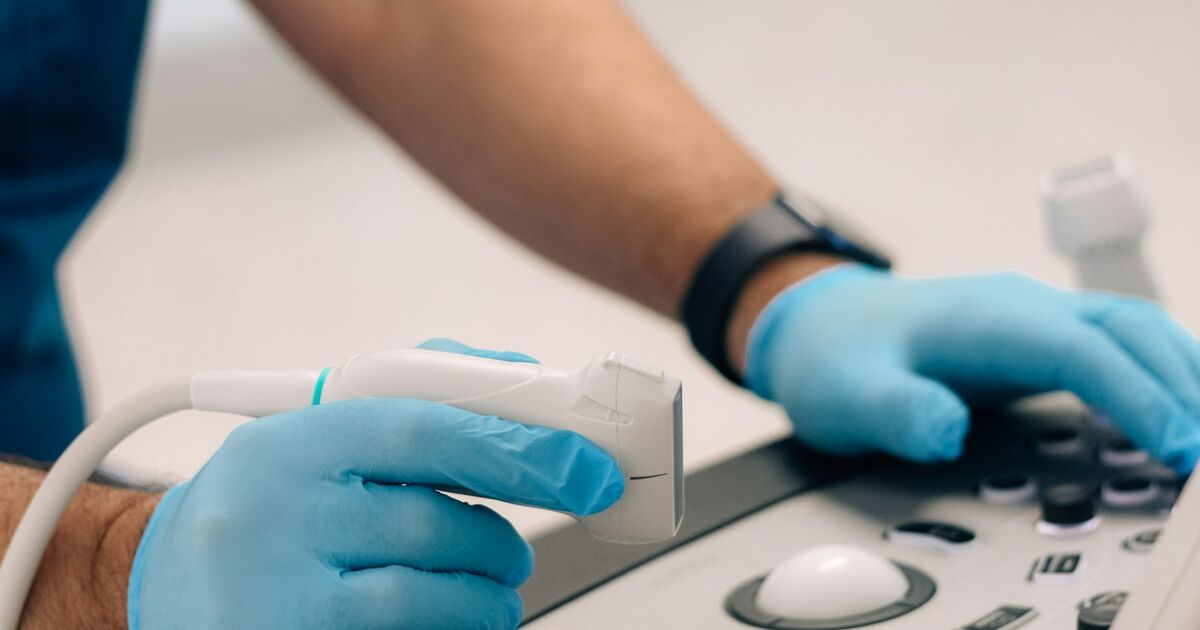
On its own, this blood test is only moderately useful. Its power comes from being combined with the NT scan — an ultrasound measuring nuchal translucency, the fluid-filled space at the back of the baby's neck, along with nasal bone, ductus venosus flow and heart rate. Software then blends your age, weight, gestational age (dated by crown-rump length), marker levels and scan findings into a single risk figure.
Reading the Numbers
Your report will show two things for each marker, and the second is the one that matters:
- Absolute value — for example, free β-hCG 42.6 ng/mL. Meaningless on its own.
- MoM (Multiple of the Median) — the value divided by the median for your exact gestational week. A MoM of 1.0 is exactly average. Roughly 0.5–2.0 MoM is the usual reference band.
The risk section typically reports:
| Report Term | Typical Meaning |
|---|---|
| Low risk / screen negative | Risk below the cut-off (commonly 1 in 250 or 1 in 300) |
| Intermediate risk | Borderline — many labs suggest NIPT as the next step |
| High risk / screen positive | Risk above the cut-off — confirmatory testing offered |
| NT measurement | Under 3.0 mm is generally reassuring at 11–13 weeks |
| Nasal bone | "Present" is reassuring; "absent" raises risk |
Combined first-trimester screening detects roughly 85–87% of Down syndrome cases at a 5% false-positive rate. That 5% is important: about 1 in 20 perfectly healthy pregnancies will be flagged as high risk. This is normal, expected behaviour for a screening test — not a lab error.
What It Costs in India
| Test | Typical Private Cost (₹) |
|---|---|
| Double marker (blood only) | 1,500 – 3,000 |
| NT scan | 1,200 – 3,000 |
| Combined package (NT + double marker + risk report) | 3,000 – 6,000 |
| Quadruple marker | 1,800 – 3,500 |
| NIPT (basic trisomy panel) | 8,000 – 18,000 |
| NIPT (extended microdeletion panel) | 18,000 – 25,000 |
| Amniocentesis + karyotype | 12,000 – 25,000 |
Government medical colleges and district hospitals under the Pradhan Mantri Surakshit Matritva Abhiyan offer first-trimester screening free or at nominal cost in many states, though availability varies widely. Most private health insurance policies in India do not cover routine antenatal screening, since normal pregnancy is treated as a planned expense — worth checking before you book, as our health insurance claims guide explains.
If You Missed the First Trimester: Quadruple Marker Test
Plenty of Indian women reach their first antenatal visit only in the fourth or fifth month — because of travel to the maternal home, a late-confirmed pregnancy, or simply because nobody told them earlier. For them the quadruple marker test (quad marker), done between 15 and 20 weeks (ideally 16–18), is the right test.
It measures four substances:
| Marker | Pattern in Trisomy 21 | Also Flags |
|---|---|---|
| AFP (alpha-fetoprotein) | Lower | High AFP suggests open neural tube defect |
| hCG | Higher | — |
| Unconjugated estriol (uE3) | Lower | — |
| Inhibin A | Higher | — |
The quadruple marker detects around 64–80% of Down syndrome cases at a 5% false-positive rate — less sensitive than combined first-trimester screening, but it has one real advantage: AFP picks up open neural tube defects, which the double marker cannot.
A note on the triple marker test (AFP, hCG, uE3): it is the older version, still offered by some labs at a slightly lower price, and it performs worse than the quad. If both are available, choose the quadruple marker.
NIPT: The Most Accurate Screen — But Still a Screen
Non-invasive prenatal testing (NIPT, also sold in India as NIFTY, Panorama, Harmony, MaterniT21 or cell-free DNA screening) analyses fragments of the baby's DNA that circulate in the mother's bloodstream. It can be done from 10 weeks onwards.
Its performance is in a different league:
| Test | Detection Rate for Trisomy 21 | False-Positive Rate |
|---|---|---|
| Maternal age alone | ~30% | 5% |
| Quadruple marker | 64–80% | 5% |
| Combined first-trimester screening | 85–87% | 5% |
| NIPT | over 99% | under 0.1% |
Four Things Indian Parents Are Rarely Told About NIPT
A positive NIPT still needs confirmation. Because trisomy 21 is uncommon, even a highly accurate test produces some false positives. The single most frequent cause is confined placental mosaicism — the extra chromosome is present in placental cells but not in the baby. A positive NIPT should always be followed by amniocentesis before any irreversible decision is taken.
"No call" results happen. In about 1–5% of samples the lab cannot get enough fetal DNA — more common with higher maternal BMI, very early testing, twins, or heparin use. A repeat sample usually resolves it.
NIPT does not replace the NT scan. Ultrasound detects structural problems — heart defects, limb and kidney anomalies, abdominal wall defects — that no blood test can see. You still need your 11–13 week scan and your 18–22 week anomaly scan.
Fetal sex is never disclosed in India. NIPT can technically read sex chromosomes, but under the PCPNDT Act, 1994, disclosing the sex of a foetus is a criminal offence. Every legitimate Indian lab redacts this. Any lab or individual offering to tell you is breaking the law — do not engage, and do not ask your doctor to.
The Indian Council of Medical Research and Indian Journal of Medical Research guidance suggests a pragmatic, resource-appropriate approach: offer combined first-trimester screening or the quadruple marker to everyone as the first line, and use NIPT as a contingent second-line test for those who screen positive or intermediate. This "contingent screening" model catches nearly as many cases as universal NIPT at a fraction of the cost — a sensible fit for Indian budgets.
Diagnostic Tests: CVS and Amniocentesis
If screening flags a high risk, or if there is a family history of a genetic condition, your doctor will offer a diagnostic test.
| Test | When | What Is Sampled | Added Miscarriage Risk |
|---|---|---|---|
| CVS (chorionic villus sampling) | 11–14 weeks | Placental tissue | ~0.2% in experienced hands |
| Amniocentesis | 15 weeks onwards | Amniotic fluid | ~0.1–0.3% in experienced hands |
Both samples go for karyotyping, QF-PCR (a rapid 2–3 day result for the common trisomies) or microarray. The procedure-related miscarriage risk quoted to Indian patients is often inflated from decades-old figures — in a high-volume fetal medicine centre with ultrasound guidance, modern risk is genuinely small. Ask your obstetrician how many procedures their centre performs each year; volume matters more than anything else.
Who Should Consider Going Straight to Diagnostic Testing
Discuss this with your doctor if you have:
- A previous child or pregnancy with a chromosomal condition
- A known balanced translocation in either parent
- Significant abnormalities on the anomaly scan
- A very high screening risk (for example, 1 in 10)
- NT above 3.5 mm
Your Prenatal Testing Timeline: A Practical Indian Schedule
| Weeks | What Happens | Approximate Cost (₹) |
|---|---|---|
| Pre-conception | Folic acid 400 mcg daily, thalassaemia carrier screening, rubella immunity, thyroid, blood group | 1,500 – 3,000 |
| 6–9 | Confirmation scan, booking bloods (CBC, blood group, HbsAg, HIV, VDRL, TSH, fasting sugar) | 1,500 – 3,500 |
| 10–13+6 | NT scan + double marker (or NIPT if opting directly) | 3,000 – 18,000 |
| 15–20 | Quadruple marker if first trimester missed | 1,800 – 3,500 |
| 18–22 | Anomaly / TIFFA scan — the single most important structural scan | 2,000 – 4,000 |
| 24–28 | OGTT for gestational diabetes, repeat haemoglobin | 600 – 1,500 |
| 28 onwards | Growth scans, Doppler if indicated | 1,500 – 3,000 each |
Two India-specific additions worth raising with your doctor: thalassaemia carrier screening for both partners, given that roughly 3–4% of Indians carry beta-thalassaemia trait (see our thalassaemia guide), and haemoglobin monitoring, since more than half of Indian pregnant women are anaemic.
Antenatal reports pile up fast — a scan CD from one centre, a marker report from a lab, booking bloods from a hospital, all across three different cities if you deliver at your parents' home. When you upload each report to MedicalVault, the values are extracted and organised chronologically, so your haemoglobin trend and every marker value sit in one place you can pull up in any consulting room. The family sharing feature means your spouse or your obstetrician can see the full record without you forwarding twenty photographs on WhatsApp.
Making Sense of a "High Risk" Report Without Panicking
If you get a screen-positive result, work through these steps in order:
- Check the dating. Marker levels are interpreted against your exact gestational week. If the report used a wrong date — common when a scan date and an LMP date disagree — the risk figure is wrong. Ask for recalculation.
- Read the actual number, not the label. "High risk, 1 in 120" means a roughly 99.2% chance the baby does not have the condition.
- Ask for genetic counselling. Most large Indian cities now have fetal medicine units and genetic counsellors. This is a conversation, not a form.
- Consider NIPT as the next step if the risk is intermediate or moderately high — it often resolves the question without a needle.
- Go to amniocentesis for any decision that cannot be reversed. No screening result, NIPT included, should ever be the sole basis for a decision about continuing a pregnancy.
- Take someone with you. These appointments are hard to absorb alone.
Remember also that a low-risk screen is reassuring, not a guarantee. Screening covers specific chromosomal conditions — not every genetic or developmental condition that exists. Continue with your scans and follow your obstetrician's plan.
Key Takeaways
- The double marker test (9–13+6 weeks) measures free β-hCG and PAPP-A, and works best combined with the NT scan — together they detect 85–87% of Down syndrome cases.
- If you missed the first trimester, the quadruple marker test at 15–20 weeks is the right substitute, and it additionally screens for open neural tube defects via AFP.
- NIPT detects over 99% of trisomy 21 with a false-positive rate under 0.1%, and can be done from 10 weeks — but it is still a screening test, not a diagnosis.
- Read the MoM values and the actual risk ratio, not just the "high risk" label. A 1 in 120 risk means roughly a 99% chance the baby is unaffected.
- Only CVS and amniocentesis are diagnostic. Never make an irreversible decision on a screening result alone.
- Under India's PCPNDT Act, fetal sex is never disclosed on any prenatal test — any offer to reveal it is illegal.
- Antenatal care generates reports across multiple labs, scan centres and cities; keeping them in one organised place with MedicalVault's trend analysis means your haemoglobin, thyroid and sugar values are always at hand — and stay accessible long after delivery.
Always discuss your screening choices and results with your obstetrician or a qualified genetic counsellor, who can interpret them in the context of your age, history and scan findings. For a complete view of your pregnancy check-ups, read our antenatal care and pregnancy tests guide, and see the features page to learn how MedicalVault keeps your family's records organised.