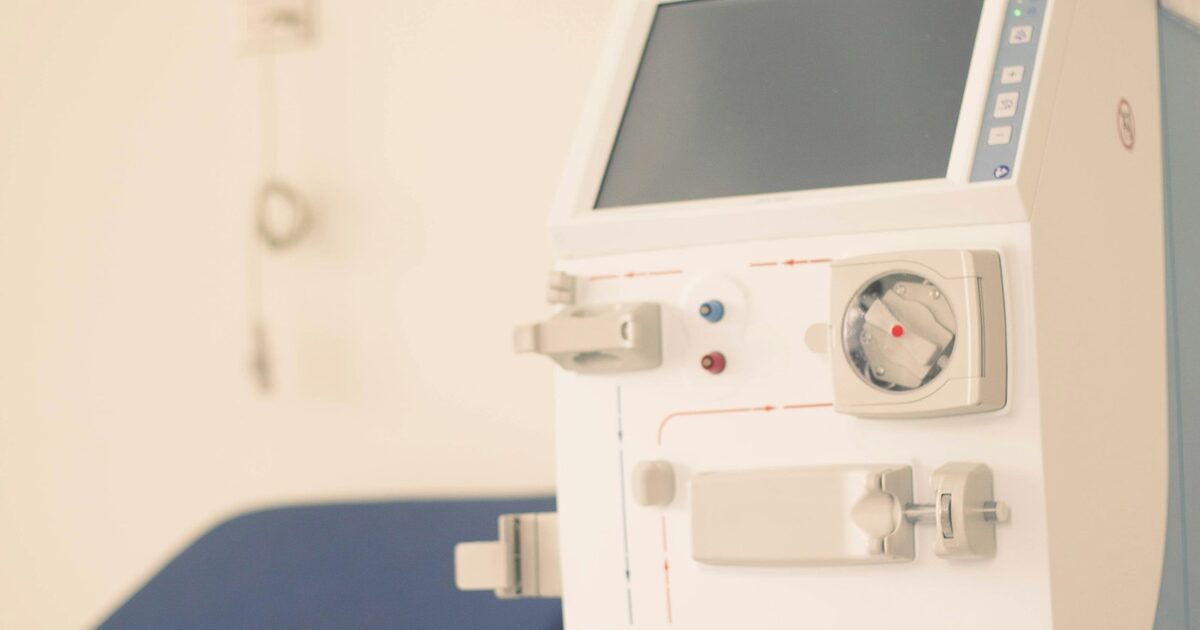
The sentence lands without warning in a nephrologist's room: "Your creatinine is 8.2. We need to start dialysis." For most Indian families, the next few days are a blur of unfamiliar decisions — haemodialysis or peritoneal, government centre or private, which arm the fistula goes into, whether a cousin can donate a kidney, and how a household running on ₹40,000 a month absorbs a treatment that costs ₹2,000 a session, three times a week, indefinitely.
India adds roughly 2.2 lakh new end-stage kidney disease patients every year, generating demand for around 3.4 crore dialysis sessions annually — against an infrastructure that meets less than half of it. Meanwhile over 2 lakh Indians sit on kidney transplant waiting lists while only 5,000–6,000 transplants happen each year. This guide explains what dialysis actually does, how haemodialysis and peritoneal dialysis differ in real Indian conditions, what the free government programme covers, how transplant works under Indian law, and the practical daily details nobody hands you a leaflet about.
When Does Dialysis Actually Become Necessary?
Healthy kidneys filter waste, balance salts and water, control blood pressure, and signal the marrow to make red blood cells. Dialysis replaces only the first two of those jobs — imperfectly, and part-time.
Chronic kidney disease is staged by eGFR, an estimate of filtration calculated from your creatinine, age and sex:
| Stage | eGFR (mL/min/1.73m²) | What It Means |
|---|---|---|
| Stage 1–2 | 60 and above (with other evidence of damage) | Early; entirely manageable with treatment |
| Stage 3a–3b | 30–59 | Moderate; nephrologist referral, slow the decline |
| Stage 4 | 15–29 | Severe; start planning access and transplant work-up |
| Stage 5 | Below 15 | Kidney failure; dialysis or transplant needed |
Dialysis is not started on a number alone. Your nephrologist weighs symptoms and biochemistry together — persistent nausea and vomiting, breathlessness from fluid overload, uncontrollable potassium, acidosis, uraemic pericarditis, confusion, or intractable blood pressure. Many patients function reasonably at an eGFR of 12 and are started later; others need it at 16.
Two Indian realities matter here. Diabetes and hypertension cause the majority of kidney failure in India, which means the disease usually arrives on top of an existing condition that also needs managing — our diabetes management and hypertension guides cover that side. And a significant number of Indian patients first present in Stage 5, having never had a creatinine checked, because early kidney disease is completely silent. If you have diabetes or high blood pressure, an annual creatinine and urine albumin test is the cheapest insurance you will ever buy — see our chronic kidney disease guide.
The Preparation That Should Happen Before Day One
Ideally, months before the first session:
- Vascular access created — an AV fistula takes 6 weeks to 6 months to mature
- Hepatitis B vaccination completed, since dialysis units are a transmission risk
- Transplant work-up begun, including potential family donors
- Anaemia and bone-mineral problems treated
- Registration done at a PMNDP centre or under a state scheme
Starting dialysis through a neck catheter in an emergency — which is how a large share of Indian patients begin — carries far higher infection risk than starting through a matured fistula. If your eGFR is drifting below 20, ask your nephrologist directly: "Should we be creating access now?"
Haemodialysis vs Peritoneal Dialysis in Indian Conditions
| Haemodialysis (HD) | Peritoneal Dialysis (PD) | |
|---|---|---|
| How | Blood pumped through an external filter (dialyser) | Fluid run into the abdomen; the peritoneum acts as the filter |
| Where | Hospital or dialysis centre | At home, by the patient or family |
| Schedule | Usually 4 hours, 3 times a week | 3–5 exchanges daily (CAPD), or overnight on a machine (APD) |
| Access | AV fistula, AV graft, or neck catheter | Soft catheter through the abdominal wall |
| Travel | Tied to centre availability | Portable; supplies delivered |
| Diet/fluid limits | Stricter — usually under 1 litre fluid/day | More relaxed |
| Main risk | Access infection/clotting, BP crashes, cramps | Peritonitis (abdominal infection) |
| Residual kidney function | Declines faster | Preserved longer |
| Typical Indian cost | ₹1,500–3,000 per session privately; free under PMNDP | ₹18,000–25,000 per month for fluids and supplies |
Haemodialysis dominates in India, largely because PD depends on a clean home environment, reliable monthly delivery of heavy fluid bags, storage space, and a family member trained to perform sterile exchanges. In a crowded urban home during the monsoon, peritonitis risk is real.
But PD deserves a fairer hearing than it usually gets, particularly for:
- Patients in small towns far from any dialysis centre — no three-times-a-week travel
- Working adults who cannot lose three afternoons a week
- Children, for whom PD is often preferred
- People with unstable hearts who tolerate gentle continuous filtering better than rapid sessions
Ask your nephrologist to discuss both. Many Indian patients are never offered the choice.
What Dialysis Costs — and What the Government Covers
| Item | Typical Cost |
|---|---|
| Haemodialysis session (private) | ₹1,500 – 3,000 |
| Monthly HD (thrice weekly, private) | ₹20,000 – 35,000 |
| Erythropoietin injections, iron, binders | ₹4,000 – 10,000 per month |
| AV fistula surgery | ₹15,000 – 40,000 |
| CAPD, monthly | ₹18,000 – 25,000 |
| Kidney transplant (surgery + stay) | ₹5 – 15 lakh |
| Post-transplant immunosuppressants | ₹10,000 – 25,000 per month initially |
The Pradhan Mantri National Dialysis Programme (PMNDP), launched in 2016 under the National Health Mission, provides free haemodialysis to eligible patients at district hospitals in public-private partnership mode. It has expanded to well over 1,300 centres across all states and union territories, with thousands of machines, and has served lakhs of beneficiaries. In many states, consumables, the dialyser and transport support are included.
How to access it:
- Go to the district hospital's dialysis unit with your nephrologist's referral and recent reports
- Carry Aadhaar, ration card or the state's BPL documentation as required
- Register — allocation is usually by slot, so ask about timing flexibility for working patients
- Check your state scheme too; several states run their own dialysis schemes with wider eligibility
Ayushman Bharat PM-JAY covers dialysis packages and transplant surgery for eligible families up to ₹5 lakh per year. Private health insurance covers dialysis in most policies, but it is usually claimed as day-care treatment rather than outpatient — the distinction decides whether your claim is paid, so read our health insurance claims guide before your first session.
A hard practical truth: dialysis paperwork is relentless. Every session generates a record, every month brings new haemoglobin, potassium, phosphate, calcium and PTH values, and every insurance claim demands the previous set. Families who keep these reports in MedicalVault can pull a six-month potassium trend or a full lab history at a claims desk instead of hunting through a bag of loose slips — and the family sharing feature lets a son in another city see his father's latest numbers the same evening.
Living Well on Dialysis: Diet, Fluid and Daily Life
The Indian Renal Diet, Honestly
Standard renal diet advice is written for Western plates. Translating it to Indian food is where most patients struggle.
| Restrict | Common Indian Sources |
|---|---|
| Potassium | Banana, coconut water, potato, tomato, spinach and most saag, dates, dry fruits, rajma, chana, sambar with lots of dal, citrus |
| Phosphorus | Milk, curd, paneer, cheese, whole dals, nuts, cola, processed and packaged food |
| Sodium | Pickle, papad, namkeen, chutney, packaged masala, added table salt, processed meat |
| Fluid | Water, tea, coffee, dal, sambar, rasam, curd, ice, juice, soups — everything liquid counts |
| Protein | Actually needs to be higher on dialysis, unlike pre-dialysis CKD — get this from your dietitian |
Techniques that genuinely help in Indian kitchens:
- Leaching vegetables: peel, cut small, soak in warm water for 2 hours, discard the water, then boil in fresh water and discard again. This removes a substantial share of potassium from potato, arbi and leafy vegetables.
- Double-boiling dals and discarding the first water.
- Cook rice in excess water and drain it, the traditional south Indian way, rather than absorption-cooking.
- Coconut water is not healthy for you. This single belief causes more dangerous potassium spikes in Indian dialysis patients than almost anything else. The same applies to "healthy" banana shakes and dry-fruit mixes pressed on patients by well-meaning relatives.
- Manage thirst without drinking: ice chips counted within your allowance, sour boiled sweets, lemon wedges, chewing gum, frequent mouth rinsing without swallowing, and cutting salt (which is what drives thirst in the first place).
Fistula Care
Your fistula is your lifeline. Every day:
- Feel for the thrill — the buzzing vibration — and report immediately if it disappears
- No blood pressure cuffs, no blood draws, no IV lines, no injections in that arm; tell every doctor and nurse
- No watch, tight bangles or sleeves on that arm; avoid sleeping on it
- No heavy lifting with that arm
- Report redness, swelling, pain, fever or bleeding immediately
Symptoms to Report Without Waiting
- Breathlessness, or sudden weight gain between sessions (fluid overload)
- Chest pain or palpitations (potassium, or cardiac disease)
- Fever, or a cloudy PD bag (infection — peritonitis is an emergency)
- Severe cramps or dizziness during sessions
- Bleeding that does not stop at the needle site
Work, Travel and Mental Health
Many Indians on dialysis continue working — nocturnal or evening slots, or PD, make this far more feasible. For travel, ask your unit to arrange a "guest dialysis" slot at your destination; carry a summary of your prescription, dry weight, dialyser type and recent labs.
Depression is very common on dialysis and very under-treated in India. The relentlessness, dependence, dietary loss and financial strain are genuinely hard. It is not weakness, and it is treatable — raise it with your nephrologist, and see our mental health guide.
Kidney Transplant: The Better Long-Term Answer
A successful transplant offers better survival, better quality of life and lower long-term cost than years of dialysis. Under India's Transplantation of Human Organs and Tissues Act (1994, amended 2011), organ sale is a criminal offence, and donation is legal from:
- Living related donors — parents, siblings, children, grandparents, spouse
- Living unrelated donors — permitted only with authorisation committee approval, on proof of genuine affection and no payment
- Deceased donors — after brain-stem death certification, allocated through NOTTO and its regional and state counterparts
Blood group incompatibility no longer rules out donation — ABO-incompatible transplants and paired kidney exchange (swap programmes) are now performed at many Indian centres.
Register on your state's deceased-donor waiting list early, ideally before starting dialysis. Allocation considers blood group, tissue matching, waiting time, medical urgency and geography. With over 2 lakh people waiting and only a few thousand transplants performed each year, waiting times for a deceased-donor kidney run into years — which is why a living donor within the family is the realistic route for most Indians, and why pledging organ donation matters at a national level.
After transplant, lifelong immunosuppressants, regular creatinine monitoring and infection vigilance become the new routine. The medicines are expensive early on and taper, and many state schemes and PM-JAY provide some support.
Key Takeaways
- India adds about 2.2 lakh new kidney failure patients a year, and existing dialysis infrastructure meets under half the need — diabetes and hypertension are the leading causes.
- Dialysis is planned, not sudden. Ask about creating an AV fistula when your eGFR approaches 20; starting through an emergency neck catheter carries far higher infection risk.
- Peritoneal dialysis is under-offered in India and suits small-town patients, working adults and children — ask your nephrologist to discuss both modalities.
- The PMNDP provides free haemodialysis at district hospitals across all states, and PM-JAY covers dialysis and transplant packages for eligible families.
- Coconut water, banana and dry fruits are dangerous, not healthy, once you are on dialysis — potassium is the silent risk, and leaching or double-boiling vegetables genuinely works.
- Protect your fistula: no BP cuffs, no blood draws, no injections in that arm, and check the thrill daily.
- A transplant is the better long-term option — register early, understand that living related donation is the realistic route in India, and know that organ sale is illegal.
- Dialysis generates lab reports monthly for years; keeping them organised with MedicalVault's trend analysis means potassium, haemoglobin and phosphate trends — and insurance claims — are always at hand.
Every decision here — when to start, which modality, transplant timing, diet targets — belongs to you and your nephrologist together. Use this guide to ask better questions at your next appointment, read our kidney function test guide to understand your numbers, and visit the features page to see how MedicalVault helps families manage long-term treatment records.