A retired school principal from Pune, diabetic for 12 years, noticed a small blister on the sole of his foot. He assumed it was nothing — just a minor irritation from his chappals. Two weeks later, the blister had become an infected ulcer that reached the bone. He spent three months in hospital and lost two toes. His endocrinologist later told him: "If you had come in on day one, none of this would have happened."
This story is not unusual. India has over 10 crore people with diabetes, and 1 lakh non-traumatic amputations are performed every year due to diabetic foot complications — a figure that places India among the countries with the highest diabetic amputation burden in the world. The tragedy is that up to 85% of these amputations are preventable with simple, consistent foot care that takes just five minutes a day.
This guide explains why diabetic foot complications happen, how to spot them early, and — most importantly — what you can do right now to protect your feet.
Why Diabetes Destroys Feet: The Two Key Mechanisms
Before diving into prevention, it helps to understand why diabetes makes feet so vulnerable. There are two biological processes at work:
1. Diabetic Neuropathy — When Your Feet Go Silent
Diabetic peripheral neuropathy is nerve damage caused by chronically high blood sugar. In India, neuropathic lesions account for 80% of all diabetic foot ulcers. When nerves are damaged:
- You stop feeling pain, heat, and pressure — so a wound can develop and worsen for days without you noticing it
- Muscles in the foot weaken and change shape, creating pressure points (calluses, hammertoes, bunions) where skin is prone to breaking down
- Sweating is reduced, causing skin to dry out and crack — small cracks become entry points for bacteria
The cruel irony: diabetic neuropathy removes the very warning signal (pain) that would normally prompt you to protect your foot.
2. Peripheral Arterial Disease — When Your Feet Run Low on Blood
Peripheral arterial disease (PAD) occurs when blood vessels supplying the legs and feet become narrowed by fatty deposits — a process accelerated by diabetes, smoking, and high blood pressure (all of which are very common together in Indian patients).
When blood flow is reduced:
- Wounds heal very slowly or not at all
- Infection spreads rapidly because immune cells cannot reach the area effectively
- Skin becomes thin, shiny, and hairless — signs of poor circulation
In India, a significant number of diabetic patients have both neuropathy and PAD simultaneously (neuroischaemic ulcers), which are the hardest to treat and carry the highest amputation risk.
The 5-Minute Daily Foot Inspection — Your Most Important Habit
The cornerstone of diabetic foot care is daily inspection. This means examining every part of your feet every single day, ideally at the same time (many doctors recommend doing it after your evening bath). You are looking for any change — no matter how small.
What to Look For
Use a hand mirror to see the bottom of your feet, or ask a family member to help if you cannot bend easily.
| Area | What to Check |
|---|---|
| Sole (plantar surface) | Blisters, cuts, cracks, discoloration, calluses, any area of redness |
| Between toes | Soggy/macerated skin, fungal infection (white, smelly, peeling), cuts |
| Heel | Cracked heels, bleeding cracks, deep fissures |
| Toenails | Thickened nails, ingrown toenails, nail discolouration (can indicate fungal infection) |
| Top of foot (dorsum) | Redness, swelling, bony prominences |
| Ankles and lower leg | Swelling, darkening of skin, varicose veins |
What Requires Immediate Medical Attention
Do not wait even a single day if you notice:
- Any open wound, cut, or blister — however small
- Redness or warmth in any area of the foot
- Swelling in one foot or ankle that appeared suddenly
- Any black or dark discolouration of the skin (this can signal gangrene)
- Pus or discharge from any area
- A bad smell from the foot
- Fever + foot symptoms combined — this is an emergency
Track your foot inspection findings using MedicalVault's report tracking feature — photograph wounds regularly and save images in your health record so your doctor can assess progression over telemedicine calls.
Footwear: The Single Most Important External Factor
In India, chappals and open sandals are by far the most common cause of diabetic foot injuries. A pebble inside a chappal, a sharp edge on a stone floor, hot pavement on a summer afternoon — these cause injuries that a person with neuropathy simply cannot feel.
Diabetic Footwear Rules
Always wear shoes indoors and outdoors. This one rule alone prevents the majority of foot injuries in diabetic patients.
- Choose closed, well-fitting shoes with a wide toe box (so toes are not compressed), a cushioned insole, and a low heel (under 4 cm)
- Check inside the shoe with your hand before wearing — feel for any small stones, stitching that has come loose, or rough areas inside
- Never walk barefoot, even at home, even on soft floors. Many infections start from a small cut on a stone floor or a sharp object on carpet
- Avoid rubber chappals/flip-flops that provide no protection and cause friction between toes
- Change shoes every few hours if you are wearing them all day, to redistribute pressure points
- Wear cotton or moisture-wicking socks inside shoes — never go sockless inside closed shoes. Socks should be seamless (or socks worn inside-out) to avoid seam pressure points
When to Consider Diabetic Footwear
If your doctor has classified you as high risk (neuropathy, previous ulcer, foot deformity, previous amputation), you should discuss custom therapeutic footwear with an orthopaedic or podiatric specialist. Custom insoles (orthotics) can redistribute pressure away from high-risk areas. These are available at major orthopaedic centres and some diabetic foot clinics at hospitals like AIIMS, JIPMER, and Apollo.
Skin and Nail Care: Practical Tips
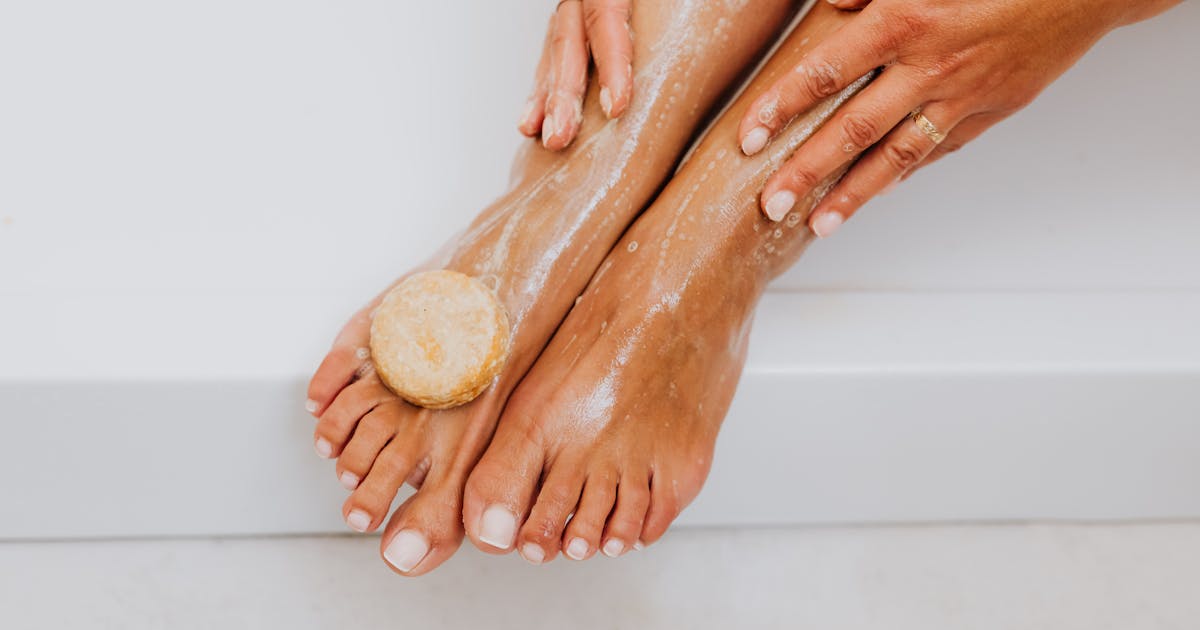
Washing and Drying
- Wash feet daily with lukewarm water (not hot — test temperature with your elbow if you have neuropathy, since you may not feel scalding water on your feet)
- Use a mild soap and wash gently
- Dry carefully and completely, including between toes — moisture trapped between toes causes fungal infections (athlete's foot) that can rapidly progress to bacterial infection in diabetic patients
- Do not soak feet — prolonged soaking softens and weakens skin, making it prone to breaking down
Moisturising
- Apply a good moisturiser (coconut oil works well in the Indian context, as do urea-based creams like Dermadew or Neutrogena Foot Cream) to the soles and tops of the feet every day after washing
- Do not apply moisturiser between the toes — this area stays moist enough and excess moisture encourages fungal growth
- Cracked heels are extremely common in India and can become entry points for bacteria — treat them with petroleum jelly (Vaseline) overnight with socks, and have hardened calluses removed by a healthcare professional (not at home)
Nail Care
- Cut nails straight across, not curved, to prevent ingrown toenails
- File sharp edges with an emery board
- Do not cut nails too short — leave a small white edge
- If your nails are thick and difficult to cut (common with fungal infection), have them trimmed by a healthcare professional, not a street barber
- Antifungal treatment: If you notice thickened, discoloured, or brittle toenails, consult a dermatologist. Oral antifungals (terbinafine, fluconazole — commonly available as Terbiforce, Forcan in India) treat fungal nail infections but require liver function monitoring in diabetic patients
Understanding the Wagner Classification of Diabetic Foot Ulcers
If you or a family member develops a diabetic foot wound, your doctor will use a grading system to determine severity. The most commonly used in India is the Wagner Classification:
| Grade | Description | Typical Treatment |
|---|---|---|
| 0 | No ulcer, but high-risk foot (neuropathy/deformity) | Prevention education, footwear |
| 1 | Superficial ulcer (skin only) | Wound dressing, offloading, antibiotics if infected |
| 2 | Ulcer reaching tendon, capsule, or bone | Hospitalisation, IV antibiotics, surgical debridement |
| 3 | Deep ulcer with abscess, osteomyelitis, or joint infection | Urgent surgery, extended antibiotics |
| 4 | Localised gangrene (toe or forefoot) | Amputation of affected part |
| 5 | Extensive gangrene of whole foot | Below-knee or above-knee amputation |
Most Grade 0 and Grade 1 ulcers heal completely with proper care. The tragedy occurs when Grade 1 lesions are ignored and progress to Grade 3 or 4. This is why the first day of a wound matters so much.
Blood Sugar Control: The Foundation of Everything
No foot care routine compensates for poorly controlled blood sugar. High glucose:
- Impairs white blood cell function (immune response)
- Slows wound healing (impaired collagen production)
- Promotes bacterial and fungal growth
- Worsens neuropathy and vascular disease
Target HbA1c levels recommended by most Indian endocrinologists for diabetic foot prevention:
| Target | Value |
|---|---|
| HbA1c | < 7% (ideally < 6.5% in younger patients) |
| Fasting blood sugar | 80–130 mg/dL |
| Post-meal blood sugar (2 hours) | < 180 mg/dL |
Track your HbA1c and blood sugar test reports on MedicalVault to monitor your control over time and spot patterns before they cause complications.
Smoking: The Silent Accelerator
Smoking is an independent major risk factor for peripheral arterial disease — and therefore for non-healing ulcers and amputation. Diabetic patients who smoke face a dramatically higher amputation risk than those who do not. Quitting smoking is one of the most powerful steps a diabetic patient can take to protect their feet.
Resources available in India: iCall helpline (9152987821), the NTPC nicotine replacement patches (available at pharmacies), and smoking cessation clinics at AIIMS and other major hospitals.
When to Visit a Diabetic Foot Clinic
Diabetic foot clinics (also called multidisciplinary diabetic foot care units) offer specialised assessment by endocrinologists, vascular surgeons, orthopaedic surgeons, and wound care nurses working together. Major centres in India offering these include:
- AIIMS (New Delhi, Bhopal, Jodhpur)
- JIPMER (Puducherry)
- PGI (Chandigarh)
- Apollo Hospitals (multiple cities)
- Fortis Hospitals (multiple cities)
- Ramaiah Medical College (Bangalore)
- Christian Medical College (Vellore)
Ask for a diabetic foot assessment even if you have no symptoms, ideally at your annual diabetes check-up. Your doctor will check for:
- Monofilament test (10g Semmes-Weinstein): Tests protective sensation — the most important bedside screening tool for neuropathy
- Tuning fork test: Tests vibration sense
- Ankle-brachial index (ABI): Screens for peripheral arterial disease
- Foot pulses (posterior tibial, dorsalis pedis)
- Pressure mapping in high-risk patients
Knowing your risk category helps determine how often you need review: low-risk patients annually, high-risk patients every 3–6 months.
Key Takeaways
- India sees 1 lakh diabetic amputations per year — up to 85% are preventable with daily foot care and early intervention.
- The two causes of diabetic foot damage are neuropathy (lost pain sensation) and peripheral arterial disease (poor blood flow) — both are accelerated by high blood sugar and smoking.
- Inspect your feet every single day — use a mirror for the soles, and never ignore any redness, blister, or break in skin, however small.
- Never walk barefoot — always wear well-fitting closed shoes both indoors and outdoors.
- Wash with lukewarm water, dry completely (especially between toes), moisturise soles daily, and cut nails straight across.
- Any open wound needs same-day medical attention — do not wait to see if it heals on its own.
- Control your blood sugar — target HbA1c < 7% — because good glycaemic control is the single most powerful protector against all diabetic foot complications.
- Use MedicalVault's family sharing feature to share your lab reports with your endocrinologist and family members — so everyone stays informed about your health journey.
Related reading: Diabetic Neuropathy Guide | Diabetes Management in India | HbA1c Test Guide | Preventive Health Check-Up