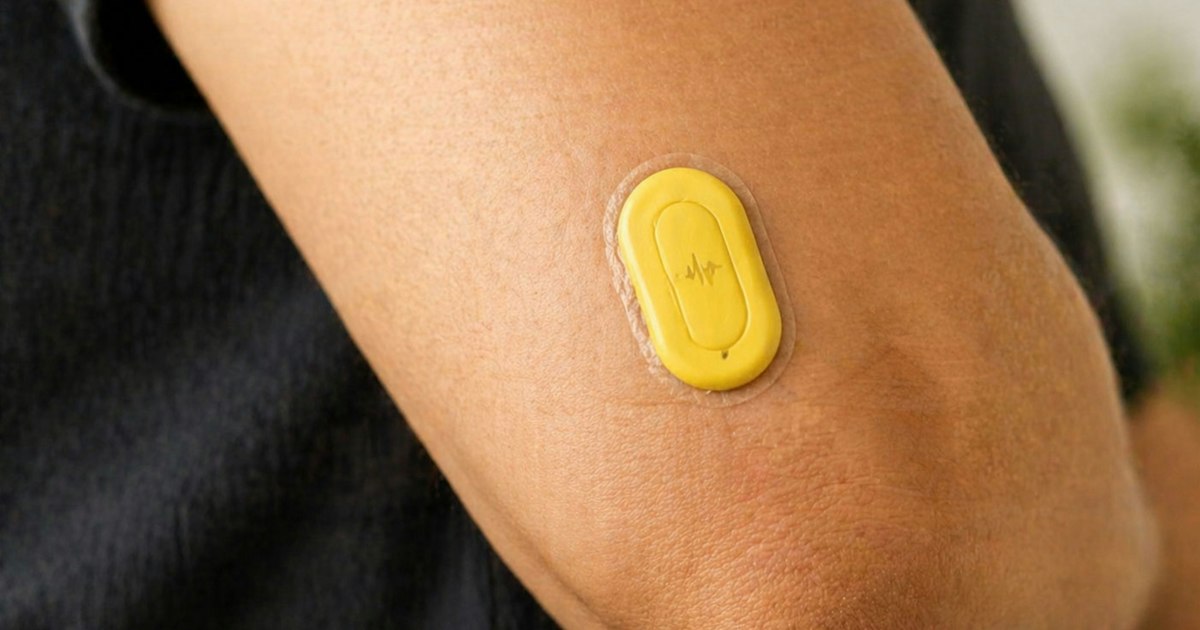
A small white sensor stuck to the back of an arm, quietly reporting a blood sugar reading every few minutes onto a phone screen — five years ago this was something only insulin-dependent patients in premium Indian hospitals used. Today it shows up on the arms of software engineers in Bengaluru, marathon runners in Mumbai, and increasingly, worried adult children trying to understand why a parent's blood sugar keeps swinging after every meal. The Continuous Glucose Monitor, or CGM, has moved from a niche medical device to a mainstream wellness gadget in India, and homegrown brands are now racing to make it affordable. With India's diabetes and prediabetes burden among the largest in the world, that shift is worth understanding properly — including where CGMs genuinely help and where the marketing has outrun the science.
What a CGM Actually Is
A Continuous Glucose Monitor is a small sensor, usually worn on the back of the upper arm or abdomen, with a thin filament that sits just under the skin and measures glucose in the interstitial fluid (the fluid between cells) rather than directly in blood, the way a fingerstick glucometer does. It takes a reading every one to five minutes and sends the data via Bluetooth to a phone app, building a continuous graph of your blood sugar rather than the single-point snapshots that a fasting or post-meal blood test gives you.
Most sensors worn today last 14 days and are disposable — you apply a new one every two weeks with a simple applicator. Because there is a short lag between blood glucose and interstitial fluid glucose, CGM readings run a few minutes behind an actual blood draw, particularly when sugar levels are changing quickly, which is one of several reasons they are described as an estimate of blood sugar rather than a diagnostic-grade measurement.
Why CGMs Have Taken Off in India
India carries one of the largest diabetes burdens in the world. The ICMR-INDIAB study, the largest population-based survey of its kind, estimated that over 101 million Indians are living with diabetes, with a further 136 million in the prediabetes stage — meaning glucose dysregulation now touches a meaningful share of the adult population, often silently for years before a diagnosis. Against that backdrop, a device that shows glucose trends in real time, rather than waiting for an annual HbA1c or fasting blood sugar test, has obvious appeal.
A second force has been price. Abbott's FreeStyle Libre popularised CGM in India for people with diabetes, but pricing historically kept it out of reach for casual or preventive use, with a single two-week sensor often costing several thousand rupees. That started changing as Indian companies — Ultrahuman with its M1 platform, and diagnostics-and-diabetes-care players like BeatO — entered the market with their own sensors and consumer-facing apps, some integrating directly with Abbott's Libre sensor hardware. Increased local competition through 2025 and 2026 has pushed sensor prices down meaningfully, with some domestic players pricing a 14-day sensor closer to ₹4,000, compared to nearly ₹5,000-7,000 for earlier premium options — still a real expense, but increasingly within reach for people who want to trial it for a cycle or two rather than committing indefinitely.
Who Is Actually Wearing CGMs Now
Broadly, three kinds of users have emerged in India:
- People with Type 1 or insulin-dependent Type 2 diabetes, for whom CGM is a genuine clinical tool — it replaces multiple daily fingersticks, can alert to dangerous lows overnight, and gives doctors far richer data than a single HbA1c number every three months
- People with prediabetes or a strong family history of diabetes, using CGM as an early-warning and lifestyle-feedback tool to see which specific foods and habits spike their sugar before a formal diagnosis arrives
- Metabolically healthy adults using it as a wellness/biohacking device, often through apps like Ultrahuman or HealthifyMe's Cyborg programme, mainly to understand their own diet and glycaemic response, unrelated to any existing diagnosis
The clinical value is clearest for the first group and reasonably well-supported for the second. For the third group — healthy adults with no diabetes risk — the evidence for meaningful long-term health benefit is much thinner, even though the trend data can be genuinely interesting.
What the Research Says About Accuracy
CGM accuracy is usually measured using something called the Mean Absolute Relative Difference (MARD) — essentially, how far off the sensor's reading is from a reference blood glucose measurement, on average. Published studies on CGM systems widely used in India report MARD figures in roughly the 9-13% range compared to laboratory blood draws, which is considered clinically acceptable for identifying trends and patterns but is not precise enough to make moment-to-moment treatment decisions the way a lab blood test is.
A notable India-specific study, published examining Ultrahuman's M1 CGM in non-diabetic and prediabetic Indian adults, found that even people without a diabetes diagnosis showed meaningful glycaemic variability and post-meal spikes over a 14-day monitoring period — useful evidence that South Asian metabolic responses to common foods can differ from Western reference data, and part of why Indian-specific benchmarking has been described as a gap worth filling. Independent accuracy work on similar sensors in non-diabetic young adults has generally found acceptable agreement with blood glucose readings at a group level, though individual readings can still drift meaningfully from a true blood value, especially during rapid glucose changes such as immediately after a meal or during exercise.
Understanding Your CGM Data
Most CGM apps distil their graphs into a few key numbers, borrowed from clinical diabetes management:
| Metric | What It Means |
|---|---|
| Time in Range (TIR) | Percentage of the day your glucose stayed within a target band (commonly 70-180 mg/dL for people with diabetes; tighter for others) |
| Glucose spikes | How high and how fast your sugar rises after a specific meal — useful for identifying personally problematic foods |
| Average glucose | A rough proxy for your overall glycaemic control over the monitoring period |
| Glucose variability | How much your sugar swings up and down through the day — high variability is itself associated with metabolic stress, independent of the average |
The most genuinely useful habit CGM encourages is connecting a specific food or activity to a specific glucose response — noticing, for instance, that a plate of white rice and dal spikes your sugar higher than the same meal with more vegetables and a short walk afterwards. Used this way, over two or three sensor cycles, it can meaningfully sharpen everyday food choices in a way a single annual blood test cannot.
What a CGM Cannot Do
It is worth being clear-eyed about the limits, because marketing around consumer CGM devices in India can outpace what the technology actually delivers:
- It cannot diagnose diabetes or prediabetes. A formal diagnosis still requires a fasting glucose, oral glucose tolerance test, or HbA1c interpreted by a doctor — CGM trend data can prompt that conversation, but does not replace it.
- Readings can drift from true blood glucose, particularly during rapid changes, in the first and last day of a sensor's wear, or if the sensor is compressed while sleeping on that arm.
- It measures interstitial fluid, not blood, glucose, so there is always a short physiological lag that matters most during fast swings, such as right after eating something sugary.
- Long-term outcome data for healthy, non-diabetic users is still limited. Whether wearing a CGM as a wellness device for months actually changes long-term health outcomes, versus simply raising food-related anxiety, is not yet well established in research.
- It is not currently regulated in India as a prescription-only medical device the way it is in some countries, so consumer marketing claims should be read with the same scepticism you would apply to any wellness gadget.
If a CGM shows an unusual pattern — persistently high fasting readings, or repeated spikes well above 180-200 mg/dL — treat it as a prompt to see a doctor and get a proper blood test, not as a self-diagnosis.
Cost and Getting Started
A single CGM sensor in India currently costs roughly ₹2,000 to ₹7,000 depending on the brand and whether it is bought standalone or bundled with an app subscription, with most sensors lasting 14 days. People with diagnosed diabetes may have insurance coverage or doctor-prescribed access through a hospital programme, while wellness users typically buy directly through brand apps or e-pharmacy platforms. If you are trying CGM for the first time, doing one or two 14-day cycles — one covering a normal routine, another covering a period with more festive or restaurant eating — usually gives a clearer picture than an ongoing subscription from day one.
Privacy: Your Glucose Data Is Health Data
A CGM app collects an intimate, continuous stream of your metabolic data, often alongside meal logs, weight, sleep, and sometimes location. Under India's Digital Personal Data Protection (DPDP) Act, 2023, this qualifies as sensitive personal data, and companies handling it are expected to be transparent about what they collect, why, and whether it is shared with third parties such as insurers or advertisers. Before committing to a CGM app, it is worth checking whether you can export your own data and request its deletion — the same due diligence covered in more depth in our guide to wearables and the DPDP Act.
Who Should Actually Consider a CGM
A CGM is most clearly worth the cost if you:
- Have diabetes and want richer data than periodic fingersticks or a three-monthly HbA1c can offer — always in consultation with your treating doctor
- Have prediabetes or a strong family history of diabetes and want concrete, personalised feedback on which foods and habits affect your sugar most
- Are recovering from gestational diabetes and want to track your glucose response during or after pregnancy, under medical guidance
- Are simply curious and can treat the data as a two-week experiment rather than a source of ongoing anxiety
It is probably not necessary if you have no risk factors, a recent normal fasting or HbA1c result, and no strong motivation to change your diet based on the data — a periodic lab test will tell you what you need to know at a fraction of the cost.
Bringing CGM Data Together With Your Real Records
A CGM app is very good at showing you two weeks of glucose trends, but that picture is only half the story without your actual lab-verified HbA1c, fasting glucose, and lipid results sitting alongside it. Most CGM apps are not built to store years of prescriptions, discharge summaries, or annual blood work — and switching brands or losing access to an old app can mean losing that history entirely. Keeping your lab reports uploaded to MedicalVault means your CGM-driven food insights and your doctor-ordered blood tests live in one place, and MedicalVault's trend analysis lets you watch your HbA1c and fasting sugar move over months and years — the slower, clinically-verified counterpart to the CGM's day-to-day view. For families managing a parent's diabetes from another city, the family sharing feature means everyone can see the same HbA1c history and doctor's notes, even if only one person is physically present to help with the CGM itself.
Key Takeaways
- A CGM is a wearable sensor that tracks glucose continuously via interstitial fluid, giving trend data rather than single-point readings like a fingerstick or lab test
- India's CGM market has grown quickly alongside a massive diabetes and prediabetes burden — ICMR-INDIAB estimates over 101 million Indians with diabetes and 136 million with prediabetes
- Domestic competition from brands like Ultrahuman and BeatO, alongside Abbott's FreeStyle Libre, has pushed 14-day sensor prices down, though they remain a real cost at roughly ₹2,000-7,000 per sensor
- Published accuracy studies show CGMs are reasonably reliable for spotting trends (MARD roughly 9-13%) but are not precise enough to replace clinical blood tests for diagnosis or treatment decisions
- CGM is most clearly valuable for people with diabetes, prediabetes, or a strong family history — the evidence for long-term benefit in metabolically healthy users is still limited
- Your glucose data is sensitive personal data under India's DPDP Act, so check what a CGM app collects and whether you can delete it
- Pairing a CGM's short-term food insights with your long-term HbA1c and fasting glucose trends, for instance by keeping both in MedicalVault, gives a far more complete picture than either data source alone
Used well, a CGM can turn a vague sense of "I should eat better" into specific, personal evidence about which meals actually spike your sugar. Used carelessly, it can become an expensive source of anxiety over numbers that need a doctor's context to interpret correctly. The device is a lens on your metabolism — your doctor, backed by proper lab tests, remains the one best placed to tell you what to do about what it shows.