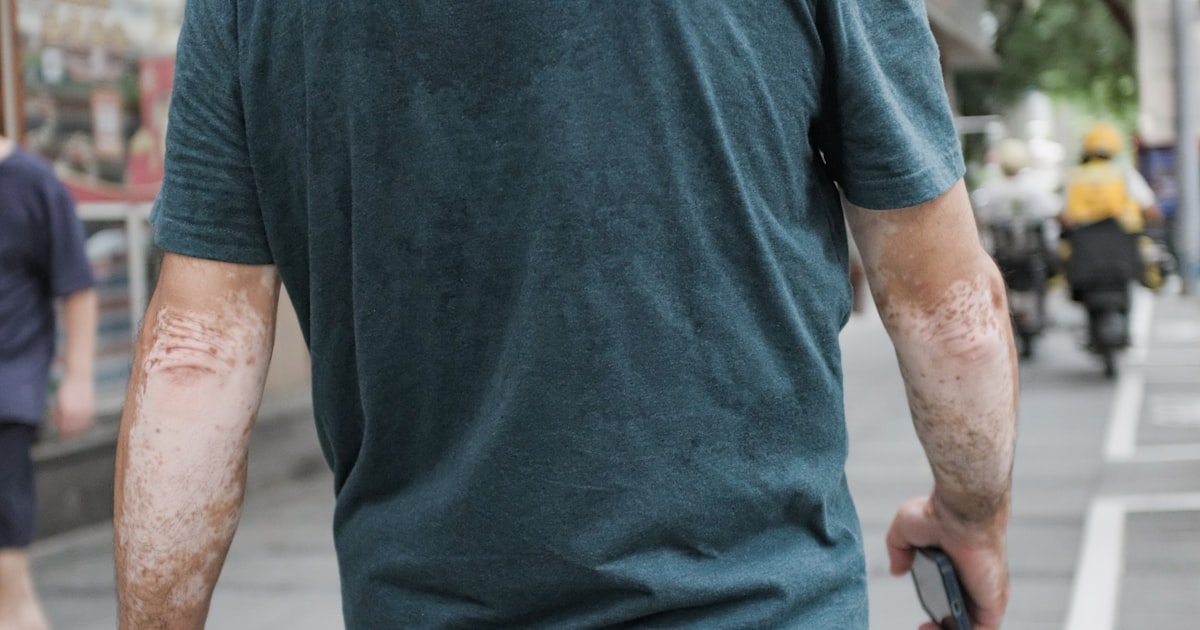
A 24-year-old bride-to-be in Ahmedabad notices a small white patch behind her ear three months before her wedding and breaks down in tears, terrified the alliance will be called off. A schoolboy in Pune hides his hands under his desk because classmates have started calling him "panda." A retired bank manager in Chennai refuses to attend family functions after a pale patch appears near his lip. Vitiligo — known across India as safed daag or leucoderma — affects an estimated 3–4% of Indians, with some regions like Gujarat and Rajasthan reporting prevalence as high as 8.8%. That's possibly the highest rate of any country in the world. Despite being completely non-contagious, non-painful and unrelated to leprosy, vitiligo continues to carry crushing social stigma in India — and many sufferers go years without learning that modern treatment, including newly approved JAK inhibitor creams, can restore most of their pigment.
This guide explains what vitiligo really is, why Indians are particularly affected, how it is diagnosed, and the full ladder of treatment options available in India in 2026 — from low-cost topical steroids at any chemist to advanced ruxolitinib cream and surgical melanocyte transplant.
What Is Vitiligo? Understanding the Basics
Vitiligo is a chronic autoimmune skin disorder in which the body's immune system mistakenly destroys the melanocytes — the pigment-producing cells in the skin. When melanocytes die, the skin in that area loses its colour and turns milky white. It is not a fungal infection, not a vitamin deficiency, and absolutely not a form of leprosy (a myth that still ruins lives in rural India).
Vitiligo is not contagious. You cannot "catch" it by touching, sharing utensils, sitting next to, or marrying a person with vitiligo. It is also not caused by eating fish with milk, drinking sour curd, or any of the countless food myths repeated at Indian weddings.
Types of Vitiligo
| Type | Pattern | Notes |
|---|---|---|
| Non-segmental (generalised) vitiligo | Symmetrical patches on both sides of the body | Most common — 80–90% of cases; tends to progress over time |
| Segmental vitiligo | Patches limited to one side, often along a nerve pathway | Usually starts in childhood; stabilises within 1–2 years |
| Focal vitiligo | One or two small isolated patches | May or may not progress |
| Acrofacial vitiligo | Affects fingertips and around the lips, eyes, nose | Common in Indians; harder to repigment |
| Universal vitiligo | More than 80% of the body depigmented | Rare; usually irreversible at the white stage |
| Mucosal vitiligo | Affects lips, inside of mouth, genitals | Frequently seen in Indian patients |
How Common Is Vitiligo in India?
India is considered to have one of the highest vitiligo burdens globally. Indian dermatology data show:
- Overall national prevalence between 0.46% and 8.8%, with most studies clustering around 3–4%
- The Indian states of Gujarat and Rajasthan report prevalence so high it has been described as of "epidemic proportions"
- A multicentric Indian dermatology study (MEDEC-V) found institutional prevalence of about 0.89% across hospitals
- Slight female predominance: 51.6% women vs 48.4% men in the nationwide study
- Two age peaks: childhood (5–15 years) and young adulthood (20–30 years)
- About 20–30% of Indian patients have a family history of vitiligo
The visual contrast against brown Indian skin makes vitiligo far more visible than in lighter-skinned populations — one reason the condition causes disproportionate distress in our country even when the actual disease burden is similar.
Causes & Risk Factors: Why Indians Are Particularly Affected
Vitiligo is a complex autoimmune disease, and no single cause has been identified. The current scientific understanding involves a combination of:
- Autoimmunity — the immune system produces antibodies against melanocytes. Up to 20–30% of Indian vitiligo patients have co-existing thyroid disease (autoimmune hypothyroidism is the most common association)
- Genetic predisposition — over 50 genes have been linked; risk is higher if a parent or sibling has vitiligo
- Oxidative stress — accumulation of hydrogen peroxide in skin cells damages melanocytes
- Neurogenic factors — explains why segmental vitiligo follows a nerve distribution
- Triggers: severe sunburn, mechanical trauma (cuts, friction from tight blouse hooks, watch straps), chemical exposure (rubber slippers, some hair dyes, phenolic compounds in industrial settings), and prolonged emotional stress
Associated Autoimmune Conditions
If you have vitiligo, your doctor will likely screen for these related autoimmune disorders that occur more frequently in Indian vitiligo patients:
- Thyroid disease (Hashimoto's thyroiditis, Graves' disease) — most common association
- Type 1 diabetes
- Pernicious anaemia (Vitamin B12 deficiency from autoimmune gastritis)
- Alopecia areata (patchy hair loss)
- Addison's disease (adrenal insufficiency)
- Lupus and rheumatoid arthritis
Track your thyroid (TSH, T3, T4), B12 and other screening tests in MedicalVault so your dermatologist can spot early changes that may impact your vitiligo treatment.
Symptoms: How to Recognise Vitiligo
Vitiligo announces itself quietly. The classic presentation includes:
- Milky-white or chalky-white patches with sharp, well-defined borders — quite different from the fuzzy edges of fungal infection or pityriasis alba
- Symmetrical distribution in non-segmental vitiligo: if you have a patch on your right elbow, expect one to appear on the left
- Common first sites in Indians: around the mouth, eyes, fingertips, knees, elbows, knuckles, ankles, and genitals
- Premature greying of hair in the affected patch (called leukotrichia) — a sign that melanocytes in the hair follicle are also affected
- Koebner phenomenon — new patches appearing at sites of recent injury (bra strap pressure points, mehndi-related burns, surgical scars)
- No pain, no itching, no scaling in most cases — this absence of symptoms is itself a clue
If a white patch is itchy, scaly, or has raised edges, it is more likely fungal (tinea versicolor), pityriasis alba, or another condition — see a dermatologist for the correct diagnosis.
Diagnosis: How Is Vitiligo Confirmed?
Vitiligo is largely a clinical diagnosis — a trained dermatologist can usually identify it on simple examination. The key diagnostic tools are:
Wood's Lamp Examination
A Wood's lamp is a handheld ultraviolet (UVA) lamp used in a darkened room. Vitiligo patches glow a bright, milky-blue or chalky-white under UVA light, while other white skin conditions (pityriasis alba, post-inflammatory hypopigmentation) do not. This 30-second test is performed in most Indian dermatology clinics and costs ₹100–300.
Skin Biopsy
A small punch biopsy is reserved for atypical cases. Histopathology shows complete absence of melanocytes in the depigmented areas — confirming the diagnosis.
Blood Tests Your Doctor May Order
To rule out associated autoimmune diseases and prepare for systemic treatment, expect a panel including:
- CBC (complete blood count) — anaemia screening
- TSH, free T3, free T4, anti-TPO antibodies — thyroid autoimmunity screen
- Fasting blood glucose, HbA1c — diabetes screening
- Vitamin B12, Vitamin D3 — Indians are commonly deficient in both
- ANA (antinuclear antibody) — if features suggest lupus
- LFT, KFT — baseline before starting systemic treatment
The full panel costs roughly ₹2,500–4,500 at chains like SRL, Thyrocare, or Dr. Lal PathLabs. Upload your reports to MedicalVault to share them seamlessly with your dermatologist on every follow-up visit — a simple step that saves a lot of paper shuffling on consultation day.
Treatment Options in India (2026)
The good news: vitiligo treatment in 2026 is dramatically better than what your parents' generation had. Modern therapy can produce 50–75% repigmentation in most patients with non-segmental vitiligo, and complete clearance is achievable in many cases — particularly on the face, neck and torso.
Treatment is matched to the type, extent, and activity of the disease.
Topical Treatments (First Line)
Topical corticosteroids are the most prescribed first-line treatment in India:
- Mometasone 0.1% cream (Elocon, Momate, Movate-S) — once daily for face and folds
- Clobetasol 0.05% (Tenovate, Clobeta, Powercort) — twice daily for limbs and trunk; potent steroid, used short-term
- Typical cost: ₹40–250 per 10–30 g tube — among the cheapest chronic medications in India
Topical calcineurin inhibitors are steroid-sparing options preferred for the face and folds (safer on thin skin):
- Tacrolimus 0.1% ointment (Talimus, Tacroz, Tacrolife) — once or twice daily
- Pimecrolimus 1% cream (Elidel)
- Typical cost: ₹350–700 per 10 g tube
Phototherapy
Narrow-band UVB (NB-UVB) phototherapy is the gold standard for non-segmental vitiligo involving more than 5–10% of the body surface area:
- 311 nm wavelength specifically stimulates melanocyte regeneration
- 2–3 sessions per week in a dermatology clinic, ideally for at least 6 months before judging response
- Cost in India: ₹500–2,500 per session in most metro clinics
- Around 60–75% of patients see meaningful repigmentation
Excimer laser (308 nm) is a more targeted option for small, stubborn patches (knuckles, elbows). Cost: ₹2,000–5,000 per session in major Indian cities.
Home NB-UVB hand-held units are now available in India for around ₹15,000–45,000, making long-term phototherapy feasible without travelling to a clinic three times a week.
Newer Treatments: JAK Inhibitors
The biggest treatment advance in vitiligo this decade has been the approval of topical ruxolitinib 1.5% cream (originally branded as Opzelura). It is a Janus kinase (JAK) 1/2 inhibitor that blocks the immune pathway destroying melanocytes. In phase 3 trials, ~30% of patients achieved 75% facial repigmentation at one year, with continuing improvement at two years.
In India, ruxolitinib cream is gradually becoming available through major dermatology chains and import channels, although it remains substantially more expensive than topical steroids. Discuss availability and cost with your dermatologist — generic Indian versions are anticipated as patents progress.
Oral JAK inhibitors (tofacitinib, baricitinib) used off-label for widespread vitiligo are sometimes prescribed by Indian dermatologists; these require specialist supervision and regular blood monitoring.
Surgical Treatments for Stable Vitiligo
If your vitiligo has been stable for at least 12 months (no new patches, no spreading), surgical melanocyte transfer can be considered:
- Suction blister grafting — pigmented skin blisters from your thigh are transferred onto white patches
- Punch grafting — tiny skin punches taken from a donor site are transplanted
- Non-cultured melanocyte–keratinocyte transplant — the dermatologist harvests cells from a donor patch and applies them to the white area
- Cellular suspension grafting (ReCell)
Indian costs typically range from ₹20,000 to ₹1,50,000 depending on the area treated and the technique used. Results on the face and torso are excellent in carefully selected patients.
Depigmentation Therapy
For patients with universal vitiligo (>80% body involvement) and only small remaining pigmented areas, monobenzone cream can be used to remove the remaining pigment for a uniform colour. This is irreversible and reserved for very specific cases.
Cosmetic Camouflage
While medical treatment progresses, many Indians choose cosmetic camouflage:
- Dermablend, Kryolan Dermacolor, Vichy Dermablend — long-wearing camouflage makeup for face, hands and exposed areas
- Self-tanners containing dihydroxyacetone (DHA)
- Medical tattooing (micropigmentation) for lips and small stable patches
What You Can Do at Home
While medical treatment is essential, lifestyle measures help:
- Sunscreen — SPF 50, applied daily. White patches burn easily and tanning around them makes the contrast worse. Look for affordable Indian brands like Re'equil, Aqualogica, or Cetaphil
- Avoid trauma to the skin — switch from elasticated waistbands, snug bra straps, and tight watch straps that can trigger Koebner phenomenon
- Stress reduction — yoga, pranayama, meditation, and counselling help; severe stress is a documented trigger
- Diet — there is no scientifically proven vitiligo diet, despite many viral claims. Don't avoid milk, citrus, or fish without medical reason; do correct any documented deficiencies (B12, D3, iron)
- Treat associated conditions — thyroid disease, diabetes, and B12 deficiency, when present, must be controlled
Vitiligo and Mental Health: A Critical Issue
In India, the psychological burden of vitiligo is often heavier than the physical disease. Studies from Indian dermatology departments consistently show:
- High rates of depression and anxiety in vitiligo patients (40–60% in some surveys)
- Marriage rejection is documented in nearly half of unmarried female patients in some North Indian studies
- Workplace discrimination still occurs, especially in client-facing roles
- Schoolchildren with vitiligo are bullied at higher rates and may struggle academically
If you or someone you love is struggling, seek help. India has a growing network of dermatologists who refer to clinical psychologists, and support groups like the Indian Association of Dermatologists, Venereologists and Leprologists (IADVL) community resources. Consider also our mental health guide for understanding what's available.
Common Myths About Vitiligo
| Myth | Truth |
|---|---|
| Vitiligo is contagious | False — no transmission whatsoever |
| Vitiligo is a form of leprosy | False — completely unrelated diseases |
| Eating fish with milk causes vitiligo | False — no food causes vitiligo |
| Vitiligo can never be treated | False — most patients see significant repigmentation with proper treatment |
| Vitiligo means you have cancer | False |
| Children with vitiligo will pass it to their children | Family history is a risk, but most children of patients never develop vitiligo |
| Vitiligo only affects "dirty" or unhygienic people | False — it's an autoimmune disease, unrelated to hygiene |
Key Takeaways
- Vitiligo affects 3–4% of Indians, with some states reporting prevalence above 8% — one of the highest rates in the world
- It is an autoimmune disease, completely non-contagious, and unrelated to leprosy or fungal infection
- Diagnosis is usually clinical, with a Wood's lamp and a few blood tests to screen for associated autoimmune conditions
- Modern treatment — topical steroids, tacrolimus, NB-UVB phototherapy, ruxolitinib cream, and surgical melanocyte transplant — can restore pigment in the majority of patients
- Start treatment early — fresh patches respond far better than long-standing ones
- The psychological impact in India is profound; mental health support should be part of every treatment plan
- Track your thyroid, B12, glucose and other monitoring tests in MedicalVault so your dermatologist always has the full picture at every consultation
Vitiligo is a long journey, not a quick fix — but it is no longer a hopeless one. If you spot a new white patch, see a dermatologist within weeks, not years. Early treatment is the single most important factor that determines how well your skin will respond. And remember: vitiligo does not define your worth, your beauty, or your future. Consult a qualified dermatologist for a treatment plan that fits your skin, your budget, and your life.