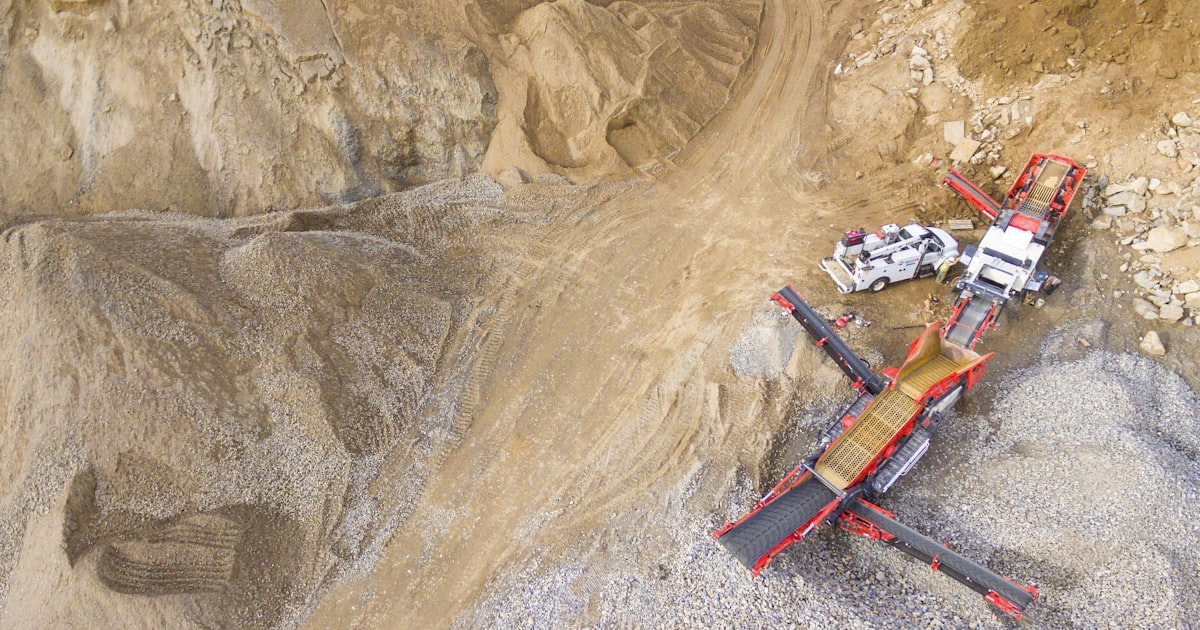
In the sandstone quarries of Rajasthan's Karauli district, studies have found silicosis in nearly four out of every five workers who have spent 20 years cutting stone. Across India — in Gujarat's agate polishing units, Madhya Pradesh's slate mines, and countless unregistered stone-crushing units — an estimated 52 million workers are projected to be exposed to silica dust by 2025-26. Most have never had a chest X-ray, and many carry a diagnosis of "tuberculosis" for years before anyone recognises the real, underlying disease: silicosis.
Silicosis rarely makes national headlines the way an outbreak does, but its toll is arguably larger and entirely preventable. This guide explains what silicosis is, why it is so often missed or misdiagnosed in India, and what workers, families, and employers can do to catch it early and access the support that exists.
What is Silicosis?
Silicosis is an incurable, irreversible lung disease caused by inhaling fine particles of crystalline silica (silicon dioxide) — a mineral found in sand, stone, granite, sandstone, slate, and quartz. When silica dust is inhaled over months or years, the particles lodge deep in the lungs and trigger scarring (fibrosis) of lung tissue, permanently reducing the lungs' ability to expand and exchange oxygen.
Silicosis belongs to a family of occupational lung diseases called pneumoconiosis (dust-related lung disease). It is entirely preventable through dust control, yet it remains one of the most common occupational diseases in India, concentrated in industries most workers do not even realise carry this risk.
Who is at Risk in India
Silica dust exposure is widespread across both formal and informal Indian industries:
- Stone mining and quarrying — sandstone in Rajasthan, granite in Tamil Nadu and Andhra Pradesh, slate in Madhya Pradesh
- Stone crushing and grinding units, often small, unregistered operations along highways
- Agate (semi-precious stone) polishing — concentrated in Khambhat, Gujarat, with prevalence studies showing rates as high as 69%
- Sandblasting — used in metal fabrication, ship-breaking, and denim distressing units
- Construction work — cutting, drilling, and grinding concrete, tiles, and stone
- Ceramic, glass, and foundry industries
- Slate pencil and chalk manufacturing
Studies across 11 Indian prevalence surveys found an average silicosis rate of 31% among exposed workers, with some occupational groups — particularly long-tenured stone mine workers — showing prevalence above 50%. The vast majority of these workers are employed informally, on daily wages, with no medical monitoring and often no awareness that the dust they breathe daily is dangerous.
How Silicosis Develops: Three Forms
Silicosis is not a single disease course — its speed and severity depend on how much silica dust a person breathes and for how long.
Chronic Silicosis (Most Common)
Develops after 10 years or more of low-to-moderate silica exposure. Symptoms — mild breathlessness, occasional cough — often go unnoticed for years, which is why chronic silicosis is frequently diagnosed only after significant lung damage has already occurred.
Accelerated Silicosis
Develops within 5 to 10 years of higher-intensity exposure, such as in stone-crushing or sandblasting units with poor dust control. Symptoms progress faster and are more clearly disabling.
Acute Silicosis
A rare but severe form that can develop within months following exposure to extremely high concentrations of fine silica dust — for example, in confined sandblasting or tunnelling operations without any protective equipment. This form progresses rapidly and can be fatal within a year or two.
Recognising the Symptoms
Silicosis symptoms are easy to dismiss, especially in workers who have grown used to breathlessness as "normal" for their trade.
- Progressive breathlessness, initially only on exertion, later even at rest
- Persistent dry cough, sometimes with sputum
- Chest tightness or pain
- Fatigue and reduced exercise capacity
- Weight loss in advanced disease
- Cyanosis (bluish lips or fingertips) in severe, advanced cases due to low blood oxygen
Because these symptoms overlap heavily with tuberculosis (TB) — a disease silicosis actually makes workers far more susceptible to — many affected workers in India are treated repeatedly for TB without anyone investigating an underlying silica dust exposure history.
The Silicosis-Tuberculosis Connection
This is one of the most important and under-recognised aspects of the disease in India. Silica dust damages the lungs' immune defences, making silicosis patients several times more likely to develop active TB than the general population — a combination doctors call silicotuberculosis.
The overlap creates a dangerous diagnostic trap: a stone-quarry worker with cough and breathlessness is often started on standard TB treatment without a chest X-ray review for silicosis, or worse, treated for TB repeatedly when the underlying driver — ongoing silica exposure — is never addressed. India's TB elimination programme (NTEP) has increasingly recognised the need for TB-silicosis collaborative screening, particularly in high-exposure districts of Rajasthan, Gujarat, and Madhya Pradesh.
How Silicosis is Diagnosed
Diagnosis rests on three pillars: a documented history of silica exposure, characteristic findings on imaging, and exclusion of other lung conditions.
Occupational History
A detailed work history — type of industry, years of exposure, use (or absence) of protective equipment — is essential and often the most neglected part of diagnosis in busy government hospitals.
Chest X-Ray and ILO Classification
Chest X-rays remain the primary diagnostic tool, read using the International Labour Organization (ILO) Classification of Radiographs of Pneumoconiosis — a standardised system that grades the size, shape, and profusion (density) of small rounded opacities scattered through the lung fields. A profusion category of 1/1 or higher, combined with a consistent exposure history, supports a silicosis diagnosis.
HRCT Chest (High-Resolution CT)
More sensitive than a plain X-ray, HRCT can detect early nodular changes and complications like progressive massive fibrosis (large conglomerate masses of scar tissue) before they are visible on standard X-ray.
Spirometry (Pulmonary Function Test)
Measures lung capacity and airflow. Silicosis typically produces a restrictive pattern — reduced total lung capacity — though mixed restrictive-obstructive patterns are common in workers who also smoke or have chronic bronchitis.
Additional Tests
Doctors will typically also order a sputum test or Mantoux/IGRA test to rule out active or latent TB, given the strong association between the two conditions.
Treatment: Managing an Incurable Disease
There is no cure for silicosis — the lung scarring is permanent and cannot be reversed. Management focuses entirely on slowing progression, treating complications, and improving quality of life.
- Immediate and complete removal from further silica exposure — the single most important step, and one that requires job reassignment or workplace intervention
- Bronchodilator inhalers for associated airway obstruction or wheezing
- Oxygen therapy for patients with low blood oxygen levels in advanced disease
- Pulmonary rehabilitation — supervised breathing exercises and physical conditioning to maximise remaining lung function
- Prompt treatment of TB if silicotuberculosis is diagnosed, following NTEP protocols
- Vaccination against influenza and pneumococcal disease, since silicosis patients are more vulnerable to respiratory infections
- Lung transplantation — considered only in select young patients with end-stage disease at specialised centres, and rarely accessible for the informal workforce most affected
Prevention: The Only Real Solution
Because silicosis cannot be cured, prevention through dust control is the only genuinely effective intervention — and the technology to prevent it is neither new nor expensive.
- Wet drilling and wet cutting methods — spraying water at the point of dust generation dramatically reduces airborne silica
- Local exhaust ventilation at grinding and cutting stations
- N95 or better-rated respirators — cloth masks and ordinary dust masks do not filter fine silica particles effectively
- Regular workplace air monitoring for silica dust concentration
- Job rotation to limit cumulative individual exposure
- Pre-employment and periodic chest X-ray screening for all workers in silica-exposed trades, ideally annually
Government Support and Compensation in India
Silicosis is a notified disease under both the Factories Act, 1948 and the Mines Act, 1952, meaning employers are legally required to report diagnosed cases. In practice, enforcement in the informal sector remains weak, but formal support mechanisms do exist:
- Rajasthan's Silicosis Policy — widely regarded as a model for other states — provides a one-time financial assistance of ₹3 lakh to affected workers and ₹2 lakh to dependents in the event of death, along with a monthly disability pension
- Similar state-level pneumoconiosis policies exist in Gujarat, Madhya Pradesh, and Haryana, though benefit structures vary
- The Employees' State Insurance (ESI) Scheme and Employees' Compensation Act provide additional avenues for compensation where applicable
- Workers can seek certification through government silicosis boards set up in high-prevalence districts, which require a chest X-ray and documented occupational history
Accessing these schemes typically requires organised medical documentation — a properly read chest X-ray, an occupational history, and often repeated hospital visits — which is precisely where many affected workers, who are frequently daily-wage labourers with limited literacy and no fixed address, fall through the cracks.
Why Organised Health Records Matter Here
Silicosis compensation claims and treatment continuity depend heavily on being able to produce consistent medical documentation — chest X-rays taken over several years, spirometry results, and TB treatment history — often to different hospitals and different silicosis certification boards as workers migrate for employment.
Uploading your reports to MedicalVault means a worker's chest X-ray, HRCT, and spirometry results are stored together and accessible from any location, rather than scattered across clinics in different states. MedicalVault's trend analysis can also help track whether lung function is stable or declining over successive tests — information that matters both for clinical decisions and for supporting a compensation claim. For families managing an elderly relative's silicosis alongside other health conditions, the family sharing feature keeps everyone informed without repeatedly requesting the same old reports.
Key Takeaways
- Silicosis is an incurable, preventable lung disease caused by inhaling crystalline silica dust, affecting millions of Indian workers in mining, stone-crushing, construction, and agate-polishing industries.
- Prevalence is alarmingly high in high-exposure trades — over 50% among some Rajasthan stone mine worker groups after long-term exposure.
- Silicosis and tuberculosis frequently overlap (silicotuberculosis), and workers are often misdiagnosed or repeatedly treated for TB without addressing the underlying silica exposure.
- Diagnosis relies on occupational history, chest X-ray (ILO classification), HRCT, and spirometry — testing that remains rare for informal-sector workers.
- There is no cure; treatment focuses on stopping further exposure, managing complications, and pulmonary rehabilitation.
- Prevention through wet drilling, proper respirators, and workplace dust control is the only real solution, alongside regular chest X-ray screening for exposed workers.
- Compensation schemes exist, notably Rajasthan's silicosis policy, but require organised medical documentation — something MedicalVault can help workers and families maintain across years and locations.
This article is for general information only and does not replace medical advice. If you or a family member works in a silica dust-exposed occupation, consult your doctor about periodic chest screening, and discuss any breathlessness or persistent cough promptly rather than assuming it is normal for the job.