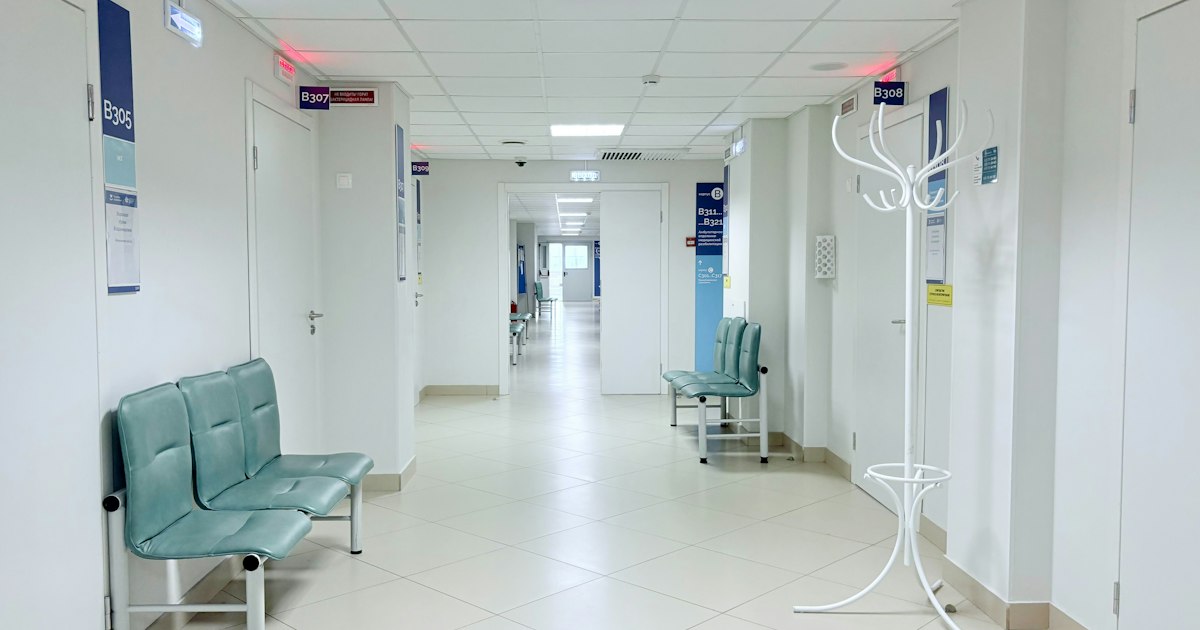
Your mother needs a knee replacement, and three hospitals in your city are offering packages. One is a large chain hospital with glossy brochures, one is a well-known local nursing home your neighbour swears by, and one is a newer multispeciality hospital close to home. All three say "NABH" somewhere on their websites. What does that actually mean, and should it decide where your mother has her surgery?
Choosing a hospital is one of the most important health decisions an Indian family makes, yet most of us decide based on distance, word of mouth or which hospital our insurer lists. NABH accreditation is India's main independent check on hospital quality and patient safety. As of the end of 2024, about 4,650 hospitals in India were NABH-accredited, a small fraction of the country's hospitals. This guide explains what NABH is, what it checks, the difference between entry-level and full accreditation, how it affects your costs under insurance and government schemes, how to verify a hospital's status, and a practical checklist for choosing a hospital.
What Is NABH?
The National Accreditation Board for Hospitals and Healthcare Providers (NABH) is a constituent board of the Quality Council of India (QCI), set up in 2006. It assesses hospitals and other healthcare organisations against detailed standards for patient safety and quality of care. Its hospital standards are themselves accredited by the International Society for Quality in Health Care (ISQua), which means they meet international benchmarks.
Accreditation is voluntary. A hospital applies, prepares its systems, and is then inspected by trained assessors, usually senior doctors, nurses and administrators from other hospitals. Accredited hospitals face regular surveillance visits and must renew their accreditation.
NABH programmes
NABH accredits more than just large hospitals:
- Hospitals (full accreditation)
- Entry-level certification for hospitals starting their quality journey
- Small healthcare organisations (SHCOs), such as nursing homes with fewer beds
- Blood banks and blood centres
- Eye care, dental and AYUSH facilities
- Clinics and primary care centres
- Nursing excellence and other specialised programmes
Medical laboratories are accredited by a different board, NABL, explained in our guide on why lab results differ between labs.
Where NABH hospitals are
According to government data, the states with the most NABH-accredited hospitals at the end of 2024 included Haryana, Maharashtra, Delhi, Punjab, Rajasthan, Uttar Pradesh, Gujarat, Karnataka, Tamil Nadu and Andhra Pradesh. Many smaller towns still have few or no accredited hospitals.
What NABH Actually Checks
NABH standards cover almost every part of how a hospital runs. From January 2025, new applications are assessed under the 6th edition of the hospital standards, which places greater emphasis on patient safety culture and digital health. The full standards include more than 600 objective elements.
| Area | What assessors look for |
|---|---|
| Access, assessment and continuity of care | Clear admission processes, timely initial assessment, proper handover between shifts and departments, discharge summaries |
| Care of patients | Standardised care for emergencies, ICU, surgery, anaesthesia, high-risk patients and end-of-life care |
| Medication management | Safe prescribing, storage of high-risk drugs, labelling, monitoring of adverse reactions |
| Patient rights and education | Informed consent, privacy, information about costs, grievance redressal, patient education |
| Infection prevention and control | Hand hygiene, sterilisation, surveillance of hospital-acquired infections, biomedical waste |
| Patient safety and quality improvement | Tracking indicators, reporting and learning from errors, preventing wrong-site surgery and falls |
| Responsibilities of management | Leadership accountability, ethical practices, transparency |
| Facility management and safety | Fire safety, electrical safety, medical gas systems, disaster preparedness |
| Human resource management | Verified qualifications of doctors and nurses, training, staff health |
| Information management | Accurate, complete and secure medical records, including electronic records |
For patients, this translates into practical things: a written consent before procedures, a wristband with your identity, checks before surgery to confirm the right patient and site, hand hygiene by staff, a proper discharge summary, and a clear way to complain.
Entry level vs full accreditation
| Feature | Entry-level certification | Full accreditation |
|---|---|---|
| Purpose | A first step for hospitals building quality systems | Comprehensive recognition of quality and safety |
| Standards | Simplified, fewer objective elements | Full standards (600+ elements) |
| Typical hospitals | Smaller and mid-sized hospitals, nursing homes | Larger hospitals and those further along the quality journey |
| PM-JAY incentive | About 10% higher package rates | About 15% higher package rates |
| What it tells you | The hospital has basic systems in place | The hospital meets the full national benchmark |
Both are meaningful, but they are not the same. Check which one a hospital actually holds; brochures often just say "NABH".
Why NABH Accreditation Matters to Your Wallet
Accreditation affects not just the quality of care but also how insurers and government schemes deal with a hospital.
Government schemes
- Ayushman Bharat PM-JAY: Hospitals with NABH entry-level certification receive about 10% more than the base package rate, and fully accredited hospitals about 15% more. This encourages hospitals to get accredited and helps keep good hospitals in the scheme. See our PM-JAY guide.
- CGHS: Under the revised CGHS rates from October 2025, NABH-accredited hospitals receive the base rate, while non-accredited hospitals receive 15% less. Our CGHS card guide explains how this affects beneficiaries.
Private health insurance
Many insurers prefer NABH-accredited hospitals for their cashless networks, and some negotiated package rates are linked to accreditation. When planning a surgery, ask the hospital's TPA desk whether your insurer offers cashless treatment there, and whether any room rent or package limits apply. Our health insurance claims guide explains how to avoid rejections.
Does accreditation make a hospital more expensive?
Not necessarily. Accredited hospitals range from government hospitals and charitable trusts to premium corporate chains. Accreditation is about systems and safety, not luxury. Always ask for a written cost estimate before planned admissions, and compare like with like.
What NABH Does Not Guarantee
Accreditation is a strong signal, but it has limits:
- It does not guarantee outcomes. An accredited hospital can still have complications, errors or an unhelpful doctor. It means the hospital has systems to reduce and learn from errors.
- Quality varies between departments. A hospital may have an excellent cardiac unit but an average orthopaedic department. Ask about experience with your specific procedure.
- Accreditation can lapse. Certificates have validity periods and can be suspended. A logo on an old signboard is not proof.
- Non-accredited does not mean unsafe. Many excellent smaller hospitals and specialist centres have not applied for accreditation, often because of cost and paperwork.
- The doctor matters as much as the hospital. For planned surgery, the surgeon's experience and the hospital's ICU and anaesthesia support are crucial.
Some large Indian hospitals also hold JCI (Joint Commission International) accreditation, an international standard popular with medical tourists. For most Indian patients, NABH is the more relevant benchmark.
How to Verify a Hospital's NABH Status
- Visit the NABH website (nabh.co) and use the list of accredited organisations to search by hospital name, city or state.
- Check the type: full accreditation, entry-level certification or SHCO.
- Check the validity dates on the certificate.
- Check the address: accreditation applies to a specific hospital campus, not every branch or clinic of a chain.
- Look at the scope: some certificates list included services and beds.
If a hospital displays the NABH logo but does not appear on the official list, ask for the certificate number and verify it.
A Practical Checklist for Choosing a Hospital
Accreditation is one factor among several. Here is a checklist to use for planned treatment, and to prepare for emergencies before they happen.
For emergencies (decide in advance)
| Check | Why it matters |
|---|---|
| 24x7 emergency department with doctors on site | Minutes matter in heart attack, stroke and accidents |
| ICU and cath lab availability | Essential for heart attacks; check if the cath lab works round the clock |
| CT scan available 24x7 | Critical for stroke and head injury |
| Blood bank on site | Needed for bleeding, surgery and childbirth |
| Distance and traffic | The nearest capable hospital is usually better than the "best" hospital an hour away |
| Cashless with your insurer, CGHS or PM-JAY | Avoids large deposits during a crisis |
Save the emergency numbers of two hospitals near your home and your parents' home, along with 112 and 108 for ambulances.
For planned surgery or treatment
- Accreditation status: full NABH, entry-level, or none
- Experience with your procedure: ask how many such procedures the surgeon and hospital do each year
- ICU and anaesthesia support, especially for older patients and major surgery
- Written cost estimate, including what is not covered by the package
- Infection control: look for hand hygiene, clean wards and isolation facilities
- Patient reviews and personal recommendations, taken with a pinch of salt
- Transparency: willingness to answer questions, share reports and explain risks
- Post-discharge support: follow-up visits, physiotherapy and a contact number for problems
Know your rights as a patient
The Ministry of Health and Family Welfare has adopted a Charter of Patients' Rights, based on recommendations of the National Human Rights Commission, that lists rights including:
- The right to information about your illness, treatment and expected costs
- The right to copies of your medical records and reports (see our guide on your right to medical records)
- The right to informed consent and a second opinion
- The right to choose where to buy medicines or get tests done
- The right to emergency care without demand for advance payment in life-threatening situations
- The right to non-discrimination, privacy and dignity
- The right to redressal of grievances
If you have a problem, start with the hospital's grievance cell or patient relations desk. If that fails, you can approach the state medical council, the state health department, consumer courts or, for insurance disputes, your insurer's grievance officer and the insurance ombudsman. Our guide to checking and disputing hospital bills covers billing problems.
Keeping Your Hospital Records Together
Whichever hospital you choose, you will leave with a stack of documents: admission notes, consent forms, operation notes, lab reports, scans and the discharge summary. If you change hospitals, seek a second opinion or file an insurance claim, these records become essential, and they are often the first thing families lose.
When you upload your reports to MedicalVault, every report from every hospital and lab is organised in one place, so you can share the complete history with a new doctor or insurer in minutes. MedicalVault's trend analysis shows how key values such as haemoglobin, creatinine or blood sugar changed before and after a hospital stay. With the family sharing feature, the whole family can see an elderly parent's records, which helps when different family members take turns at the hospital.
Key Takeaways
- NABH, part of the Quality Council of India, is the country's main hospital accreditation body; about 4,650 hospitals were accredited by the end of 2024.
- NABH checks patient safety, infection control, medication management, patient rights, facility safety, staff credentials and medical records, with 600+ objective elements in the full standards.
- Full accreditation and entry-level certification are different; check which one a hospital holds and verify it on the NABH website.
- Accreditation affects payments: about 10 to 15% higher PM-JAY package rates, and under revised CGHS rates, non-NABH hospitals receive 15% less.
- Accreditation does not guarantee outcomes; also consider the surgeon's experience, ICU support, distance, cost transparency and insurer tie-ups.
- Know your rights under the Charter of Patients' Rights, including access to records, cost information, informed consent and a second opinion.
- Choose your emergency hospitals in advance, and keep every hospital report in MedicalVault so your history is ready wherever you are treated.