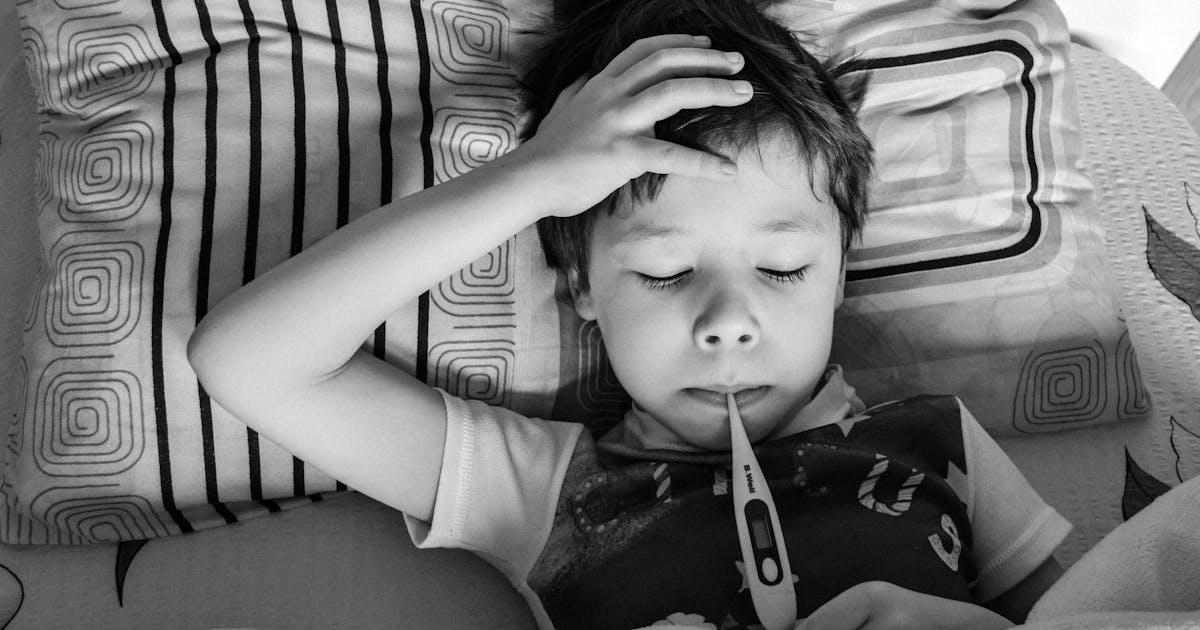
It started as a stubborn fever that would not break. Aarav, a four-year-old from Pune, was given paracetamol, then antibiotics, then antimalarials over the course of nine days. By the time his lips cracked and turned strawberry-red, his palms peeled, and his neck glands swelled, his pediatrician finally suspected the truth: Kawasaki disease. An echocardiogram showed early dilation of his coronary arteries — a finding that, left untreated, could have caused a heart attack in childhood. Stories like Aarav's are no longer rare in India. Once dismissed as a "Japanese illness", Kawasaki disease (KD) has now overtaken acute rheumatic fever as the leading cause of acquired heart disease in Indian children, and pediatricians across Chandigarh, Delhi, Bengaluru, Chennai and Mumbai are reporting a steady rise in cases.
For Indian parents, the trouble is that Kawasaki disease still flies under the radar. It mimics the flood of viral fevers, dengue and typhoid that India battles every year. Yet missing it — or treating it late — can permanently scar a child's heart. This guide explains what Kawasaki disease looks like, what tests confirm it, how it is treated, and how Indian families can spot the danger early.
What Is Kawasaki Disease?
Kawasaki disease is a medium-vessel vasculitis — an inflammation of medium-sized arteries throughout the body. It overwhelmingly affects children under the age of five, with peak incidence between six months and two years of age. Boys are slightly more often affected than girls. The exact cause is still unknown, although evidence points toward an abnormal immune response triggered by an infection in a genetically susceptible child.
Why does this matter? Because the most dangerous part of KD is what it does to the coronary arteries — the arteries that supply blood to the heart muscle. In about 1 in 4 untreated children, the inflammation weakens the artery walls, producing coronary artery aneurysms (balloon-like dilations). These aneurysms can rupture, clot, or narrow over time, leading to childhood heart attacks, arrhythmias, or sudden cardiac death decades later.
With prompt treatment within ten days of fever onset, the risk of coronary aneurysms drops dramatically — to around 4%. That single statistic is why early recognition is the difference between a child who recovers fully and a child whose heart is permanently damaged.
Rising Incidence in India
For decades, Kawasaki disease was thought to be a problem confined to Japan and East Asia. That assumption is no longer true. Long-running surveillance from the Postgraduate Institute of Medical Education and Research (PGIMER), Chandigarh — India's most prolific KD research centre — has documented a steady, decade-long rise.
Between 1994 and 2008, the incidence in Chandigarh climbed from 0.51 to 4.54 cases per 100,000 children under fifteen. By 2015–2019, the rate among children under five had risen further to 5.64–9.72 per 100,000 per year. National pediatric cardiology registries project a sustained monthly rise of roughly 0.018 cases per 100,000 children under fifteen through 2030. Cases are being recognised in tier-2 cities and rural districts as awareness grows and pediatricians look for it.
Several reasons may explain the trend: better awareness among Indian pediatricians, more accessible echocardiography, and possibly genuine epidemiological change linked to environmental triggers, viral exposures, and urbanisation. Whatever the cause, the takeaway for Indian families is simple: KD is no longer rare in India, and any prolonged fever in a young child must keep this diagnosis on the table.
Recognising the Symptoms: The Five-Day Rule
A diagnosis of classical (complete) Kawasaki disease is made when a child has fever for at least five days plus four out of these five clinical features:
- Bilateral conjunctival injection — both eyes look red and bloodshot, but without pus or sticky discharge (this distinguishes it from conjunctivitis).
- Changes in the lips and oral cavity — bright red, dry, cracked lips; a "strawberry tongue" with prominent papillae; redness of the throat without ulcers.
- Polymorphous rash — usually on the trunk, sometimes confused with measles or a drug reaction. The rash is variable: maculopapular, urticarial, or erythrodermic.
- Changes in the hands and feet — early on, redness and swelling of the palms and soles. Later (around the second to third week), peeling of the skin starting from the fingertips and toes — a near-pathognomonic late sign.
- Cervical lymphadenopathy — a single, firm, swollen lymph node in the neck more than 1.5 cm in diameter, usually on one side.
Importantly, not all children fit neatly into this picture. Incomplete (atypical) Kawasaki disease — where children have fever and only two or three of the classical features — is more common in infants under six months and in older children, and carries an even higher risk of coronary involvement because diagnosis is so often delayed.
Other clues Indian parents and pediatricians should watch for:
- Extreme irritability disproportionate to the fever — described by parents as "the most miserable child I have ever seen".
- Joint pain or swelling in the knees and ankles.
- Abdominal pain, vomiting, or diarrhoea — may be mistaken for gastroenteritis.
- Redness or peeling at the BCG vaccination scar — a distinctive finding seen in many Indian children, since BCG is given at birth.
- Sterile pyuria — white cells in the urine without a urinary tract infection.
When to Suspect KD vs Other Indian Childhood Fevers
In India, paediatricians juggle a long list of fever-with-rash illnesses. Distinguishing KD from these can be tricky:
| Illness | Key distinguishing features |
|---|---|
| Dengue | Falling platelets, positive NS1/IgM, retro-orbital pain, no oral mucosal changes. Read more in our dengue test guide. |
| Scrub typhus | Eschar (black scab), responds to doxycycline. See our scrub typhus guide. |
| Measles | Koplik spots, conjunctivitis with discharge, classic rash spreading head-to-toe. See our measles guide. |
| Streptococcal scarlet fever | Sandpaper rash, throat swab positive for Group A strep, responds to penicillin. |
| Typhoid | Sustained fever, relative bradycardia, positive blood culture. See our typhoid test guide. |
| Drug reactions / Stevens-Johnson syndrome | Recent drug exposure, mucosal ulceration. See our SJS guide. |
The crucial rule: a fever lasting more than five days in a child under five, with no clear focus of infection and no response to antibiotics or antimalarials, must prompt a Kawasaki workup.
Diagnostic Workup
There is no single confirmatory test for Kawasaki disease — diagnosis is clinical. However, supportive investigations are essential to rule out mimics, assess severity, and screen the heart. A typical workup at an Indian tertiary hospital includes:
Blood Tests
- Complete blood count (CBC) — typical findings include neutrophilic leucocytosis early in the illness and a striking thrombocytosis (platelet count above 4.5 lakh) in the second week. Our CBC guide explains how to read these values.
- ESR and C-reactive protein (CRP) — both are markedly elevated; CRP often above 30 mg/L. ESR may stay raised for weeks. See our ESR test guide.
- Liver function tests — mild elevation of ALT and low albumin are common. See our LFT guide.
- Urine routine — sterile pyuria supports the diagnosis. See our urine routine guide.
- NT-proBNP — a cardiac biomarker that is often elevated in KD; useful when the diagnosis is unclear.
Echocardiography
A 2D echocardiogram is the most important test. It evaluates the coronary arteries, the heart muscle (myocarditis), the heart valves (valvulitis, mitral regurgitation), and the pericardium (pericardial effusion). Echocardiography is repeated at diagnosis, again at two weeks, and again at six to eight weeks to monitor for aneurysm development or resolution. Children with persistent abnormalities continue lifelong cardiac follow-up.
Other Tests
- Chest X-ray — to rule out pneumonia.
- Rapid viral panels and dengue/typhoid serology — to exclude mimics.
- Cardiac MRI or CT coronary angiography — reserved for older children with established coronary aneurysms.
Keeping all of these reports — CBC, ESR/CRP trends, echo findings — in one place is essential for long-term cardiac follow-up. Indian families managing children with KD often shuttle between paediatric cardiologists, general paediatricians and tertiary centres. A digital record like MedicalVault lets parents store every report and share them instantly with any specialist they consult.
Treatment: Beat the 10-Day Window
The treatment goal is straightforward: start treatment within ten days of fever onset to prevent coronary artery aneurysms.
Intravenous Immunoglobulin (IVIG)
The first-line treatment is a single high-dose infusion of IVIG (2 g/kg) given over 10–12 hours. IVIG dampens the immune storm and reduces the risk of coronary aneurysms from roughly 25% to 4%. In Indian tertiary hospitals, IVIG costs ₹40,000–80,000 per gram, and a typical infusion for a 10–15 kg child can run between ₹2 lakh and ₹4 lakh. Ayushman Bharat PM-JAY, ESI, and several state schemes cover IVIG for KD; check our Ayushman Bharat guide for eligibility.
Aspirin
High-dose aspirin (30–50 mg/kg/day) is given alongside IVIG during the acute phase for its anti-inflammatory effect, then reduced to a low antiplatelet dose (3–5 mg/kg once daily) for six to eight weeks, or longer if coronary abnormalities persist. Aspirin in children is normally avoided due to Reye's syndrome risk, but in KD the benefits outweigh the risk under medical supervision.
Corticosteroids and Other Agents
About 10–15% of children do not respond to the first IVIG dose (persistent or recrudescent fever after 36 hours). Options for refractory KD include a second IVIG infusion, intravenous methylprednisolone pulses, or biological agents such as infliximab or anakinra. Many Indian centres now use a risk-stratified approach, adding steroids upfront in children with severe inflammation or early coronary changes.
Hospital Stay
Most children improve within 24–48 hours of IVIG and are discharged within five to seven days. Activity is restricted for several weeks while aspirin is being weaned.
Long-Term Follow-Up: Why It Does Not End at Discharge
Even after fever and rash settle, KD demands long-term cardiac surveillance:
- Children with no coronary involvement — repeat echocardiograms at 2 weeks and 6–8 weeks; routine paediatric review thereafter, with annual cardiology check-ups recommended for at least a few years.
- Children with mild, transient coronary dilation — close echocardiographic monitoring; aspirin continued until resolution.
- Children with persistent coronary aneurysms — lifelong follow-up with paediatric and adult cardiologists. Many will need long-term antiplatelet therapy or anticoagulation. Some will need cardiac catheterisation, stenting or, in rare cases, coronary artery bypass surgery in adolescence or adulthood.
Indian families should expect echo, ECG and lipid profile monitoring at regular intervals. Tracking these reports across years using MedicalVault's trend analysis helps cardiologists detect subtle changes in coronary measurements early.
Practical Guidance for Indian Parents
- Keep a fever diary: note when the fever started, peak temperatures, and which medications were tried. Take it to every doctor visit.
- Push for an echo if fever crosses five days with no clear cause, especially in children under five — even if all classical signs are not present. Incomplete KD is a real entity in Indian children.
- Do not delay: every day after day ten without IVIG raises the coronary risk substantially.
- Insist on follow-up: even after recovery, do not skip the 6-week and 6-month echocardiograms.
- BCG scar matters: redness or peeling at the BCG site is a strong KD clue in Indian children — point it out to the doctor.
- Use family sharing: KD can recur (in 1–3% of cases), and siblings have a slightly higher risk. Store the index child's records and share them via MedicalVault's family sharing feature so any future paediatric visit has full context.
Key Takeaways
- Kawasaki disease is now the leading cause of acquired heart disease in Indian children and is rising in incidence across major cities.
- Suspect KD in any child under five with a fever lasting more than five days plus red eyes, red lips, rash, swollen hands/feet, or neck node — even if all features are not present.
- Coronary artery aneurysms are the dreaded complication; treatment with IVIG within ten days of fever onset cuts the risk by 80%.
- Common mimics in India include dengue, scrub typhus, measles, typhoid and drug reactions — KD is the diagnosis pediatricians often reach last but should reach earlier.
- Long-term follow-up with serial echocardiograms is essential, even after a smooth recovery.
- Storing every fever record, blood test, and echo report on MedicalVault gives your child's cardiologist a complete cardiac history at every visit, for years to come.